
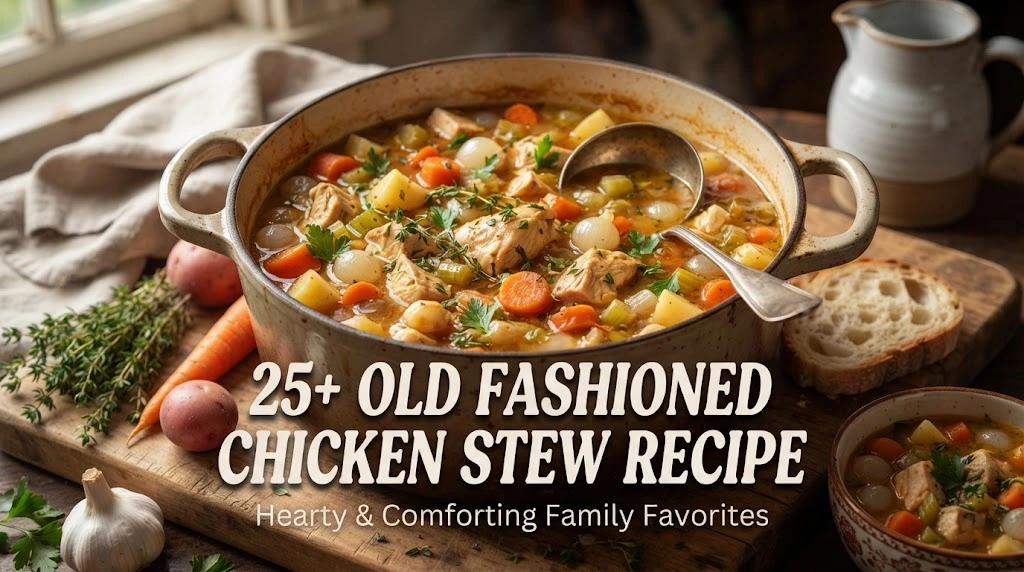
There are meals that fill your stomach, and then there are meals that make the whole house feel warmer. A pot of chicken stew belongs in the second group. The smell of onions softening in butter or oil, chicken simmering in a savory broth, and vegetables becoming tender together can make an ordinary evening feel like Sunday dinner at Grandma’s house.
An old fashioned chicken stew recipe does not need fancy ingredients or complicated techniques. Its strength comes from simple food cooked patiently: tender chicken, hearty vegetables, a flavorful broth, and herbs that bring everything together.
This is the kind of meal you can make on a chilly afternoon, serve to a hungry family, and still have leftovers for tomorrow. It also gives you plenty of room to adjust the recipe. Use chicken thighs for deeper flavor, add extra vegetables when you have them, or make the broth thicker if you prefer a gravy-like stew.
The important thing is learning the method. Once you understand how to build flavor in stages and cook the chicken gently, you can make a comforting chicken stew without depending on a complicated recipe.
What Makes an Old Fashioned Chicken Stew So Good?
A traditional chicken stew works because every ingredient contributes something useful.
Chicken provides the main protein and savory flavor. Onions create sweetness and depth. Carrots add gentle sweetness and color, while potatoes make the stew hearty enough to serve as a complete meal.
The broth carries all those flavors. Herbs such as thyme, parsley, bay leaf, and black pepper give the liquid a classic homemade taste.
The texture matters just as much as flavor. A good chicken stew should have tender chicken, soft but intact vegetables, and a broth that is thick enough to coat a spoon without becoming gluey.
That balance comes from technique rather than expensive ingredients.
Browning the chicken first can add extra flavor. Sautéing the vegetables before adding liquid builds another layer. Finally, simmering instead of aggressively boiling protects the texture of the chicken.
These small steps separate a rich homemade stew from a pot that simply tastes like boiled chicken and vegetables.
Ingredients for a Classic Homemade Chicken Stew
You do not need a huge ingredient list. For approximately 6 servings, gather:
- 2½ to 3 pounds boneless, skinless chicken thighs
- 2 tablespoons olive oil or vegetable oil
- 1 medium yellow onion, diced
- 3 carrots, peeled and sliced
- 2 celery stalks, sliced
- 3 cloves garlic, minced
- 1½ pounds potatoes, cut into chunks
- 4 cups low-sodium chicken broth
- 1 cup water
- 2 tablespoons all-purpose flour
- 1 teaspoon dried thyme
- 1 bay leaf
- ½ teaspoon black pepper
- 1 teaspoon salt, or to taste
- 1 tablespoon chopped fresh parsley
- 1 tablespoon butter
Chicken thighs work particularly well because they stay moist during longer cooking. You can use bone-in thighs for additional flavor, although you will need to account for the bones when estimating portions.
For the potatoes, Yukon Gold potatoes hold their shape nicely and provide a naturally creamy texture. Russet potatoes can work too, but they tend to break down more easily.
Use low-sodium broth if possible. It gives you more control over the final salt level.
How to Make Old Fashioned Chicken Stew From Scratch
Start by patting the chicken dry with paper towels. Season it lightly with salt and black pepper.
Heat the oil in a large heavy-bottomed pot or Dutch oven over medium-high heat. Brown the chicken in batches rather than crowding the pot.
You do not need to cook the chicken completely at this stage. Give the pieces a good golden-brown surface, then transfer them to a plate.
Next, add the onion, carrots, and celery to the same pot. Cook them for several minutes until the onion softens and the vegetables begin to develop color.
Add the garlic and cook for about 30 seconds. Sprinkle the flour over the vegetables and stir well so the flour coats everything.
Slowly pour in the chicken broth while stirring. Scrape the browned bits from the bottom of the pot because they contain valuable flavor.
Return the chicken to the pot. Add the potatoes, thyme, bay leaf, and water.
Bring the stew to a gentle simmer, then reduce the heat. Cover partially and cook until the chicken and vegetables are tender.
Remove the bay leaf. Stir in the butter and fresh parsley near the end.
Taste the broth and adjust the seasoning.
The final result should be rich and savory, with a broth that has enough body to cling lightly to the chicken and vegetables.
Should You Use Chicken Thighs or Chicken Breast?
Both work, but they behave differently during slow cooking.
Chicken thighs are usually the better choice for stew. Dark meat contains more fat and connective tissue, which helps it remain tender and flavorful during longer cooking.
Chicken breast is leaner and can become dry if you simmer it too long. If you prefer breast meat, cut it into larger pieces and avoid overcooking it.
Bone-in chicken thighs provide even more flavor and can create a richer broth. However, they require a little more work because you will need to remove the bones before serving.
For a family meal, boneless thighs offer a convenient middle ground. They provide good flavor without making the stew difficult to eat.
If you are trying to reduce fat, trim excess skin and visible fat before cooking rather than removing every trace of fat from the meat.
A little fat contributes to flavor. You simply do not need an excessive amount.
The Best Vegetables for Traditional Chicken Stew
Carrots, celery, onions, and potatoes form the classic foundation.
That combination works because the vegetables contribute different textures and flavors. Onion creates a savory base, carrots add sweetness, celery provides freshness, and potatoes absorb the broth.
You can add other vegetables, but timing matters.
Good additions include:
- Green beans
- Peas
- Corn
- Mushrooms
- Turnips
- Parsnips
- Pearl onions
- Rutabaga
Hard vegetables such as turnips and parsnips should go into the pot early enough to become tender.
Frozen peas should go in near the end. They require only a few minutes of cooking and can lose their bright color if you simmer them for too long.
If you add mushrooms, consider sautéing them separately or cooking them before adding the broth. This helps them develop a deeper flavor instead of simply becoming soft and watery.
Try not to add every vegetable in your refrigerator. A stew tastes better when each ingredient has a purpose.
How to Make Chicken Stew Thick and Creamy
A traditional chicken stew can have a clear, broth-like base or a thicker gravy-style consistency.
For a naturally thickened stew, flour works well. Coating the sautéed vegetables with flour before adding broth creates a simple roux-like base.
The broth should go in gradually. Stir as you pour so the flour dissolves smoothly.
If your stew remains too thin, you have several options.
One method is to simmer it uncovered for a few minutes. Evaporation concentrates the broth and naturally thickens the stew.
You can also make a slurry by mixing a small amount of cornstarch with cold water. Stir it into the simmering stew gradually and stop when you reach the consistency you want.
Another traditional trick is to mash a few cooked potato pieces against the side of the pot. Their starch can naturally add body to the broth.
Avoid dumping dry flour directly into the finished stew. It can form unpleasant lumps and leave a raw flour taste.
For a creamy chicken stew, add a small amount of heavy cream or whole milk near the end. Keep the heat gentle afterward so the dairy remains smooth.
How Long Should Chicken Stew Cook?
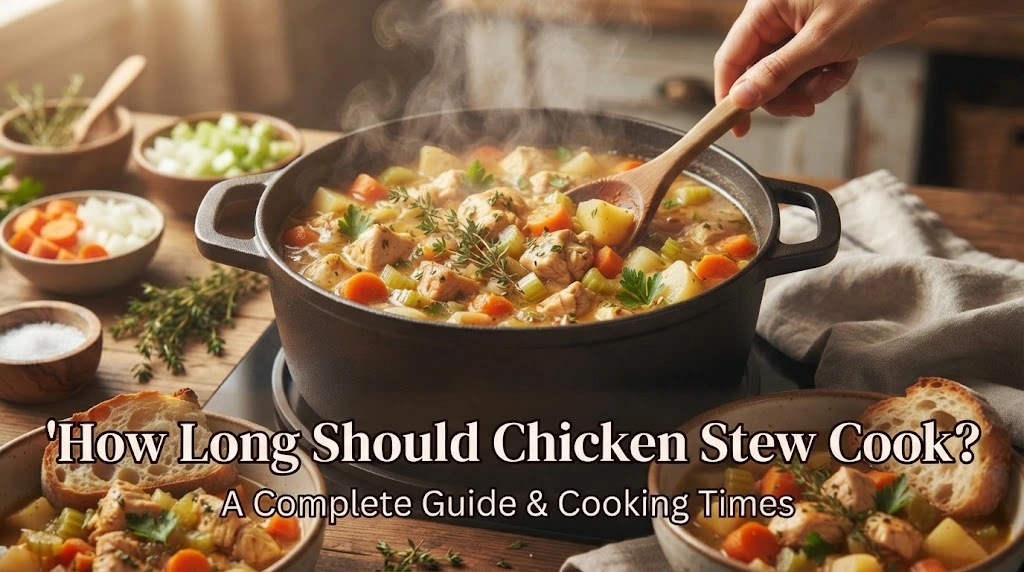
Cooking time depends on the type and size of the chicken pieces.
Boneless chicken thighs usually need roughly 25 to 35 minutes of gentle simmering after the stew reaches temperature. Larger bone-in pieces may require longer.
The safest approach is to check the chicken rather than relying only on the clock. Poultry should reach a safe internal temperature of 165°F (74°C) as measured with a food thermometer.
Vegetables should become fork-tender without completely falling apart.
If you simmer the stew much longer than necessary, the chicken may eventually become stringy and the vegetables can lose their structure.
There is a common misconception that every stew improves simply by cooking for hours. That is true for some tough cuts of meat, but chicken requires more care.
The goal is enough cooking time to develop flavor and tenderness without destroying the texture.
How to Build More Flavor Into Chicken Stew
The biggest flavor mistake is adding everything to the pot at the same time.
Instead, build the stew in stages.
First, brown the chicken. Those browned surfaces create savory flavors that boiling alone cannot provide.
Next, cook the onion, carrots, and celery in the same pot. The vegetables absorb some of the browned flavors left behind by the chicken.
Garlic goes in later because it can burn quickly.
When you add the broth, scrape the bottom of the pot. Those dark bits are concentrated flavor.
Herbs also matter. Thyme is a classic choice, but rosemary, parsley, sage, and a small amount of oregano can work depending on the style you want.
For additional depth, you can add:
- A teaspoon of Dijon mustard
- A splash of dry white wine before the broth
- A small amount of Worcestershire sauce
- A pinch of smoked paprika
- Fresh parsley at the end
Use these additions carefully. The purpose is to deepen the flavor, not make the stew taste like five different dishes at once.
Layering flavor beats adding more ingredients.
Dutch Oven Chicken Stew vs. Slow Cooker Chicken Stew
A Dutch oven gives you more control because you can brown the chicken and vegetables in the same pot before adding liquid.
That makes it ideal when flavor is your top priority.
A slow cooker offers convenience. You can add the ingredients, set the cooker, and return later to a nearly finished meal.
However, slow cookers do not provide the same browning unless you perform that step separately.
For the best slow-cooker result, brown the chicken and sauté the onions first if you have the time. Then transfer everything to the slow cooker.
Potatoes and carrots should be cut into fairly large pieces so they do not become overly soft.
Be careful with chicken breast in a slow cooker. Lean meat can become dry if left cooking far beyond the time it needs.
A Dutch oven is better when you want deep browning and precise control. A slow cooker wins when convenience matters most.
Old Fashioned Chicken Stew With Gravy
Some families prefer their chicken stew thick enough to resemble chicken and vegetable gravy.
To get that texture, start with flour and fat before adding the broth. This creates a simple thickening base.
After the broth goes in, simmer the mixture until it develops enough body to coat the back of a spoon.
If you want a particularly rich gravy, use chicken stock instead of plain water and include the browned bits from the bottom of the pot.
You can also add a small amount of butter at the end. Butter gives the sauce a smooth finish and rounds out the flavor.
For an extra-rich version, serve the stew over mashed potatoes or alongside warm biscuits.
Keep the seasoning balanced, though. Thick sauces concentrate salt as they reduce.
Taste near the end, not just at the beginning.
That final adjustment can make the difference between a stew that tastes flat and one that tastes complete.
How to Make Chicken Stew Ahead of Time
Chicken stew is one of those meals that often tastes even better after a night in the refrigerator.
As the stew cools, the flavors have time to blend. The broth also becomes easier to judge for seasoning once it is no longer extremely hot.
For make-ahead cooking, prepare the stew as usual and cool it promptly. Refrigerate it in shallow containers rather than leaving a large hot pot sitting at room temperature for an extended period.
When reheating, warm the stew thoroughly on the stovetop or in the microwave.
If the broth has thickened too much in the refrigerator, add a little chicken broth or water.
Potatoes can soften further after refrigeration, so avoid overcooking them during the original preparation.
If you plan to freeze the stew, consider leaving out dairy until you reheat it. Cream-based sauces can sometimes change texture after freezing and thawing.
Label your container with the date. Good kitchen organization makes leftovers easier and safer to manage.
What to Serve With Homemade Chicken Stew
Chicken stew can easily stand alone as a complete meal, but the right side dish can make it feel special.
Warm bread is one of the best choices because it gives you something to soak up the broth.
Try serving it with:
- Buttermilk biscuits
- Crusty French bread
- Cornbread
- Dinner rolls
- Garlic bread
- Simple green salad
If the stew contains plenty of potatoes, you may not need another starchy side. Instead, choose a green vegetable or salad.
Steamed green beans, roasted broccoli, sautéed cabbage, or a crisp lettuce salad can add color and freshness.
For a classic comfort-food dinner, spoon the stew into shallow bowls and serve warm biscuits on the side.
For presentation, add fresh chopped parsley just before serving. The green color provides a simple contrast against the golden broth, carrots, and potatoes.
You do not need complicated garnishes. Homemade stew looks best when it looks homemade.
Common Mistakes When Making Chicken Stew
Even experienced home cooks can run into a few problems.
The first is crowding the chicken during browning. If too many pieces sit in the pot at once, they release moisture and steam instead of browning.
The second is boiling the stew aggressively. A hard boil can break down vegetables and make chicken texture less pleasant.
Another mistake is adding all the vegetables at once. Peas, green beans, and other quick-cooking vegetables usually need much less time than potatoes or carrots.
Using too much flour can also create a heavy, pasty sauce. Start conservatively because you can always thicken the stew later.
Other problems include:
- Adding too much salt before the broth reduces
- Cutting potatoes too small
- Overcooking chicken breast
- Skipping the browning step
- Forgetting to taste before serving
- Adding cream while the stew is boiling hard
- Using too little seasoning
The easiest solution is to cook deliberately rather than rushing.
Give each stage enough attention, and the pot will usually reward you.
How to Adapt This Recipe for Different Diets
A classic chicken stew can be adjusted without losing its comforting character.
For a gluten-free version, replace all-purpose flour with a gluten-free thickener such as cornstarch. Also check the label on your chicken broth because some packaged broths contain ingredients that may not fit a gluten-free diet.
For a dairy-free stew, use olive oil instead of butter. The stew will still have plenty of flavor from the chicken, vegetables, herbs, and broth.
For a lighter version, use skinless chicken and increase the amount of vegetables. You can also skip the cream and allow the broth to remain relatively light.
For a lower-carbohydrate version, replace some or all of the potatoes with cauliflower, turnips, or another suitable vegetable.
If you need a higher-protein meal, increase the chicken while maintaining enough broth and vegetables to keep the stew balanced.
The best substitutions depend on your dietary needs, but one principle remains useful: change one or two ingredients at a time rather than rebuilding the entire recipe.
That makes it easier to understand what works.
Expert Tips for the Best Homemade Chicken Stew

A few professional-style habits can make your stew much better.
Use a heavy pot. A Dutch oven or heavy-bottomed saucepan distributes heat more evenly and reduces the chance of scorching.
Brown in batches. Give the chicken enough room to contact the hot surface.
Season in layers. Season the chicken, season the vegetables lightly, then taste the finished broth before making the final adjustment.
Cut vegetables with purpose. Larger potato chunks can handle longer cooking, while smaller pieces cook faster.
Do not rush the simmer. Gentle heat develops flavor while protecting texture.
Taste before adding more salt. Broth and stock can vary widely in sodium.
Use fresh herbs at the end. Parsley added just before serving gives the stew a fresher finish.
Let the stew rest briefly. Five to ten minutes off the heat allows the sauce to settle and the flavors to come together.
If you want a richer stew, do not automatically add more cream or butter. First ask whether the dish needs more browning, better seasoning, or a more concentrated broth.
Often, the answer is one of those three.
Conclusion
A good old fashioned chicken stew does not depend on expensive ingredients or complicated cooking. It depends on patience, good technique, and simple food that works well together.
Brown the chicken for extra flavor. Sauté the vegetables before adding the broth. Simmer gently instead of boiling hard. Choose chicken thighs when you want tender, flavorful meat, and add vegetables according to how long they need to cook.
You can keep the recipe traditional with potatoes, carrots, celery, onions, thyme, and a savory broth. Or you can make it your own with mushrooms, peas, parsnips, herbs, or a creamy finish.
The most important lesson is to pay attention to texture. Chicken should reach a safe internal temperature and remain tender, while vegetables should become soft enough to eat but firm enough to hold their shape.
Once you learn that balance, this becomes more than a single recipe. It becomes a reliable comfort-food method you can use whenever you want a warm, satisfying homemade dinner.
And perhaps that is why chicken stew has remained a family favorite for so long. It is simple enough for a weeknight, special enough for Sunday dinner, and forgiving enough to welcome your own little traditions.
FAQs About Old Fashioned Chicken Stew
1. What is the secret to good chicken stew?
The biggest secrets are browning the chicken, building flavor with sautéed vegetables, using a flavorful broth, and simmering gently. Avoiding excessive heat also helps keep the chicken tender and the vegetables intact.
2. Is chicken breast or chicken thigh better for stew?
Chicken thighs generally work better because they contain more fat and connective tissue and tend to remain moist during simmering. Chicken breast can work, but you should watch the cooking time carefully to avoid dryness.
3. How do you thicken old fashioned chicken stew?
You can thicken it with flour, cornstarch, a roux, or by reducing the broth. Mashing a few cooked potato pieces into the liquid can also add natural thickness.
4. Can I make chicken stew in a slow cooker?
Yes. Brown the chicken first if possible, then transfer it to the slow cooker with the vegetables and broth. Cook until the chicken and vegetables are tender, checking the chicken with a food thermometer to confirm it reaches 165°F (74°C).
5. Why is my chicken stew bland?
Bland stew often needs better seasoning or more developed flavor rather than simply more salt. Browning the chicken and vegetables, using good broth, adding herbs, and scraping the browned bits from the pot can make a major difference.
6. Can I freeze homemade chicken stew?
Yes, although the texture of potatoes and dairy-based sauces can change after freezing. For the best result, cool and package the stew properly, freeze it in suitable portions, and reheat it thoroughly. If using cream, consider adding it after thawing and reheating.
7. What vegetables go well with chicken stew?
Carrots, celery, onions, and potatoes are classic choices. You can also use peas, green beans, mushrooms, parsnips, turnips, corn, or rutabaga. Add each vegetable according to its cooking time so everything finishes at the right texture.