Walking into a fashion studio and watching a simple sketch turn into a finished garment can feel magical. Many people dream of becoming fashion designers because they love creativity, style, fabrics, and the idea of influencing how people express themselves. But behind the beauty of fashion is a practical question every aspiring designer asks: how much can you actually earn?
The answer is not the same for everyone. Wages for fashion designers depend on experience, location, education, design skills, industry connections, and the type of fashion work they choose. A beginner designing for a small clothing brand may earn very differently from an experienced designer working for a global fashion house.
Fashion is also changing quickly. Designers today do more than create clothing. They work with digital design tools, study consumer trends, build personal brands, manage collections, understand sustainable materials, and sometimes run their own fashion businesses.
This guide explains fashion designer salaries in detail, including entry-level pay, experienced designer earnings, freelance opportunities, factors that influence income, and practical ways to increase your earning potential. Whether you are a student, a career changer, or someone curious about the fashion industry, this article will help you understand what to expect.
Understanding the average wages for fashion designers
The average income of a fashion designer can vary widely because the profession includes many different roles. A junior designer, a costume designer, a luxury fashion creator, and an independent designer may all have different income levels.
Fashion designers usually earn money through salaries, freelance projects, commissions, consulting work, or profits from their own brands. According to industry patterns, beginners often start with modest earnings while experienced professionals can earn significantly more.
Several elements influence average fashion designer pay:
- Work experience: Designers with years of industry experience usually earn higher salaries.
- Design specialization: Luxury fashion, technical apparel, and footwear design may offer different income opportunities.
- Employer type: Large fashion companies often provide higher salaries and benefits than small studios.
- Location: Fashion capitals and major cities generally offer more opportunities.
- Portfolio quality: A strong portfolio can sometimes matter more than formal qualifications.
A new designer might spend the first few years building skills, learning production processes, and creating industry relationships. Over time, their income can grow as they gain recognition and responsibility.
Many successful designers did not become highly paid overnight. They developed expertise through internships, assistant roles, practical experience, and continuous learning.
Entry-level fashion designer wages and beginner salaries
Starting a fashion career is exciting, but beginners often need realistic expectations. Entry-level fashion designers usually focus on gaining experience, improving technical skills, and understanding how the fashion business operates.
A junior designer may assist senior designers with:
- Creating mood boards
- Researching fashion trends
- Selecting fabrics
- Preparing sketches
- Developing samples
- Communicating with manufacturers
At this stage, employers often value creativity, attention to detail, and willingness to learn. A fresh graduate with a strong portfolio may have an advantage over someone with only academic knowledge.
Many beginners make the mistake of focusing only on salary during the first job search. While income matters, early career opportunities should also provide valuable learning experiences.
A good first position can help a designer understand:
- How collections are planned
- How clothing moves from concept to production
- How fashion brands understand customers
- How deadlines affect creative decisions
Building a strong foundation early can lead to better wages later.
Fashion designer salary based on experience level
Experience is one of the biggest factors affecting fashion designer income. As designers develop their skills and reputation, they often move into higher-paying roles.
A general career progression looks like this:
Beginner designer: Usually works under experienced designers and learns industry systems. Responsibilities include research, sketches, samples, and basic design tasks.
Mid-level designer: Takes more ownership of collections, works directly with manufacturers, and may supervise assistants.
Senior designer: Creates major design concepts, leads teams, manages brand direction, and influences business decisions.
Creative director: Oversees the complete creative vision of a fashion brand and often earns the highest salaries in the industry.
Experienced designers usually earn more because they combine creativity with business knowledge. They understand customer behavior, production costs, branding, and market trends.
A common career mistake is improving only artistic skills while ignoring communication and business abilities. Fashion professionals who can design and make smart commercial decisions often have stronger earning potential.
Factors that affect wages for fashion designers
Fashion designer salaries are influenced by many factors beyond talent. Two designers with similar skills can earn very different amounts because of their career choices.
Important salary factors include:
Education and training: Fashion schools and professional courses can provide technical knowledge, industry contacts, and portfolio development.
Portfolio strength: A portfolio shows your design ability better than a simple resume. Employers often look for creativity, originality, and attention to detail.
Industry experience: Practical experience through internships, assistant positions, and freelance projects can increase career opportunities.
Specialized skills: Designers with knowledge of areas like digital fashion, textile development, sustainable fashion, or fashion technology may stand out.
Networking ability: Fashion is a relationship-driven industry. Connections with brands, manufacturers, photographers, and stylists can open new opportunities.
Business understanding: Designers who understand pricing, production, marketing, and customer demand often create more value.
The strongest fashion professionals combine artistic vision with practical knowledge.
Fashion designer wages by job role and specialization
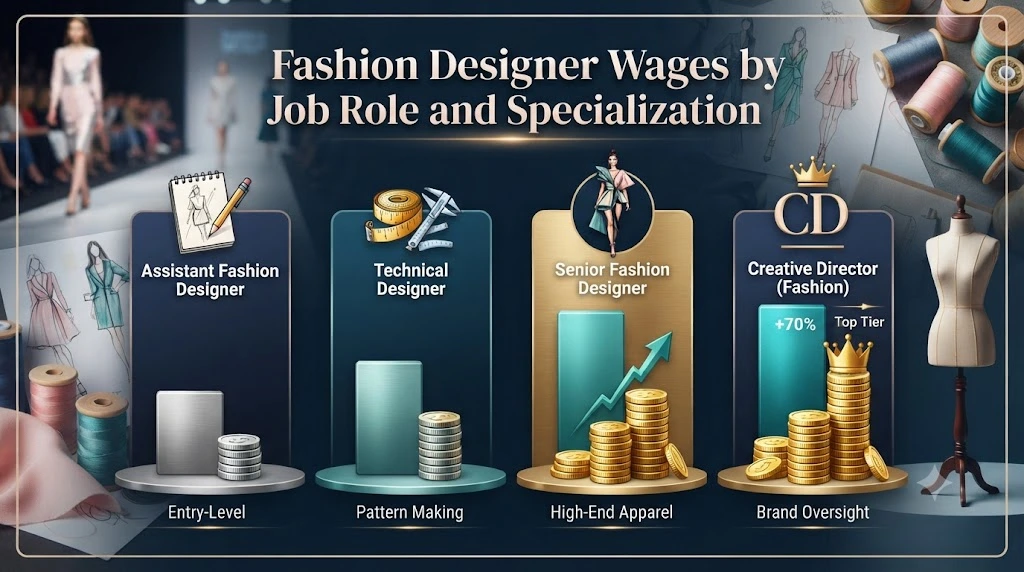
Not every fashion designer follows the same career path. The fashion industry includes many specialized roles, and each role can have different earning opportunities.
Common fashion design careers include:
- Apparel designer
- Textile designer
- Costume designer
- Footwear designer
- Accessory designer
- Pattern maker
- Fashion illustrator
- Technical designer
- Fashion stylist
- Creative director
For example, a technical designer focuses on garment construction, measurements, and production accuracy. A fashion stylist focuses more on creating visual appearances through clothing combinations and brand storytelling.
Luxury fashion designers often work on exclusive collections where creativity and craftsmanship are highly valued. Meanwhile, designers working in mass-market fashion focus on producing attractive clothing at competitive prices.
Choosing a specialization based on your strengths can help you build a stronger career path. Someone who loves detailed craftsmanship may enjoy couture work, while someone interested in trends and consumer behavior may prefer commercial fashion.
Freelance fashion designer income opportunities
Freelancing has become a popular option for many fashion professionals. Instead of working for one company, freelance designers take projects from different clients.
Freelance fashion designers may earn money through:
- Clothing collection design
- Fashion consulting
- Custom outfit creation
- Brand collaborations
- Pattern development
- Fashion illustration services
- Styling projects
Freelancing offers flexibility, but income can be less predictable. A designer must manage client communication, pricing, deadlines, and marketing.
Successful freelance designers usually build a strong online presence. They showcase their work through professional websites, social media platforms, and digital portfolios.
A practical tip for freelancers is to avoid charging only based on hours worked. Consider the value of your creative ideas, experience, and the impact your designs provide to the client.
Many freelance designers increase income by combining multiple services instead of depending on one type of project.
How much do fashion designers earn in different countries?
Fashion designer wages change significantly depending on the country and local fashion industry.
Countries with strong fashion markets often provide more opportunities because they have established brands, fashion events, manufacturing networks, and creative communities.
Major fashion centers include:
- United States
- United Kingdom
- France
- Italy
- Japan
- India
Cities such as New York, Paris, Milan, and London are known for their influential fashion industries. However, designers can build successful careers in many locations through digital platforms and global business connections.
A designer’s income also depends on the local economy, cost of living, demand for fashion professionals, and available employers.
For example, a designer working in a major fashion city may earn more but also face higher living costs. Someone working remotely or running an online fashion business may have different financial advantages.
Researching the local fashion market is important before choosing where to build a career.
Education, degrees, and their impact on fashion designer pay
Many successful fashion designers develop their careers through a combination of education and practical experience. A fashion degree can provide important foundations, but it is not the only path to success.
Fashion education can teach:
- Fashion illustration
- Garment construction
- Textile knowledge
- Fashion history
- Trend forecasting
- Computer-aided design
- Collection development
A degree from a respected fashion institution may help students access internships and industry networks.
However, employers and clients often care deeply about actual design ability. A designer with a strong portfolio, practical skills, and industry experience can compete effectively.
The best approach is to combine education with real-world practice. Creating personal projects, participating in fashion competitions, and working with small brands can strengthen career growth.
Skills that can increase fashion designer earnings
Fashion is a creative field, but successful designers need a wide range of skills. Improving these abilities can directly influence career opportunities.
Important high-value skills include:
Digital design skills: Modern designers often use software for sketches, patterns, and presentations.
Trend research: Understanding customer preferences helps designers create relevant products.
Fabric knowledge: Knowing how materials behave improves design quality.
Communication skills: Designers must explain ideas clearly to teams, clients, and manufacturers.
Business skills: Budgeting, pricing, marketing, and brand development are valuable for independent designers.
Sustainability knowledge: Many brands now seek designers who understand ethical materials and responsible production.
Expert designers do not only create beautiful clothing. They solve problems, understand markets, and deliver designs that customers want.
Common mistakes that reduce fashion designer earning potential
Many talented designers struggle financially because they overlook important career decisions.
Common mistakes include:
- Building a weak portfolio
- Ignoring business skills
- Waiting for opportunities instead of creating them
- Copying trends without developing a personal style
- Underpricing freelance work
- Avoiding networking
- Stopping skill development after graduation
A portfolio should show your creative thinking, not just finished clothing photos. Include sketches, research, design processes, and explanations behind your choices.
Another mistake is believing that creativity alone guarantees success. Fashion is both an art and a business. Designers who understand both sides usually have stronger careers.
How fashion designers can increase their income over time
Increasing income in fashion requires patience, strategy, and continuous improvement.
Practical ways to grow earnings include:
- Building a recognizable personal brand
- Developing a strong online portfolio
- Learning fashion business management
- Creating specialized expertise
- Collaborating with brands
- Expanding into consulting or teaching
- Selling original designs online
Successful designers often create multiple income streams. For example, a designer may work with a fashion company while also selling custom designs or offering styling advice.
Another effective strategy is staying updated with technology. Digital fashion tools, online marketplaces, and social media marketing have created new opportunities for designers worldwide.
Career growth usually comes from combining creativity with smart decisions.
Fashion designer wages compared with related fashion careers
Many people interested in fashion also consider related careers. Comparing different roles can help individuals choose the best direction.
Fashion-related careers include:
- Fashion stylist
- Fashion buyer
- Textile designer
- Fashion marketer
- Costume designer
- Fashion photographer
- Brand manager
Each role requires different skills. A stylist may focus on visual presentation, while a buyer studies customer demand and product selection.
Fashion designers often enjoy the creative process of developing products from ideas to finished pieces. However, related careers may offer different working conditions and income possibilities.
Understanding your personal strengths can help you select a career that matches both your interests and financial goals.
The future of fashion design careers and income trends
The fashion industry continues to evolve. Technology, sustainability, and changing customer expectations are creating new opportunities for designers.
Future fashion professionals may work with:
- Digital clothing
- Artificial intelligence design tools
- Sustainable materials
- Personalized fashion experiences
- Online fashion businesses
Consumers increasingly care about where clothing comes from and how it is produced. Designers who understand ethical fashion and responsible manufacturing may become more valuable.
Social media has also changed how designers build careers. A creative designer can now reach customers globally without depending only on traditional fashion houses.
The future belongs to designers who combine imagination with adaptability.
Expert tips for building a successful fashion design career
Building a strong fashion career requires more than talent. Small decisions made consistently can create long-term success.
Helpful expert recommendations include:
- Practice sketching regularly
- Study successful fashion collections
- Visit fabric markets and exhibitions
- Learn from experienced professionals
- Create a professional portfolio
- Follow industry changes
- Accept feedback and improve
A designer’s personal style develops through exploration. Do not rush to copy famous designers. Instead, study what makes their work successful and develop your own creative identity.
The strongest designers remain curious throughout their careers.
Final thoughts on building a profitable fashion design career
Fashion design can be a rewarding career for people who love creativity, problem-solving, and visual storytelling. However, income depends on much more than artistic talent.
Wages for fashion designers vary based on experience, specialization, location, skills, and business decisions. Beginners may start by learning and building experience, while skilled professionals can create impressive earning opportunities through employment, freelancing, or entrepreneurship.
The most successful designers continue learning, adapt to industry changes, and understand the business side of fashion. A beautiful design may attract attention, but knowledge, professionalism, and consistency create long-term success.
If you are planning a career in fashion, focus on developing strong skills, creating meaningful work, and building relationships. Over time, those efforts can lead to both creative satisfaction and financial growth.
FAQs About Fashion Designer Wages
What is the average salary of a fashion designer?
The average salary of a fashion designer depends on experience, country, employer, and specialization. Beginners usually earn less while senior designers, creative directors, and successful independent designers can earn much higher incomes.
Do fashion designers make good money?
Yes, fashion designers can earn good money, especially when they develop strong skills, build industry connections, and understand fashion business strategies. Income often increases with experience and reputation.
How much does an entry-level fashion designer earn?
Entry-level fashion designers usually earn less than experienced professionals because they are still developing industry skills. Their early career focus is often gaining experience, improving portfolios, and learning professional processes.
Can freelance fashion designers earn more than employed designers?
Freelance designers can potentially earn more because they can work with multiple clients and set their own rates. However, freelance income may change from month to month and requires strong business management skills.
What skills help fashion designers earn higher wages?
Skills such as digital fashion design, textile knowledge, trend forecasting, communication, branding, and business management can help designers increase their earning potential.
Is a fashion design degree necessary to earn a high salary?
A fashion design degree can provide valuable education and networking opportunities, but practical skills, a strong portfolio, and professional experience are also extremely important.
What is the highest-paying job in fashion design?
Creative directors, luxury fashion designers, and successful fashion entrepreneurs often have some of the highest earning potential because they influence major design decisions and brand direction.