
Some desserts feel like they belong to a particular season. Old fashioned baked apples belong to autumn, cool evenings, family kitchens, and the comforting smell of cinnamon drifting through the house.
There is something wonderfully simple about placing a few apples in a baking dish, filling their centers with warm spices and brown sugar, and letting the oven do the work. No fancy equipment is needed. No complicated decoration is required. Yet the result can feel special enough for a holiday table.
This is the kind of dessert that often brings back memories. Perhaps you remember a parent making baked apples after dinner. Maybe your grandmother served them with cream, or you discovered them at an old-fashioned country restaurant. Even if you have never tasted them before, the combination of soft baked fruit, cinnamon, butter, and caramel-like juices feels instantly familiar.
The beauty of this classic dessert is its flexibility. You can keep it very simple with apples, cinnamon, brown sugar, and butter. You can add raisins, nuts, maple syrup, oats, dried fruit, or a little lemon. You can serve the apples warm with vanilla ice cream, yogurt, custard, or simply enjoy them with a spoon.
This guide explains how to make traditional baked apples successfully, which apples work best, how to avoid common mistakes, and how to turn a humble fruit dessert into something your family will request again.
What Are Old Fashioned Baked Apples
Old fashioned baked apples are whole apples that have been cored, filled with a sweet or spiced mixture, and baked until the fruit becomes tender.
The classic method is wonderfully straightforward. You remove the core while keeping the bottom of the apple intact, add a filling such as brown sugar and cinnamon, place the apples in a baking dish, and add a little liquid around them. As they bake, the apples soften and release their natural juices into the pan.
A traditional version can be as simple as apples, brown sugar, cinnamon, butter, and water. Other recipes use apple juice, apple cider, honey, maple syrup, raisins, nuts, or dried fruit. Published recipes show how much this basic dessert can vary while keeping its old-fashioned character.
The finished texture depends on the apple and cooking time. Some apples become very soft and almost spoonable, while others hold their shape with a tender, creamy center.
That difference is useful. If you want individual apples that look beautiful on a serving plate, choose an apple that holds its shape reasonably well. If you want a soft, almost applesauce-like dessert, cook them longer.
The most important thing is to avoid treating the recipe like a rigid formula. Baked apples are forgiving, which makes them ideal for home cooks.
Best Apples for Baking Whole
Choosing the right apple can make a noticeable difference.
You want an apple with enough structure to soften in the oven without instantly collapsing. Firm-textured varieties are generally a good starting point for whole baked apples. Joy of Baking notes that firm-textured apples work well for this preparation.
Good options include:
- Rome apples.
- Golden Delicious.
- Granny Smith.
- Jonagold.
- Braeburn.
- Honeycrisp.
- Northern Spy.
Rome apples have long been associated with baking because they soften nicely while retaining useful structure. Golden Delicious offers a naturally sweet flavor and becomes tender in the oven.
Granny Smith provides more acidity. That tartness can balance a sweet brown-sugar filling, although you may want slightly more sweetener if you prefer a dessert with a gentler flavor.
Jonagold gives you a sweet-tart balance and can work well when you want both flavor and structure.
Do not worry if you only have another firm apple available. Baked apples are not limited to one perfect variety.
One useful trick is to taste the apple before baking it. If it tastes extremely tart, expect the finished dessert to remain more tangy. If it already tastes sweet, you can be more conservative with the sugar.
Old Fashioned Baked Apples Recipe
Here is a simple traditional approach that captures the character of classic baked apples without making the recipe unnecessarily complicated.
Ingredients
For four baked apples, you can use:
- 4 firm baking apples.
- 1/4 cup packed brown sugar.
- 1 teaspoon ground cinnamon.
- 2 tablespoons butter, divided.
- 1/4 cup raisins or chopped dried fruit, optional.
- 1/4 cup chopped pecans or walnuts, optional.
- 1/2 cup apple juice or apple cider.
- 1 tablespoon lemon juice, optional.
- A small pinch of salt.
Method
Preheat your oven to 350°F.
Wash and dry the apples. Remove the core from the top, but stop before cutting through the bottom. Leaving the base intact gives you a natural pocket for the filling and prevents the mixture from simply falling through.
Mix the brown sugar, cinnamon, salt, and optional dried fruit or nuts.
Place the apples in a snug baking dish. Spoon the filling into each center and add a small piece of butter on top.
Pour the apple juice or cider around the apples rather than directly filling the cavities with liquid.
Bake until the apples become tender. Depending on their size and variety, this may take roughly 45 to 60 minutes, although you should judge doneness by texture rather than the clock alone. Traditional recipes commonly use a 350°F oven and bake until the apples become very tender.
During baking, spoon some of the liquid from the bottom of the dish over the apples once or twice.
When a fork slides easily into the flesh, remove the dish from the oven.
Let the apples rest for several minutes before serving.
The result should be soft, fragrant, and surrounded by a sweet, spiced cooking liquid.
How to Make Baked Apples With Brown Sugar and Cinnamon
Brown sugar and cinnamon form one of the most recognizable flavor combinations for this dessert.
Brown sugar contributes a deeper sweetness than plain granulated sugar, while cinnamon gives the apples their familiar warm spice.
Start with a modest amount of sugar. You can always add more sweetness at the table with maple syrup, caramel, honey, ice cream, or whipped cream.
For four medium apples, a mixture of about 1/4 cup brown sugar and 1 teaspoon cinnamon gives you a useful starting point. You can adjust the ratio according to the sweetness of the apples.
Add butter to the center of each apple. As it melts, it combines with the sugar and apple juices to create a rich syrup.
A small amount of salt can also help. You do not need much. Its job is to balance the sweetness, not make the apples taste salty.
If you want more spice, consider a tiny amount of nutmeg. Allspice or ground ginger can also work, but use them lightly so cinnamon remains the main flavor.
One of the best things about this method is that it tastes homemade without requiring complicated pastry work.
Baked Apples With Raisins, Nuts, and Dried Fruit
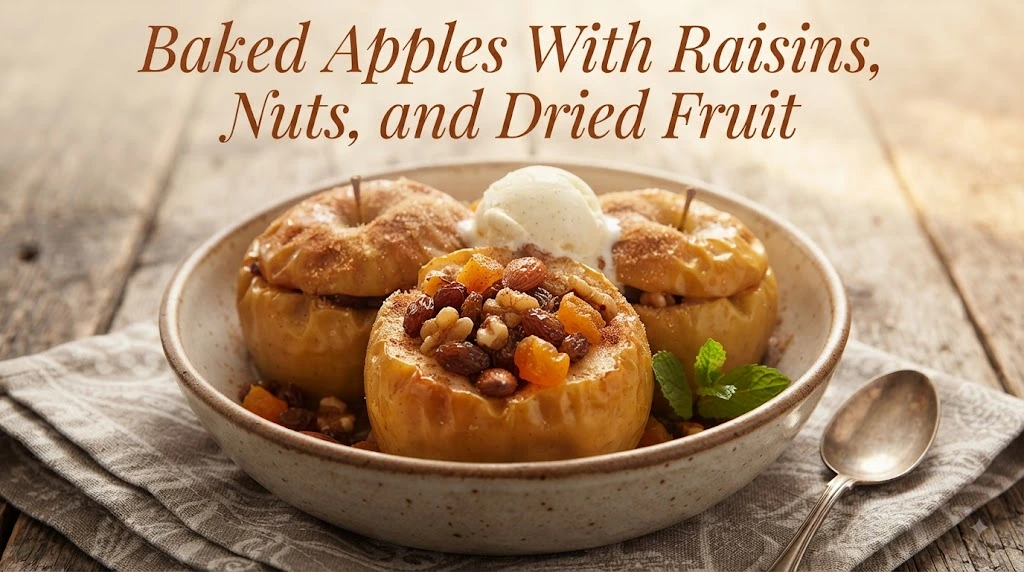
If you grew up with a more generous filling, add dried fruit or nuts.
Raisins are a classic choice because they become plump and soft as they absorb the warm juices. Dried cranberries can add color and a pleasant tart note.
Chopped dates offer a richer, almost caramel-like sweetness.
For crunch, use pecans or walnuts.
A simple filling might contain:
- Brown sugar.
- Cinnamon.
- Raisins.
- Chopped pecans.
- A small piece of butter.
- A splash of apple cider.
You can also add finely chopped dried apricots. One traditional baked-apple recipe uses either candied ginger or dried apricot as an optional filling component.
Do not pack the filling too tightly. Leave enough room for the ingredients to expand and soften.
If you add nuts, chop them fairly small. Large pieces can make the apple difficult to eat with a spoon.
For a softer dessert, skip the nuts. For a more textured dessert, pecans are especially good.
The filling should complement the apple, not overpower it.
How to Prepare Whole Apples for Baking
Proper preparation makes the final dessert much easier to eat.
Wash the apples well and dry them.
Place each apple upright on a cutting board. Use an apple corer, melon baller, or small sharp knife to remove the core.
The goal is to remove the seeds and tough core while leaving the bottom intact.
A melon baller can give you good control because you can remove the center gradually. One tested baked-apple recipe specifically recommends using a melon baller or sharp-edged measuring spoon and leaving about half an inch of apple at the bottom.
Do not make the cavity excessively wide. A deep, reasonably narrow center gives the filling somewhere to sit.
Some traditional recipes peel a strip around the upper portion of the apple. Others leave the entire skin intact. Both approaches can work.
Leaving the skin on helps the apple maintain its shape and gives the finished dessert a rustic appearance.
If you want a softer skin, you can peel the top third. This also gives the filling more direct contact with the apple flesh.
Once the apples are prepared, place them close together in the baking dish.
Snug apples tend to stand upright better during baking.
How Long to Bake Apples in the Oven
There is no single baking time that works for every apple.
Apple size, variety, ripeness, oven temperature, and desired texture all affect the result.
A common starting point is 350°F for about 45 to 60 minutes. Traditional recipes use similar temperatures, while exact cooking times vary.
Start checking the apples before you think they are finished.
Insert a fork or thin knife into the side of one apple. If it slides in easily, the apple is tender.
If the center still feels firm, continue baking.
You can also judge the appearance. The skin should look softened and slightly wrinkled, while the apple should have visibly relaxed in the baking dish.
For a firmer apple that still holds a strong shape, remove it as soon as it reaches your preferred tenderness.
For a softer, spoonable dessert, continue cooking.
Do not rely solely on the clock.
The fork test is more useful than a rigid minute count.
Remember that the apples will remain hot after leaving the oven, so their texture may continue to soften slightly during the resting period.
Baked Apples With Apple Cider or Apple Juice
Adding liquid to the baking dish serves two purposes.
First, it helps create a flavorful syrup. Second, it provides moisture around the apples while they cook.
Apple juice gives you a sweet, straightforward flavor.
Apple cider has a deeper, more seasonal taste and can make the dessert feel especially cozy in autumn.
Some traditional recipes combine syrup or honey with apple juice or water, while modern versions often use apple cider as the base of the baking liquid.
You do not need to drown the apples.
A shallow layer of liquid in the bottom of the dish is enough to create a useful cooking environment.
You can also add a little lemon juice. The acidity brightens the flavor and prevents the dessert from tasting overwhelmingly sweet.
For a more adult dessert, some recipes use brandy or bourbon as an optional addition.
If you prefer an alcohol-free version, simply leave it out.
A good everyday combination is:
- Apple cider.
- A squeeze of lemon.
- Brown sugar.
- Cinnamon.
- Butter.
The resulting juices are delicious spooned over the finished apples.
Easy Baked Apples Without Oats
Some baked apple recipes use oats, granola, or other crunchy ingredients. They can be delicious, but you do not need them.
A very simple version uses only:
- Apples.
- Brown sugar.
- Cinnamon.
- Butter.
- Apple juice or water.
That minimalist approach may actually be closer to what many people remember as traditional baked apples.
If you want extra flavor without adding oats, use a little vanilla extract in the cooking liquid.
You can also replace part of the brown sugar with maple syrup.
Honey works as another sweetener, although it changes the flavor and sweetness level.
The important thing is to avoid adding so many ingredients that the dessert starts tasting like a completely different apple dessert.
Simple does not mean boring.
When the apple itself is flavorful, you only need a few supporting ingredients.
This version also works well for breakfast or a light snack because you can control how much additional sugar you use.
Healthy Old Fashioned Baked Apple Ideas
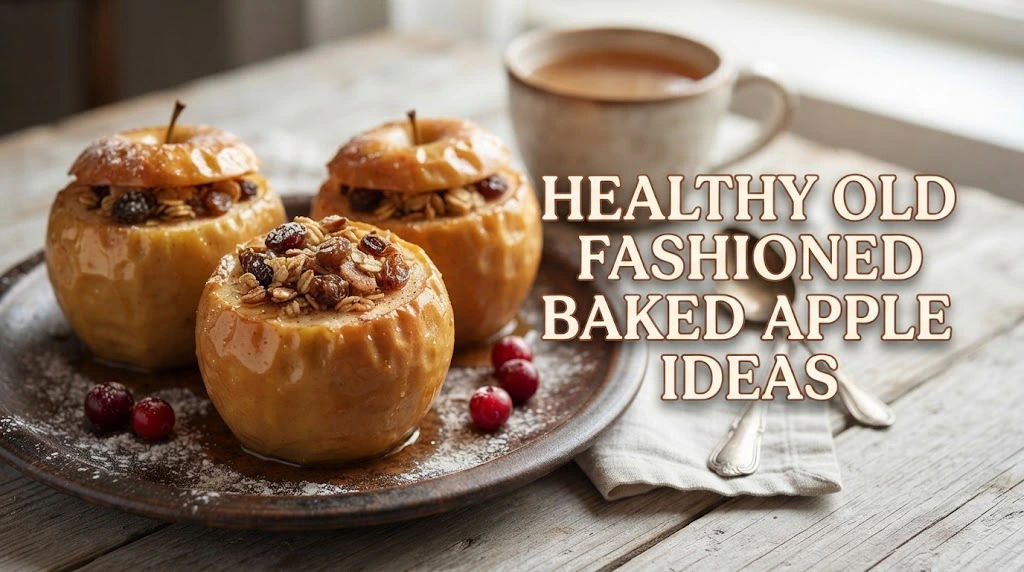
Baked apples can be a lighter dessert because the main ingredient is fruit rather than pastry.
That does not automatically make every version low in calories or sugar. Butter, brown sugar, caramel, ice cream, and other toppings can quickly turn a simple apple into a richer dessert.
If you want a lighter approach, focus on the fruit and spices.
Try:
- Using less brown sugar.
- Choosing naturally sweet apples.
- Adding cinnamon and nutmeg for flavor.
- Using chopped nuts for texture.
- Serving with plain Greek yogurt.
- Using a small drizzle of maple syrup instead of a heavy sauce.
- Skipping the crust.
- Serving a single apple rather than a large portion of several desserts.
You can also use dried fruit sparingly because it concentrates sweetness.
The best way to make the dessert lighter is not to remove everything enjoyable. Instead, let the apple remain the star.
A warm baked apple with cinnamon and a spoonful of plain yogurt can feel satisfying without the heaviness of a large pastry.
Baked Apples With Oatmeal and Granola
For a heartier version, add oats or granola.
Oats can create a soft, crumbly filling that makes the dessert feel closer to apple crisp while keeping the apple whole.
Combine rolled oats with brown sugar, cinnamon, chopped nuts, and a little butter.
Spoon the mixture into the cored apples.
Do not pack it too tightly.
As the apple cooks, the fruit releases moisture. The oats absorb some of that liquid and become tender.
Granola works too, although its sweetness varies greatly by brand.
If your granola already contains sugar, honey, or dried fruit, reduce the added sweetener.
This version is particularly good for breakfast.
Serve the baked apple with plain yogurt and a small drizzle of maple syrup.
The result feels more substantial while still retaining the comfort of a classic baked apple.
If you want the crunch to remain noticeable, add some granola during the final portion of baking rather than putting all of it inside the apple at the beginning.
How to Serve Traditional Baked Apples
Baked apples are excellent straight from the oven, but the right topping can turn them into a memorable dessert.
For the most classic presentation, place one warm apple in a shallow bowl and spoon some of the baking juices around it.
Then choose one topping.
Vanilla ice cream is one of the easiest choices. The cold creaminess contrasts beautifully with the hot apple.
Whipped cream creates a lighter finish.
Custard gives the dessert an old-fashioned, pudding-like quality.
Plain or lightly sweetened yogurt works well when you want something less rich.
You can also add:
- Chopped toasted pecans.
- A drizzle of caramel sauce.
- Maple syrup.
- Cinnamon.
- Powdered sugar.
- A small spoonful of whipped cream.
- Toasted oats.
- A little lemon zest.
Do not add everything at once.
A few well-chosen elements create a more balanced dessert than a pile of toppings.
If you are serving guests, place the baked apple slightly off-center in the bowl and spoon the sauce around it. A small scoop of vanilla ice cream beside the apple creates a simple but attractive presentation.
Old Fashioned Baked Apples for Breakfast
Baked apples are not limited to dessert.
Their warm fruit-and-spice flavor works surprisingly well at breakfast.
For a morning version, reduce the added sugar and serve the apple with Greek yogurt, oatmeal, or cottage cheese.
You can also prepare the apples ahead of time and gently reheat them.
A breakfast baked apple can include:
- Cinnamon.
- Chopped walnuts.
- Raisins.
- Rolled oats.
- A small amount of maple syrup.
- Plain yogurt.
This makes a comforting alternative to pastries.
One older baked-apple recipe specifically suggests serving the dish for breakfast as well as an evening treat.
If you plan to serve them in the morning, keep the sweetness moderate.
The natural flavor of the apple becomes more noticeable when you do not cover it with a large amount of sugar.
For busy mornings, bake the apples the evening before and store them according to the recipe’s storage requirements. Reheat them gently before serving.
Common Baked Apple Mistakes to Avoid
Baked apples are easy, but a few mistakes can affect the result.
Choosing apples that soften too quickly
Some apples may collapse before the filling develops the texture you want.
Use firm baking apples when you want the whole fruit to retain its shape.
Cutting through the bottom
If you core the apple completely, your filling can fall into the baking dish.
Leave a solid base.
Using too much sugar
Remember that apples become sweeter as they cook and that toppings can add even more sweetness.
Start modestly.
Adding too little liquid
Without enough liquid in the dish, the juices may reduce too quickly.
A small amount of apple juice, cider, or water helps create the sauce.
Overbaking
If you want a whole apple that still looks attractive on the plate, do not cook it until it completely collapses.
Check tenderness regularly.
Cutting the cavity too wide
A very large opening can weaken the apple.
Keep the cavity deep enough for filling but narrow enough to support the fruit.
Serving immediately
Freshly baked apples are extremely hot.
Give them several minutes to cool before serving.
Using toppings without considering sweetness
If you already have brown sugar, raisins, caramel, and ice cream, you probably do not need a heavily sweetened sauce as well.
Balance creates a better dessert than excess.
How to Make Baked Apples Taste Like Apple Pie
If your goal is the flavor of apple pie without making a crust, focus on the same flavor family.
Use cinnamon, brown sugar, butter, and vanilla.
Add a little nutmeg if you enjoy warm spice.
Use apple cider or apple juice in the baking dish.
For a stronger pie-like character, add chopped pecans or walnuts.
You can even serve the baked apple with a spoonful of vanilla ice cream and a little caramel sauce.
The result gives you the warm apple-and-spice comfort of pie without the pastry work.
If you miss the crust, add a small oat or streusel topping.
Mix oats, flour, brown sugar, cinnamon, and butter until crumbly. Add the topping during the final part of baking so it develops a pleasant texture.
This creates something between a baked apple and an apple crisp.
It is especially good for guests who want a richer dessert but still appreciate the simplicity of whole baked fruit.
Make-Ahead and Storage Tips for Baked Apples
Baked apples are useful when you want to prepare dessert before guests arrive.
You can bake them ahead and refrigerate them once they have cooled appropriately.
Keep them covered in a suitable food-safe container.
When reheating, warm them gently rather than using extremely high heat. You want the apple to become pleasantly warm without turning the fruit into a completely broken-down puree.
If you plan to freeze them, remember that freezing can change the texture of cooked fruit. A baked apple that was firm before freezing may become softer after thawing.
For the best texture, make them close to serving time when possible.
If you are preparing them for a dinner party, bake them earlier in the day and rewarm them before serving.
Keep perishable toppings such as whipped cream, custard, and dairy-based sauces refrigerated according to food-safety guidance.
Do not leave perishable toppings sitting out for extended periods.
The apple itself is simple, but safe storage still matters, especially when dairy or other perishable ingredients enter the recipe.
Best Ways to Adapt the Classic Recipe

The traditional version is a starting point rather than a limit.
For a maple version, replace some of the brown sugar with maple syrup.
For a nutty version, add toasted pecans or walnuts.
For a holiday version, use cranberries and warm spices.
For a citrus version, add lemon zest and a small amount of lemon juice.
For a richer dessert, serve the apple with vanilla ice cream and caramel.
For a breakfast version, use oats, raisins, walnuts, and Greek yogurt.
For a rustic country-style dessert, keep the skins on and serve the apples in the baking dish with their juices.
For a more elegant dinner-party presentation, place one apple in a shallow white bowl with a small pool of sauce and a modest scoop of ice cream.
The key is to change one or two elements at a time.
If you change the apple, filling, liquid, spice mixture, and topping all at once, you may lose the character of the original recipe.
Classic food often works best when you respect its foundation.
Frequently Asked Questions About Old Fashioned Baked Apples
What apples are best for old fashioned baked apples?
Firm baking apples such as Rome, Golden Delicious, Granny Smith, Jonagold, and similar varieties are good choices. The best option depends on whether you prefer a sweeter, tarter, firmer, or softer finished apple.
Should I peel apples before baking them whole?
Usually, no. Leaving the skin on helps the apple hold its shape and gives it a rustic appearance. Some recipes peel a strip around the upper portion, which can create a softer top and expose more fruit to the filling.
How do I core an apple without cutting through the bottom?
Use an apple corer, melon baller, or small knife and work gradually. Stop before reaching the bottom so the apple forms a natural cup for the filling. A tested recipe recommends leaving roughly half an inch of apple at the base.
Why are my baked apples still hard?
They may need more time, or you may have chosen a particularly firm apple. Continue baking and test the flesh with a fork at regular intervals.
Why did my baked apples fall apart?
You may have cooked them longer than necessary. Very soft apples can eventually lose their structure. If presentation matters, remove them once they become fork-tender rather than waiting until they are completely collapsed.
Can I make baked apples without brown sugar?
Yes. You can use less sugar, granulated sugar, maple syrup, honey, or simply rely more heavily on the apple’s natural sweetness. The choice will change the flavor and texture slightly.
Can I make baked apples ahead of time?
Yes. You can prepare them ahead, cool them, store them properly, and gently reheat them before serving. Keep any perishable toppings refrigerated and follow the specific recipe’s storage guidance.
Conclusion
Baked apples prove that a memorable dessert does not need a long ingredient list or complicated technique.
At their best, they are simply good apples treated with care. A little cinnamon brings warmth. Brown sugar adds depth. Butter creates richness. Apple cider or juice builds a fragrant sauce. The oven turns everything soft and comforting.
That simplicity is exactly what makes this dessert special.
You can make a batch on a quiet Sunday afternoon, serve them after a family dinner, or prepare them when the weather turns cool and you want something warm from the oven. You can keep the recipe traditional or add nuts, raisins, oats, maple syrup, or a favorite topping.
Most importantly, you can make the dessert fit the moment.
Serve one with vanilla ice cream for a cozy dinner. Add yogurt for breakfast. Put a baked apple beside a holiday dessert spread. Or eat one warm from the dish with nothing more than a spoon.
Old fashioned baked apples are proof that comfort food does not have to be complicated.
The best version is the one that makes your kitchen smell wonderful, leaves a little cinnamon in the air, and gives everyone at the table a reason to slow down for a few minutes.
Sometimes that is all a great dessert needs to do.