
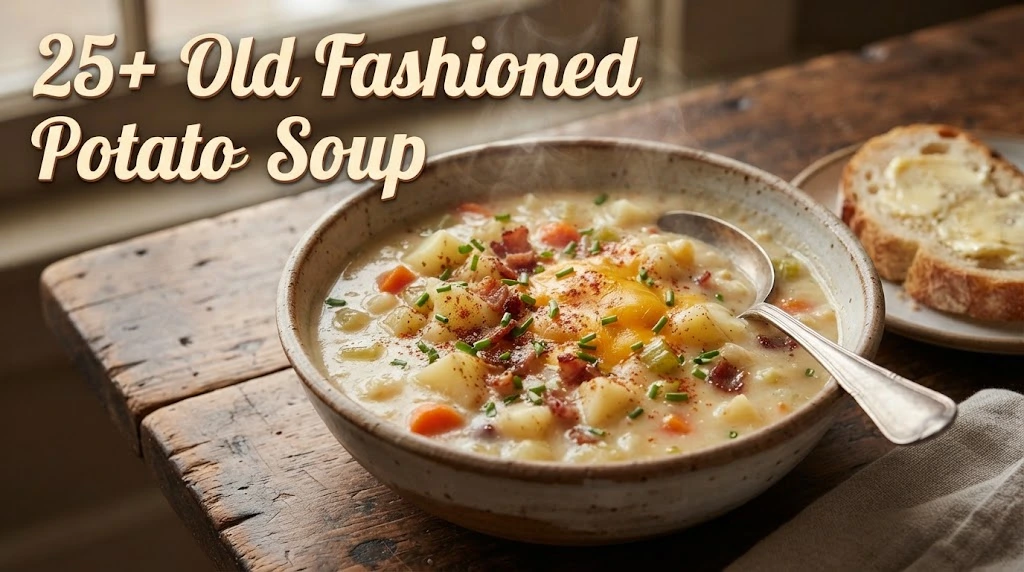
There is something deeply comforting about a pot of potato soup simmering on the stove. The smell of butter and onion fills the kitchen, the potatoes become tender, and suddenly an ordinary evening feels a little more like home.
That is the charm of old fashioned potato soup. It does not need expensive ingredients, complicated techniques, or a long shopping list. Potatoes, onion, butter, milk, seasoning, and a few simple pantry staples can create a creamy, hearty bowl that feels familiar from the very first spoonful.
This is the kind of soup that belongs on a cold afternoon, beside a piece of crusty bread, or at the center of a family dinner when everyone wants something warm and satisfying. It also happens to be forgiving. You can leave it chunky, make it smoother, add bacon or cheese, use broth for extra flavor, or keep it simple.
The recipe below takes the classic old-fashioned approach while adding practical cooking tips that help you get better texture and flavor. It is designed for home cooks who want dependable results without turning dinner into a project.
What Makes Old Fashioned Potato Soup Special
Traditional potato soup usually relies on a few basic ingredients instead of a long list of extras. Historical and community versions often combine diced potatoes and onions with butter or bacon, milk, flour, salt, and pepper. One documented old-fashioned version even traces its recipe to a 1915 cookbook and uses potatoes, onions, seasoning, bacon or butter, flour, and milk.
That simplicity is part of the appeal. You can actually taste the potatoes and onions instead of burying them under strong sauces.
A classic bowl also tends to have a soft, creamy texture with tender pieces of potato. It does not have to be completely smooth. In fact, keeping some potato pieces intact gives the soup more character and makes it feel homemade.
Another reason this recipe works so well is flexibility. You can make it with whole milk, use broth for part of the liquid, add cream for extra richness, or stir in cheese at the end.
The best version is not necessarily the richest one. It is the one that tastes balanced.
A good bowl should have:
- Tender potatoes that do not feel hard or undercooked.
- Soft onions that add flavor without overpowering the soup.
- Enough salt to bring out the potato flavor.
- A creamy base without becoming overly thick.
- Black pepper for gentle warmth.
- A buttery, savory finish.
That balance gives potato soup its timeless character.
Old Fashioned Potato Soup Ingredients
You do not need a complicated ingredient list for this homemade potato soup. Most of the ingredients are inexpensive and easy to find.
Ingredients for about 6 servings
- 2 1/2 pounds Yukon Gold or russet potatoes, peeled and cut into small cubes.
- 1 medium yellow onion, finely chopped.
- 3 tablespoons unsalted butter.
- 3 tablespoons all-purpose flour.
- 4 cups whole milk.
- 2 cups chicken broth or vegetable broth.
- 1 teaspoon salt, plus more to taste.
- 1/2 teaspoon black pepper.
- 1/2 teaspoon garlic powder.
- 1/2 teaspoon dried parsley.
- 1/4 teaspoon dried thyme.
- 1 bay leaf.
- 1/2 cup heavy cream, optional.
- 2 tablespoons chopped fresh parsley for serving.
For toppings, you can keep things traditional or make the soup more substantial.
Good options include:
- Crumbled cooked bacon.
- Shredded cheddar cheese.
- Chopped green onions.
- Sour cream.
- Fresh parsley.
- Cracked black pepper.
- A small pat of butter.
The broth is optional in a very traditional milk-based version, but I like using some broth because it adds savory depth without requiring extra ingredients.
If you want a particularly simple version, you can also skip the cream. Milk and potatoes can create a satisfying texture on their own.
Classic recipes vary widely. Some use chicken broth, some use only water, and others use cream or evaporated milk. The important thing is to understand what each ingredient contributes rather than treating one ingredient list as the only correct version.
Best Potatoes for Homemade Potato Soup
Potato choice affects both flavor and texture.
Yukon Gold potatoes are an excellent choice when you want a naturally creamy soup with pieces that hold their shape reasonably well. They have a buttery flavor and moderate moisture, making them particularly useful in soups and stews.
Russet potatoes also work beautifully, especially if you want the soup to become thicker and more rustic. They contain more starch and can break down readily as they cook.
The difference becomes especially noticeable when you mash or blend the soup.
If you want distinct potato chunks, Yukon Gold is my first choice. If you want a thicker, more broken-down soup, russets can help.
Red potatoes are another option, particularly if you enjoy a firmer potato texture. They will generally hold their shape better than russets during cooking.
For the recipe above, I recommend Yukon Gold potatoes because they offer a nice middle ground.
A simple potato guide
- Yukon Gold: Creamy, buttery, and versatile.
- Russet: Starchy, fluffy, and useful for thickening.
- Red potatoes: Firmer and better at holding their shape.
- Mixed potatoes: Great when you want different textures.
You do not need to buy a special potato just for soup. Use what you already have, but adjust your cooking and mashing technique according to the variety.
How to Make Old Fashioned Potato Soup
Start by peeling the potatoes and cutting them into roughly equal cubes. Aim for pieces around 3/4 inch so they cook at about the same rate.
Place a large heavy-bottomed pot over medium heat. Add the butter, then add the chopped onion.
Cook the onion for about five minutes, stirring occasionally. You want it soft and translucent rather than deeply browned.
Add the flour and stir constantly for about one minute. This creates a simple roux that will help thicken the soup.
Slowly pour in the milk while whisking. Add the broth gradually as well. Keep stirring so the flour blends smoothly into the liquid.
Add the potatoes, salt, pepper, garlic powder, parsley, thyme, and bay leaf.
Bring the mixture to a gentle simmer. Do not let it boil aggressively once the milk goes into the pot.
Cook for roughly 15 to 25 minutes, depending on the size and type of your potato pieces. Stir occasionally and check the potatoes with a fork.
When the potatoes become tender, remove the bay leaf.
Now comes the important texture decision.
For a chunky old-fashioned soup, mash only a small portion of the potatoes directly in the pot. A potato masher works perfectly.
For a creamier soup, mash about one-third to one-half of the potatoes.
If you want an almost smooth soup, blend part of it with an immersion blender. Avoid over-blending because potatoes can develop a gluey texture when you process them too aggressively. Culinary guidance also recommends keeping some potato texture rather than turning the entire soup into a completely smooth puree.
Finally, stir in the cream if you are using it. Taste the soup and adjust the salt and pepper.
Let it sit for five minutes before serving.
That short rest gives the flavors a chance to settle.
How to Make Potato Soup Creamy Without Making It Heavy

Creamy does not have to mean loaded with heavy cream.
Potatoes naturally provide starch, and that starch can help thicken the soup as the potatoes cook and break down. A small amount of flour also creates a smooth base when you use a traditional roux.
The key is to build creaminess gradually.
Start with butter and flour. Add your milk slowly. Then allow the potatoes to cook until tender. Finally, mash some of them into the liquid.
That method creates body without requiring a large amount of cream.
If you want more richness, add a small amount of heavy cream near the end. Do not add it too early and then boil the soup hard. Gentle heat keeps the dairy mixture smooth.
You can also use evaporated milk. Some traditional potato soup recipes use evaporated milk as part of the creamy base, while others rely on ordinary milk.
For a lighter bowl, simply leave out the cream.
The biggest mistake is trying to fix thin soup by dumping in a large amount of flour at the end. That can create a pasty texture.
Instead, let the potatoes do some of the work.
How to Get the Perfect Potato Soup Texture
Texture is where a good potato soup becomes a great one.
If every potato piece remains perfectly intact, the soup can taste more like potatoes sitting in milk. If you blend everything completely, you can lose the rustic quality that makes homemade potato soup so appealing.
I prefer a mostly creamy base with small tender potato pieces.
You can achieve that easily with a potato masher.
Once the potatoes become soft, press the masher into different areas of the pot. Do not mash continuously. A few deliberate presses can release enough potato starch to thicken the soup while leaving plenty of chunks behind.
If your soup seems too thin, mash more potatoes.
If it seems too thick, add warm milk or broth a little at a time.
Do not add a large amount of liquid all at once. You can always thin a soup, but bringing an overly thin soup back to the right consistency takes more work.
Texture problems and fixes
Too thin: Mash more cooked potatoes or simmer gently for a few minutes.
Too thick: Add warm milk or broth gradually.
Too chunky: Mash a little more with a potato masher.
Too smooth: Stir in a few separately cooked potato cubes.
Gluey: Stop blending and add liquid gradually. Avoid aggressive processing.
That last problem deserves special attention. Potato starch can become unpleasantly sticky when you overwork cooked potatoes. A gentle hand usually produces a much better result.
Easy Ways to Add More Flavor
Potatoes have a mild flavor, so seasoning matters.
Onion provides the foundation. Butter adds richness. Black pepper gives the soup a little bite.
Garlic can add depth, but use it carefully. Too much garlic can overpower the gentle flavor that makes old-fashioned potato soup special.
Dried thyme works well because it adds a subtle herbal note. Fresh thyme can taste brighter if you have it available.
Bacon is another classic addition. Cook it separately until crisp, crumble it, and sprinkle it over each bowl. This gives you smoky flavor and a crunchy contrast against the soft soup.
Cheddar cheese creates a completely different direction. Stir a small handful into the finished soup and allow it to melt gently.
You can also add:
- Chopped celery for extra savory flavor.
- Carrots for mild sweetness and color.
- Green onions for a fresh finish.
- Smoked paprika for gentle smoky warmth.
- Chives for a clean onion flavor.
- Sour cream for tanginess.
- Parsley for freshness.
Be careful with salt when adding bacon, cheese, or salty broth. Taste the soup after those additions before adding more seasoning.
That one habit can save an otherwise excellent pot of soup.
Old Fashioned Potato Soup Variations
One of the best things about this recipe is how easily you can adapt it.
Bacon potato soup
Cook six strips of bacon until crisp. Remove the bacon, reserve a little of the rendered fat, and use it alongside the butter when cooking the onion.
Crumble the bacon over each bowl.
Cheesy potato soup
Add 1 to 1 1/2 cups of shredded sharp cheddar after removing the pot from high heat. Stir until the cheese melts.
Avoid boiling the soup after adding cheese because excessive heat can make the dairy separate.
Potato and leek soup
Replace some of the onion with sliced leeks. Clean them carefully because dirt can hide between the layers.
This version tastes slightly sweeter and more delicate.
Vegetable potato soup
Add diced carrots and celery with the onion. You can also add peas near the end.
This creates a more colorful, vegetable-rich bowl.
Loaded baked potato soup
Top each serving with cheddar, bacon, sour cream, and green onions.
This variation tastes almost like a baked potato turned into soup.
Vegetarian potato soup
Use vegetable broth instead of chicken broth and skip bacon.
You can still create plenty of flavor with butter, onion, garlic, thyme, black pepper, and fresh herbs.
Dairy-free potato soup
Use a plant-based milk that performs well in savory cooking and replace butter with olive oil or a suitable plant-based butter.
Choose unsweetened milk. Vanilla-flavored milk has no place in potato soup.
These variations show why the basic recipe is so useful. Once you understand the foundation, you can make it fit the meal you want.
Common Potato Soup Mistakes to Avoid
Most potato soup problems come from a few simple mistakes.
The first is cutting the potatoes into wildly different sizes. Small pieces become soft while large pieces remain firm.
Keep the cubes similar.
The second mistake is boiling the soup too aggressively. High heat can cause milk-based soups to scorch on the bottom or develop an unpleasant texture.
Keep the heat at a gentle simmer and stir from time to time.
Another mistake is adding too much flour. A little thickener goes a long way.
You should also avoid adding all your salt at the beginning. Broth, bacon, cheese, and other additions can change the final salt level.
Watch for these common errors
- Cutting uneven potato pieces.
- Boiling dairy too hard.
- Adding too much flour.
- Over-blending the potatoes.
- Adding cheese over very high heat.
- Forgetting to taste before serving.
- Using excessive salt before adding salty toppings.
- Letting the bottom of the pot sit unstirred for too long.
One more mistake is trying to make every potato disappear.
A rustic soup should look homemade.
Perfect uniformity is not the goal. Comfort and flavor are the goal.
What to Serve With Potato Soup

Potato soup can stand on its own, but the right side dish can turn it into a complete meal.
Crusty bread is one of the easiest choices. The crunchy exterior and soft interior contrast nicely with the creamy soup.
A simple green salad also works well because its fresh texture balances the richness of the soup.
For a heartier dinner, serve the soup with:
- Grilled cheese sandwiches.
- Crusty sourdough.
- Garlic bread.
- A simple garden salad.
- Roasted vegetables.
- Cornbread.
- Turkey sandwiches.
- Ham sandwiches.
If you add bacon and cheddar to the soup, you may not need a heavy side.
If you make a lighter milk-based version, bread and a salad can make the meal feel more substantial.
For a family dinner, I especially like serving small bowls of toppings separately. Put bacon, cheddar, green onions, sour cream, and herbs on the table so everyone can build their own bowl.
That simple setup turns an everyday soup into a relaxed shared meal.
How to Store and Reheat Potato Soup
Potato soup makes excellent leftovers, but dairy-based soup needs proper handling.
Refrigerate leftovers promptly rather than leaving the pot sitting on the counter for hours. The FDA advises refrigerating perishable leftovers within two hours, and USDA guidance recommends using refrigerated leftovers within three to four days.
For faster cooling, divide the soup into smaller, shallow containers instead of putting a very large hot pot straight into the refrigerator. USDA specifically recommends shallow containers for rapid cooling.
Store the soup in covered containers.
When reheating, use low to medium heat and stir often. Potato soup can thicken noticeably after refrigeration because the starch continues to affect the texture as it cools.
Add a splash of milk or broth if necessary.
If you use a microwave, heat the soup in short intervals and stir between them. This helps distribute the heat more evenly.
USDA guidance recommends reheating leftovers to 165°F.
Freezing is possible, but dairy-based potato soups can change texture after thawing. The potatoes may become softer, and the milk mixture can separate slightly.
For the best texture, I prefer making a fresh batch when possible. If you do freeze it, cool it safely, store it in a suitable freezer container, and thaw it in the refrigerator before reheating.
Can You Make Old Fashioned Potato Soup Ahead
Yes, and it can actually be a useful make-ahead meal.
If you plan to serve the soup later the same day, prepare it fully and keep it warm only as long as necessary. Avoid prolonged high heat because the dairy can scorch and the potatoes can become overly soft.
For next-day meals, refrigerate the soup promptly after cooking.
The flavor can become even more settled after a night in the refrigerator. However, the texture will usually become thicker.
That is easy to correct.
Place the soup in a saucepan and warm it slowly. Add a small amount of milk or broth until the soup reaches the consistency you want.
If you plan to freeze the soup, consider leaving out the final cream addition and adding fresh cream after thawing and reheating. This can help you achieve a smoother finished texture.
For meal prep, portion the soup into individual containers. That way, you only reheat what you plan to eat.
This approach also reduces repeated heating and cooling of the entire batch.
How to Make Potato Soup Without Flour
You can absolutely make a delicious potato soup without flour.
The easiest method is to let the potatoes provide the thickening power.
Cook the potatoes until very tender, then mash some of them directly into the broth and milk. The released potato starch naturally thickens the soup.
You can also blend part of the soup with an immersion blender.
For a completely flour-free version, use:
- Potatoes.
- Onion.
- Butter or olive oil.
- Milk or a suitable alternative.
- Broth.
- Salt.
- Black pepper.
- Herbs.
The result may be slightly less silky than a soup thickened with a roux, but it can still taste excellent.
Another option is to use cornstarch, but you usually need only a small amount. Mix it with cold liquid first so it does not form lumps.
Do not sprinkle dry cornstarch directly into a hot pot.
For an old-fashioned feel, however, I would first try the potato-only method. It keeps the ingredient list simple and lets the main ingredient do the work.
How to Make Potato Soup in a Slow Cooker
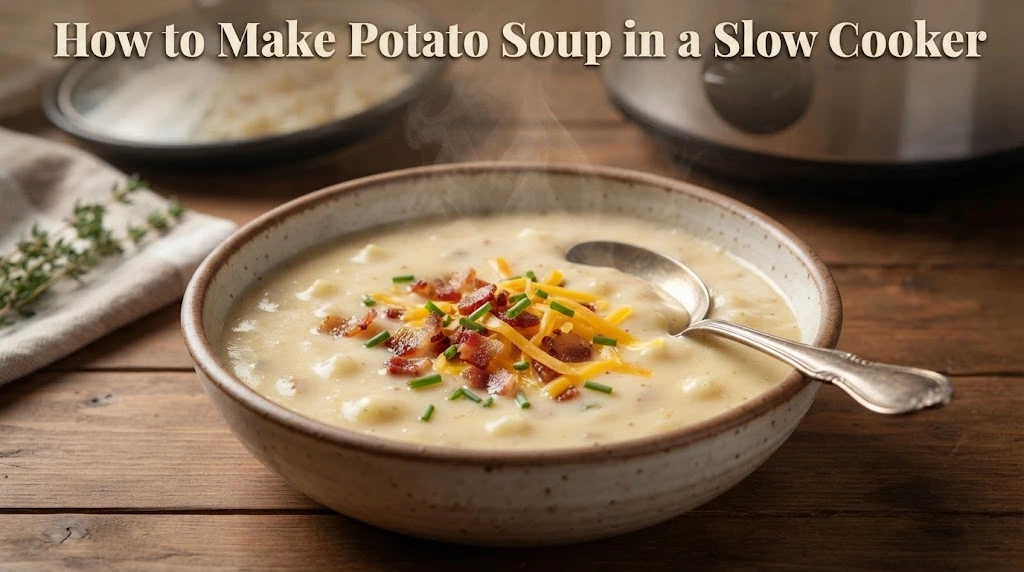
A slow cooker can make potato soup convenient, especially when you want dinner ready after a busy day.
Start by adding diced potatoes, onion, broth, garlic, thyme, salt, and pepper to the slow cooker.
Cook until the potatoes become tender. The exact time depends on your slow cooker and the size of your potato pieces, so use tenderness rather than the clock as your final test.
Do not add a large amount of dairy at the beginning unless your specific slow-cooker recipe calls for it. Dairy can behave poorly during long cooking.
Instead, add milk or cream near the end.
Once the potatoes are tender, mash some directly in the slow cooker. You can also use an immersion blender carefully if your slow cooker insert permits it.
Finish with milk, cream, cheese, or fresh herbs.
The slow-cooker method will not produce exactly the same texture as the stovetop recipe, but it is useful when convenience matters most.
For the best old-fashioned flavor, I still prefer the stovetop method because you can control the onions, thickness, seasoning, and potato texture more closely.
Frequently Asked Questions About Old Fashioned Potato Soup
What is the best potato for old fashioned potato soup?
Yukon Gold potatoes are an excellent all-purpose choice because they have a buttery flavor and work well in soups and stews. Russets also work well when you want a starchier soup that thickens more readily.
How do you thicken old fashioned potato soup?
The easiest method is to mash some of the cooked potatoes directly into the soup. You can also make a simple butter-and-flour roux, as many traditional recipes do, or use a small amount of cornstarch mixed with cold liquid.
Can I make potato soup without heavy cream?
Yes. Whole milk can produce a creamy, comforting soup when you combine it with potatoes and a small amount of flour or mashed potato. Heavy cream is optional rather than essential.
Why did my potato soup become gluey?
Overworking cooked potatoes can release too much starch and create a sticky texture. Use a potato masher for a rustic soup and blend only part of the pot when you want extra smoothness. Culinary guidance also warns against excessive blending of potato soup because it can produce an unpleasantly gluey result.
How long does homemade potato soup last in the refrigerator?
Properly stored leftovers generally keep for three to four days in the refrigerator. Refrigerate the soup within two hours, use covered containers, and reheat leftovers to 165°F.
Can I freeze old fashioned potato soup?
Yes, but the texture may change after freezing and thawing, especially when the soup contains a lot of dairy. For better results, thaw it in the refrigerator, reheat gently, and adjust the consistency with a little milk or broth.
What can I add to potato soup for more flavor?
Bacon, cheddar cheese, green onions, garlic, thyme, chives, sour cream, and fresh parsley all work well. Start with small amounts and taste as you go so the additions support rather than overpower the potato and onion base.
Conclusion
A great bowl of potato soup does not need to impress anyone with complicated ingredients. Its strength comes from simple food cooked with care.
The combination of tender potatoes, soft onion, butter, milk, seasoning, and a little patience creates the kind of meal people remember. You can keep it traditional, add bacon and cheese, make it vegetarian, or adjust the texture until it suits your family perfectly.
The most important lessons are simple: choose potatoes that match the texture you want, cut them evenly, simmer gently, season gradually, and do not overwork the cooked potatoes. Those small details make a noticeable difference.
And when the pot is finally ready, serve it hot with warm bread and a few favorite toppings. Sit down, take your time, and enjoy it.
Sometimes the most comforting meals are also the simplest ones.