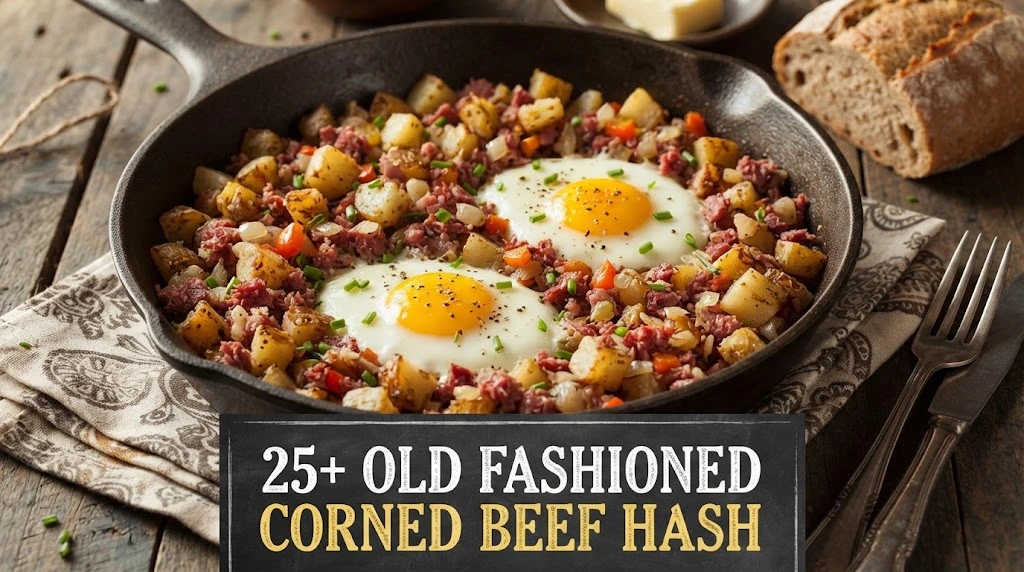
There is something wonderfully comforting about a skillet of corned beef hash sizzling on the stove. The potatoes turn golden at the edges, the onions become sweet and tender, and the salty pieces of corned beef develop those crisp little bits that make you want to scrape the bottom of the pan.
For many families, this is more than a quick breakfast. It is a practical way to turn leftover corned beef and potatoes into a meal that feels completely different from the night before. Add a fried egg on top, and suddenly a humble skillet becomes the kind of breakfast everyone gathers around.
This old fashioned corned beef hash keeps things simple and traditional. You do not need a long list of ingredients or complicated equipment. What matters most is how you cook the potatoes, when you add the corned beef, and how much you resist the urge to stir everything every few seconds.
What Makes Old Fashioned Corned Beef Hash So Good
Classic corned beef hash usually combines cooked corned beef with potatoes and onions, then cooks the mixture in a skillet until the edges become browned and crisp.
The recipe has practical roots. Leftover meat and potatoes are inexpensive, filling ingredients, and hash gives them a second life instead of sending them to waste.
The best version has contrast in every bite. You want crisp potato edges alongside soft centers, browned meat beside tender onions, and enough seasoning to make the flavors lively without overpowering the corned beef.
That texture is why the cooking method matters so much. If you constantly stir the skillet, the ingredients steam and break apart instead of developing a golden crust.
A heavy skillet, moderate heat, and patience will take you much further than adding lots of extra ingredients.
Ingredients for Traditional Corned Beef Hash
The ingredient list is intentionally short.
You will need
- 3 cups cooked corned beef, chopped into small pieces
- 3 cups cooked potatoes, diced
- 1 medium yellow onion, finely chopped
- 2 tablespoons butter
- 1 tablespoon neutral cooking oil
- 1/2 teaspoon black pepper
- 1/2 teaspoon garlic powder
- 1/4 teaspoon paprika
- 2 tablespoons chopped fresh parsley
- Salt, only if needed
- Fried or poached eggs, for serving
You can use leftover boiled potatoes, roasted potatoes, or potatoes cooked specifically for the hash.
Russet potatoes create wonderfully crisp edges because they contain plenty of starch. Yukon Gold potatoes have a naturally buttery flavor and hold their shape well.
Corned beef already contains salt, so taste before adding more salt. This small step prevents one of the most common problems with homemade hash.
Butter contributes flavor, while a little oil raises the skillet’s working temperature and helps prevent the butter from browning too quickly.
How to Make Old Fashioned Corned Beef Hash
If you are using leftover corned beef and potatoes, this recipe comes together quickly.
Start by cutting the cooked potatoes into roughly 1/2-inch cubes. Try to keep the pieces similar in size so they brown at about the same rate.
Chop the corned beef into small bite-sized pieces. You can shred some of it if you like a softer, more blended hash, but larger chopped pieces give you more noticeable bites of meat.
Heat a large heavy skillet over medium heat. Add the butter and oil.
Add the chopped onion and cook for about four to five minutes, stirring occasionally, until softened and lightly golden.
Add the diced potatoes in an even layer. Season with black pepper, garlic powder, and paprika.
Now comes the most important part: leave the potatoes alone for several minutes. Let the bottom surface brown before you stir.
After about four minutes, turn sections of the potatoes with a spatula. Continue cooking until several sides develop a golden crust.
Add the corned beef and gently fold it into the potatoes and onions.
Cook for another five to eight minutes, allowing some of the meat to brown. Avoid stirring constantly.
Taste the hash. Add salt only if it genuinely needs it.
Sprinkle with parsley and serve immediately, ideally with a fried egg on top.
The finished hash should have crisp edges, tender potatoes, browned corned beef, and onions that have almost melted into the mixture.
The Best Potatoes for Homemade Corned Beef Hash
Potatoes may look like a supporting ingredient, but they determine much of the final texture.
Russet potatoes are excellent if crispiness is your priority. Their higher starch content helps create browned, crunchy surfaces.
Yukon Gold potatoes are a great all-purpose choice. They have a creamy interior and hold together well during skillet cooking.
Red potatoes work too. Their firmer texture makes them less likely to fall apart, although they may not become quite as crisp as russets.
The easiest option is often leftover cooked potatoes. In fact, potatoes that have been chilled overnight can make excellent hash because their surface dries slightly in the refrigerator.
If you are cooking potatoes specifically for the recipe, boil them until just tender rather than completely soft. Overcooked potatoes can break apart when you toss them in the skillet.
Let the cooked potatoes cool before cutting them. Warm potatoes are more delicate and can turn your hash into something closer to mashed potatoes.
How to Get Crispy Corned Beef Hash
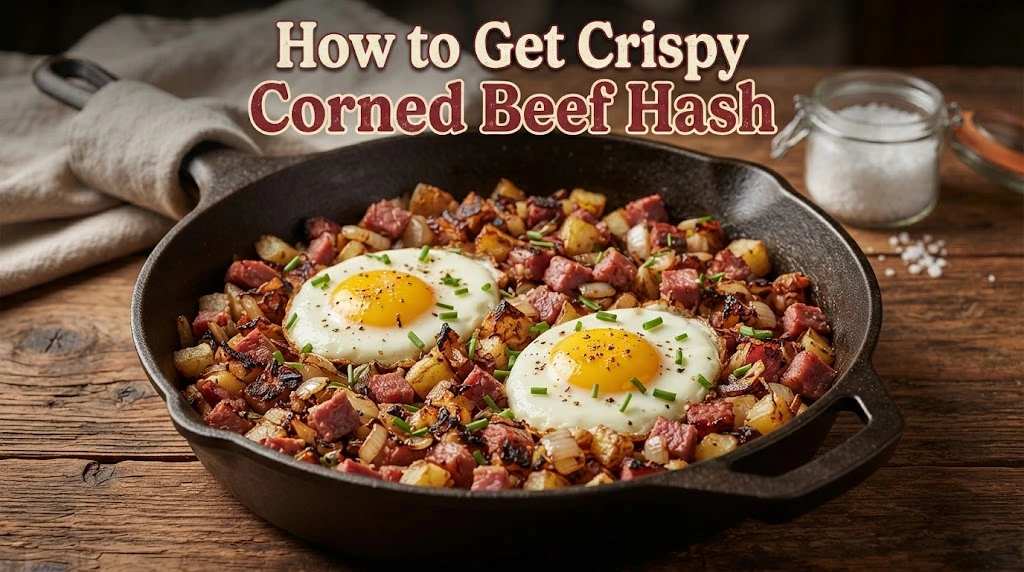
Crispy hash requires more patience than most people expect.
The first rule is do not overcrowd the skillet. If you pile too many potatoes into one pan, they release moisture and steam instead of browning.
Use a wide skillet so the potatoes can spread into a relatively even layer.
The second rule is to control the heat. Medium to medium-high heat usually works well, but the exact setting depends on your stove and skillet.
The third rule is to avoid unnecessary stirring.
Think of the potatoes as having a job: they need contact with the hot pan. Every time you move them, you interrupt that contact.
Give them several minutes to brown, then turn them.
If your hash still refuses to crisp, your potatoes may contain too much moisture. Spread them on a plate and let them cool and dry slightly before cooking.
A cast-iron skillet is particularly useful because it holds heat well and creates excellent browning.
However, you do not need cast iron. A wide stainless-steel or heavy nonstick skillet can also produce excellent results.
Should You Use Leftover Corned Beef?
Absolutely. Leftover corned beef is arguably the reason this dish exists in so many home kitchens.
After a traditional corned beef dinner, you may have a few thick slices left that are not quite enough for another full meal. Hash turns those leftovers into something satisfying.
Chilled corned beef is easy to chop and tends to hold its shape better than very warm meat.
You can cut it into cubes for hearty bites or chop it more finely if you prefer a classic diner-style texture.
If your corned beef has a thick layer of fat, trim some of it before chopping. A little fat adds flavor, but too much can make the hash greasy.
Leftover brisket that is not corned can also be used, although the result will no longer have the distinctive salty flavor associated with traditional corned beef hash.
If you are using canned corned beef, drain it well and adjust the seasoning carefully. Canned versions can be considerably saltier than homemade corned beef.
Why Onions Matter in Corned Beef Hash
Onions are not just filler. They balance the salty richness of the meat and add sweetness as they cook.
Yellow onions are the classic choice, but white onions work well too. Sweet onions can be used if you prefer a milder flavor.
Cut the onions fairly small so they soften at the same pace as the potatoes.
Cooking the onions before adding the potatoes gives them time to become tender and lightly caramelized. That creates much more flavor than simply throwing everything into the skillet at once.
If you like a stronger onion flavor, reserve a small amount and add it during the final few minutes of cooking. This gives you both sweet cooked onion and a little fresh bite.
For a traditional hash, however, keep the onion simple. The goal is to support the corned beef rather than turn the skillet into a vegetable medley.
Corned Beef Hash With Eggs
A fried egg is one of the best companions for corned beef hash.
The crisp edges of the potatoes and meat pair beautifully with a soft yolk. When you cut into the egg, the yolk becomes a rich sauce that coats the hash.
For sunny-side-up eggs, cook them gently until the whites are set while the yolks remain soft.
If you prefer over-easy eggs, flip them carefully and cook just long enough to set the surface.
You can also poach the eggs if you want a lighter presentation.
For a family breakfast, place the skillet in the center of the table and serve eggs separately so everyone can choose how they like them.
A little hot sauce is another excellent addition. Its acidity and heat cut through the richness of the corned beef.
You can also serve the hash with:
- Toasted sourdough
- English muffins
- Fresh fruit
- Sliced tomatoes
- Green salad for a lunch version
- Pickled vegetables
Keep the sides fresh and simple. The hash is already rich and savory.
How to Make Corned Beef Hash From Scratch
You do not have to wait for leftover corned beef to make this dish.
Start with a cooked corned beef brisket. You can prepare it by simmering the brisket gently with water and aromatics until tender.
Classic cooking aromatics may include onion, garlic, bay leaves, black peppercorns, and pickling spices.
Once the meat is tender, let it cool before chopping.
For the potatoes, boil them separately until just tender. Drain thoroughly and let them cool.
Then follow the skillet method: cook the onions first, brown the potatoes, add the corned beef, and finish everything together.
This approach gives you more control over the texture because you can decide exactly how tender the meat and potatoes become.
It also makes sense when you are already preparing corned beef for a larger dinner. Cook extra meat and potatoes intentionally, then plan hash for breakfast the following day.
That is a smart way to turn one cooking session into multiple meals.
Easy Variations on Traditional Corned Beef Hash
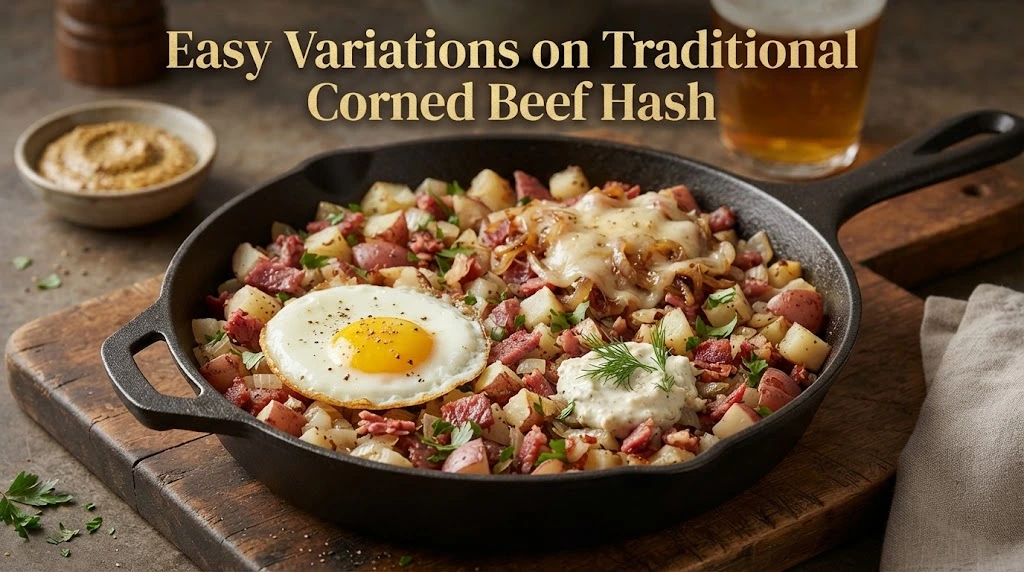
The traditional version is excellent, but hash is flexible enough to accommodate different tastes.
For a spicy hash, add diced jalapeño or a pinch of crushed red pepper.
For extra vegetables, add finely diced bell peppers after the onions soften.
A little cabbage makes sense if you have leftover cooked cabbage from a corned beef dinner. Add it near the end so it warms without becoming mushy.
Fresh herbs such as parsley, chives, or green onions can brighten the finished dish.
For a cheesy version, sprinkle shredded cheddar over the hash during the final minute and cover the skillet briefly until the cheese melts.
You can also add a spoonful of Dijon mustard to the finished hash. Start small because mustard has a strong flavor and the corned beef is already seasoned.
The best variations still respect the basic formula: potatoes + corned beef + onions + crisp browning.
If you add too many ingredients, you lose the simple character that makes old-fashioned hash so appealing.
Common Corned Beef Hash Mistakes
Hash is forgiving, but a few mistakes can make the finished skillet greasy, soggy, or bland.
Adding salt too early: Corned beef already contains plenty of salt. Taste at the end.
Using wet potatoes: Excess moisture prevents browning.
Overcrowding the skillet: Too much food creates steam.
Stirring constantly: The potatoes need uninterrupted contact with the pan to crisp.
Using extremely high heat: You may burn the outside before the inside becomes hot.
Cutting everything too large: Large chunks can make each bite feel disconnected.
Cutting everything too small: Very fine pieces can break apart and become mushy.
Adding the corned beef too early: If you cook it for the entire process, it can become dry and overly crisp.
Skipping the resting time for potatoes: Cold, firm potatoes usually handle skillet cooking better than freshly boiled ones.
One more mistake is trying to make every piece perfectly crisp. A great hash has texture variation. Some parts should be deeply browned, while others remain tender.
How to Make Corned Beef Hash in the Oven
The stovetop method gives you excellent control, but the oven can be useful when you are cooking for several people.
Heat your oven to about 425°F (220°C).
Spread the potatoes, onions, and chopped corned beef over a large rimmed baking sheet. Drizzle lightly with oil and season with pepper and paprika.
Make sure the ingredients form a fairly thin layer.
Roast for approximately 20 to 30 minutes, stirring once halfway through, until the potatoes become browned and crisp.
For even better texture, use cooked and chilled potatoes rather than raw potatoes. Raw potatoes take longer and can cook unevenly alongside the corned beef.
The oven method is particularly useful for brunch because you can cook a large batch without standing over the stove.
If you want eggs with it, cook them separately. Cracking eggs directly onto the baking sheet can work, but it makes timing and cleanup more complicated.
How to Store and Reheat Corned Beef Hash
Leftover hash should be cooled promptly and refrigerated in a covered container.
For the best texture, reheat it in a skillet rather than the microwave.
Add a small amount of butter or oil to a skillet over medium heat. Spread the cold hash into an even layer and let it heat without constant stirring.
This gives the potatoes another chance to crisp.
The microwave is faster, but it tends to soften the potatoes. If speed matters more than crispiness, microwave the portion until thoroughly hot.
You can also repurpose leftover hash in several ways.
Try it:
- Inside a breakfast burrito
- Beneath poached eggs
- Stuffed into a baked potato
- As a filling for an omelet
- Mixed into a breakfast casserole
If the hash seems dry when reheating, a small amount of butter can restore some richness.
Avoid repeatedly reheating the entire batch. Warm only what you plan to eat.
What to Serve With Old Fashioned Corned Beef Hash
Hash can easily stand on its own, but the right side dish makes the meal feel more balanced.
For breakfast, fresh fruit is a simple choice. Orange slices, berries, melon, or sliced apples add brightness to the plate.
Toast is another classic. A crisp slice of sourdough gives you something to dip into a runny egg yolk.
For brunch, consider:
- Fresh fruit salad
- Simple green salad
- Roasted tomatoes
- Sautéed spinach
- Pickled onions
- Toasted rye bread
Rye bread is particularly good because its slightly earthy flavor complements corned beef.
If you are serving the hash for lunch or dinner, a crisp salad with a tangy dressing can lighten the meal.
You do not need a heavy sauce. Corned beef already brings plenty of richness, so acidic or fresh sides usually work better.
Old Fashioned Corned Beef Hash Recipe Card
Here is the complete stovetop recipe in a convenient format.
Prep time: 10 minutes Cook time: 20–25 minutes Servings: 4
Ingredients
- 3 cups cooked corned beef, chopped
- 3 cups cooked potatoes, diced
- 1 medium yellow onion, chopped
- 2 tablespoons butter
- 1 tablespoon neutral oil
- 1/2 teaspoon black pepper
- 1/2 teaspoon garlic powder
- 1/4 teaspoon paprika
- 2 tablespoons fresh parsley
- Salt, only if needed
- 4 eggs, optional
Directions
- Cut the cooked potatoes and corned beef into bite-sized pieces.
- Heat a large skillet over medium heat.
- Add butter and oil.
- Cook the onion for four to five minutes until tender and lightly browned.
- Add the potatoes and spread them into an even layer.
- Season with pepper, garlic powder, and paprika.
- Cook without stirring for several minutes so the potatoes develop a crust.
- Turn the potatoes and continue cooking until several sides are golden.
- Add the chopped corned beef.
- Fold gently and cook for another five to eight minutes.
- Taste and add salt only if necessary.
- Sprinkle with fresh parsley.
- Serve with fried or poached eggs if desired.
For the crispiest result, use a wide skillet and avoid overcrowding it.
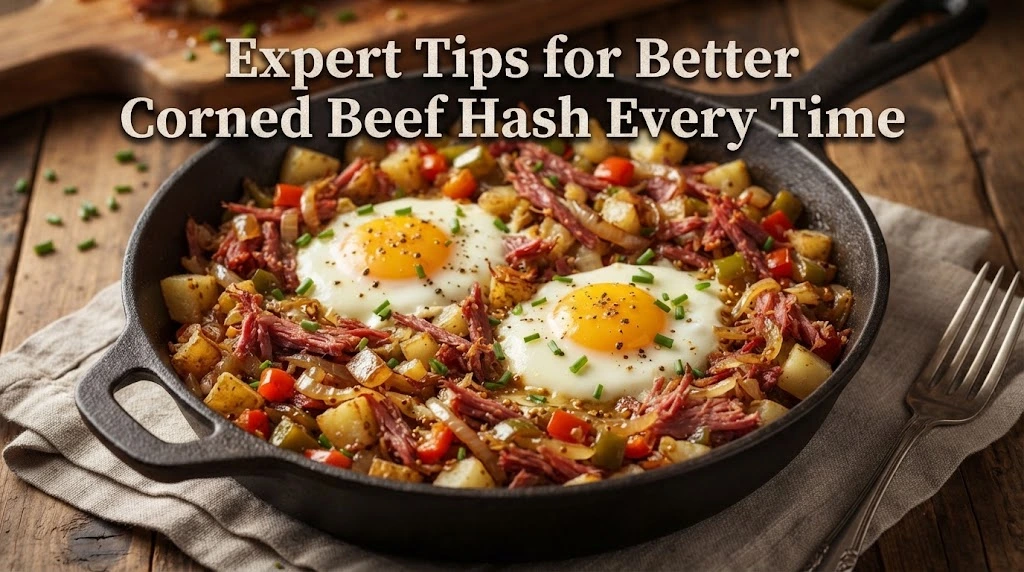
Expert Tips for Better Corned Beef Hash Every Time
The most useful trick is to plan for the hash before you finish the original corned beef dinner.
If you know you want hash the next day, save enough cooked potatoes and corned beef rather than hoping there will be leftovers.
Chill both ingredients overnight. Cold potatoes are firmer and easier to brown, while chilled corned beef is easier to cut cleanly.
Use a wide pan. Surface area matters more than most people realize because browning requires direct contact with the hot skillet.
Do not add a mountain of meat. A good ratio is roughly equal parts cooked potato and corned beef by volume. This gives the dish enough potato to crisp while keeping the corned beef prominent.
Season conservatively. Corned beef can vary significantly in saltiness, so the recipe should guide you rather than dictate the final amount.
For a diner-style finish, allow a few dark golden spots to develop. Those crisp pieces provide much more flavor than a uniformly pale skillet.
Finally, serve the hash immediately. Like many fried potato dishes, it is at its best while the outside is crisp and the inside remains tender.
Frequently Asked Questions About Corned Beef Hash
1. What is traditional corned beef hash made of?
Traditional corned beef hash combines cooked corned beef, potatoes, and onions. The ingredients cook together in a skillet until browned and crisp, often with eggs served alongside or on top.
2. Should I use raw or cooked potatoes for corned beef hash?
Cooked potatoes are generally the easiest choice, especially when using leftovers. They brown quickly and give you a tender interior with crisp edges. Boil them just until tender rather than cooking them until they fall apart.
3. How do I make canned corned beef hash crispy?
Spread the canned hash into a hot skillet in a relatively thin layer. Let it cook undisturbed until the bottom develops a crust, then turn it in sections rather than stirring constantly.
4. Why does my corned beef hash get soggy?
Excess moisture, an overcrowded skillet, and too much stirring are common causes. Use well-drained potatoes, a wide pan, and enough cooking time for moisture to evaporate before expecting the potatoes to crisp.
5. Can I make corned beef hash with leftover corned beef?
Yes. Leftover corned beef is ideal for hash. Chilled leftovers are particularly convenient because they are easy to chop and combine with cooked potatoes.
6. What potatoes are best for corned beef hash?
Russet potatoes are excellent for crispiness, while Yukon Gold potatoes provide a creamy center and good structure. Red potatoes also work well if you prefer a firmer texture.
7. Can I freeze homemade corned beef hash?
You can freeze it, but the potatoes may lose some of their original crisp texture after thawing. For the best results, refrigerate leftovers and reheat them in a skillet to restore some of the browning.
Conclusion
There is a reason old-fashioned corned beef hash has stayed popular for so long. It takes food that might otherwise become an afterthought and turns it into a meal people actually look forward to.
The secret is not complicated. Use cooked, fairly dry potatoes; brown them patiently; add the corned beef at the right time; and let the skillet do the work. Keep the seasoning simple and remember that corned beef already brings plenty of salt and flavor.
Serve the finished hash with a runny fried egg, a slice of toasted rye, and something fresh on the side. It is humble food, but when the potatoes are crisp and the corned beef is browned just right, humble food can be incredibly satisfying.
And if you are cooking corned beef for dinner, save the leftovers. Tomorrow’s breakfast might just be the best part.