Have you ever seen a beautiful dress online and thought, “I wish I could change the colour, neckline, or sleeves to make it truly mine?” You’re not alone. Fashion today is no longer about wearing what brands decide to sell. It’s about expressing your personality through clothing that feels unique.
The good news is that you don’t need to be a professional designer or spend hundreds of pounds to create something special. Thanks to modern design platforms, you can design your own dress online free, experiment with different styles, and visualise your ideas before making any purchase. Whether you’re dreaming of a wedding gown, prom dress, casual outfit, or evening wear, online dress design tools make creativity accessible to everyone.
I’ve explored many of these platforms over the years, and one thing has become clear: the best designs aren’t always the most complicated. Often, the dresses that stand out are the ones that reflect the wearer’s personality rather than the latest trend. With a little creativity and the right online tool, you can build a dress that’s stylish, comfortable, and unmistakably yours.
This guide covers everything you need to know—from choosing the right design platform to avoiding common mistakes—so you can create a dress you’ll genuinely love.
Why More People Want to Design Their Own Dresses Online
Fashion has changed dramatically over the last few years. Instead of buying the same dresses everyone else owns, many people now prefer personalised clothing that reflects their own style.
Online dress design tools have made this possible without requiring sewing skills or expensive software.
People choose custom dress design because they can:
- Create a one-of-a-kind outfit
- Experiment with colours before buying
- Choose fabrics that suit their needs
- Adjust necklines, sleeves, and dress lengths
- Save money by planning designs before ordering
- Express their creativity
Imagine planning your graduation dress. Instead of searching through hundreds of similar designs, you can simply customise every detail until it feels perfect. That’s one of the biggest advantages of online fashion design.
Another reason for the growing popularity is confidence. Wearing something you’ve helped design often feels more personal than buying an off-the-rack dress.
How Free Online Dress Design Tools Actually Work
Many beginners assume these platforms are difficult to use. In reality, most are designed for people with no fashion background.
A typical online dress designer lets you customise different parts of a digital dress model. You simply click through various options to build your design.
Most tools allow you to adjust:
- Dress silhouette
- Sleeve style
- Neckline
- Waistline
- Skirt length
- Fabric appearance
- Colours
- Patterns
- Decorative details
Some advanced platforms even provide a realistic 3D preview so you can rotate the dress and inspect every angle before saving or ordering.
Think of it as building a character in a video game—but instead of creating a person, you’re creating your dream outfit.
Many platforms also let you save multiple versions. This makes it easy to compare different ideas before deciding which one works best.
Benefits of Designing Your Own Dress Instead of Buying Ready-Made
Buying ready-made clothing is convenient, but it also comes with limitations. You’re restricted to whatever the retailer currently stocks.
Custom online design gives you far more flexibility.
Here are some major benefits.
Complete Creative Freedom
You choose every important detail rather than settling for what’s available.
Better Personal Style
Your wardrobe becomes more unique because your clothing reflects your own taste.
Improved Fit Planning
Although free design tools don’t always provide custom measurements, they help you visualise how different cuts and styles may complement your body shape.
Easier Event Planning
Special occasions often require unique outfits.
For example:
- Weddings
- Proms
- Birthday celebrations
- Engagement parties
- Cultural festivals
- Holiday gatherings
Instead of visiting multiple shops, you can build your ideal dress from home.
Greater Satisfaction
People often value clothing more when they’ve invested time in creating it.
That emotional connection can make even a simple dress feel much more special.
Best Types of Dresses You Can Create Online for Free
One of the biggest surprises for first-time users is the variety of dresses that can be customised online.
You’re not limited to formal gowns.
Many design platforms support different fashion categories.
Casual Dresses
Perfect for everyday wear.
You can experiment with:
- Cotton fabrics
- Floral prints
- Simple necklines
- Comfortable sleeves
Evening Dresses
Ideal for formal dinners and celebrations.
Popular choices include:
- Satin-inspired finishes
- Elegant long skirts
- Off-the-shoulder styles
- Side slits
Wedding Dresses
Many brides use online design tools to explore ideas before meeting a dressmaker.
You can test:
- Lace details
- Sleeve lengths
- Train styles
- Veils
- Necklines
Prom Dresses
Students often enjoy mixing bold colours with modern silhouettes to create something memorable.
Summer Dresses
Lightweight styles work well for holidays and warm weather.
Bright colours and breathable designs usually perform best.
Party Dresses
These often feature:
- Sparkle details
- Bold colours
- Shorter hemlines
- Statement sleeves
The flexibility of online dress design means you can switch between these categories within minutes and compare different looks before deciding.
How to Choose the Right Dress Style for Your Body Shape
One common mistake is copying someone else’s design without considering whether it suits your own proportions.
The best dress isn’t the trendiest one—it’s the one that complements your shape while making you feel comfortable and confident.
Here are some general styling tips.
Hourglass Shape
Focus on designs that highlight your natural waist.
Good choices include:
- Wrap dresses
- Belted styles
- Fit-and-flare silhouettes
Avoid hiding your waist beneath oversized cuts.
Pear Shape
Balance your proportions by drawing attention upward.
Consider:
- Statement sleeves
- Boat necklines
- Embellished shoulders
- A-line skirts
Apple Shape
Comfort and balance work best.
Look for:
- Empire waist dresses
- V-necklines
- Soft flowing fabrics
Avoid extremely tight waistlines if they feel restrictive.
Rectangle Shape
Create the illusion of curves by adding structure.
Good options include:
- Peplum details
- Ruffled skirts
- Defined waistlines
- Layered designs
Petite Frame
Keep designs simple and avoid overwhelming proportions.
A few styling tricks include:
- Shorter hemlines
- Vertical design lines
- Smaller prints
- Fitted silhouettes
Tall Frame
Longer dresses often look elegant, but don’t be afraid to experiment.
You can confidently wear:
- Maxi dresses
- Layered skirts
- Bold prints
- Dramatic sleeves
The most important rule is this: use body-shape advice as a guide, not a limitation. If a design makes you feel confident, that’s often more important than following every fashion “rule.”
Best Free Websites to Design Your Own Dress Online
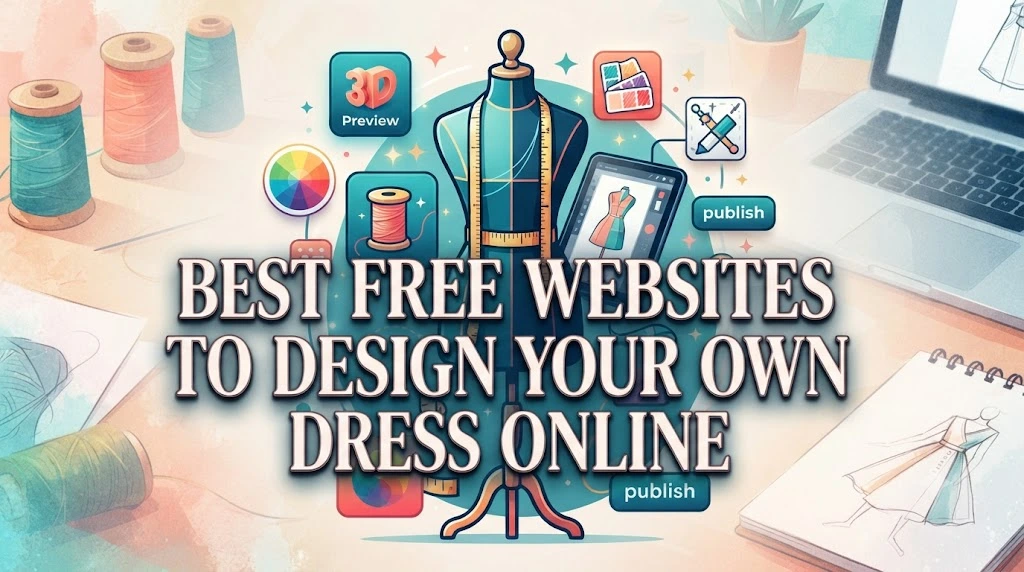
Finding the right platform can make the entire design process easier. Some websites focus on visual creativity, while others are built for people who eventually want their design manufactured. If your goal is to explore ideas without spending money, start with free tools that let you experiment as much as you like.
Here are some of the most useful options.
Canva
Many people know Canva for social media graphics, but it can also help you sketch dress concepts. You can combine templates, colours, patterns, and illustrations to create a fashion mood board before designing the actual garment.
Best for:
- Beginners
- Style inspiration
- Colour planning
- Fashion presentations
Fashion Design Software with Free Versions
Several online fashion platforms offer free plans that include basic dress templates and design features. These are great for learning how different silhouettes, sleeves, and fabrics work together.
Look for features like:
- Drag-and-drop editing
- 3D previews
- Fabric libraries
- Save and share options
Digital Drawing Apps
If you enjoy sketching, free browser-based drawing tools allow you to create original dress designs from scratch. Even simple digital sketches can help communicate your ideas to a tailor or dressmaker later.
AI Fashion Design Tools
New AI-powered fashion tools can generate dress concepts based on text prompts. For example, typing “emerald green satin evening dress with puff sleeves” may produce several unique design ideas within seconds.
These tools work best as inspiration rather than final designs because you’ll usually want to personalise the details yourself.
Expert Tip: Don’t rely on just one platform. I often combine a mood board, an AI concept, and a traditional dress designer to create a polished final idea.
How to Choose the Perfect Colours for Your Dress
Colour is usually the first thing people notice about a dress. Even the most beautiful design can feel ordinary if the colour doesn’t suit the wearer or the occasion.
Instead of choosing your favourite colour immediately, think about where you’ll wear the dress and how you want people to remember it.
Match the Occasion
Different events naturally suit different colour palettes.
For example:
- Weddings – Soft ivory, champagne, blush, or pastel shades
- Proms – Royal blue, burgundy, emerald green, black
- Summer holidays – Coral, turquoise, yellow, white
- Office events – Navy, charcoal, beige, forest green
- Evening parties – Deep red, black, metallic tones
Consider Your Skin Tone
A simple colour adjustment can make your complexion appear brighter.
As a general guide:
Warm undertones often suit:
- Olive green
- Mustard
- Peach
- Cream
- Rust
Cool undertones often look great in:
- Sapphire blue
- Lavender
- Emerald
- Grey
- Silver
Neutral undertones have the widest flexibility and can usually wear both warm and cool shades comfortably.
Use Colour Psychology
Colours also communicate emotions.
- Blue suggests confidence.
- Green feels fresh and balanced.
- Black looks sophisticated.
- White represents simplicity.
- Red creates a bold statement.
- Pink often feels playful or romantic.
When designing your own dress online for free, experiment with several colour combinations before choosing your favourite. Sometimes a shade you never considered ends up looking the most elegant.
Common Mistake: Choosing colours because they’re trending rather than because they suit your personal style. Fashion trends come and go, but a colour that complements you always looks timeless.
Choosing Fabrics That Match Your Design
A dress isn’t only about appearance. The fabric changes how it moves, fits, and feels throughout the day.
Many beginners create a beautiful design without thinking about whether the chosen material can actually achieve that look.
Here are some popular options.
Cotton
Perfect for everyday dresses.
Advantages include:
- Breathable
- Comfortable
- Easy to maintain
- Great for warm weather
Linen
Ideal for relaxed summer outfits.
It feels cool and lightweight, although it wrinkles more easily than cotton.
Satin
A favourite for formal occasions.
Its smooth surface reflects light beautifully, making evening dresses appear more luxurious.
Chiffon
Light, soft, and flowing.
Chiffon works especially well for layered skirts and elegant sleeves.
Velvet
Velvet creates a rich, premium appearance that’s perfect for colder seasons and festive occasions.
Lace
Often used as an accent rather than the main fabric.
It adds texture and elegance without overwhelming the design.
Jersey Knit
Excellent for comfortable dresses that need flexibility.
This fabric stretches naturally, making it popular for casual and body-hugging styles.
Expert Styling Advice: Always imagine how the fabric behaves in real life. A structured dress design may lose its shape if made from a soft material, while a flowing design may feel stiff if paired with a heavy fabric.
Common Mistakes to Avoid When Designing a Dress Online
Everyone makes mistakes during their first few designs. The advantage of free online tools is that you can correct those mistakes before spending any money.
Here are the most common ones I see.
Adding Too Many Details
It’s tempting to include every trend in one dress.
For example:
- Puff sleeves
- Sequins
- Large bows
- Bright prints
- High slits
Individually, these features can look beautiful. Combined together, they often compete for attention.
Choose one statement feature and let it shine.
Ignoring Comfort
A dress should feel as good as it looks.
Ask yourself:
- Can I sit comfortably?
- Can I walk easily?
- Will I wear this for several hours?
Beautiful fashion should never come at the expense of comfort.
Forgetting Balance
If the neckline is dramatic, consider keeping the skirt simple.
If the skirt has bold layers, a cleaner bodice often creates better harmony.
Balance helps every part of the dress work together.
Copying Every Trend
Social media changes quickly.
Instead of copying someone else’s outfit exactly, adapt trends to fit your own personality.
That’s how timeless style develops.
Skipping the Preview
Always zoom in and examine your design carefully.
Small issues—such as mismatched colours or awkward proportions—are much easier to spot before saving the final version.
How Beginners Can Create a Professional-Looking Dress Design
You don’t need a fashion degree to create something beautiful. In fact, many impressive dress concepts start with a simple idea and careful refinement.
Here’s a process that works well for beginners.
Start With Inspiration
Collect images that reflect your preferred style.
Look for inspiration in:
- Nature
- Architecture
- Vintage fashion
- Celebrity red carpets
- Cultural clothing
- Seasonal colour palettes
Instead of copying one outfit, combine elements from several sources.
Keep the Design Simple
Professional designers often remove unnecessary details rather than adding more.
A clean, elegant dress usually has greater impact than one overloaded with decorations.
Focus on One Feature
Ask yourself:
“What should people notice first?”
It might be:
- A unique neckline
- Statement sleeves
- An elegant silhouette
- A striking colour
- An interesting fabric
Everything else should support that feature instead of competing with it.
Review the Design Later
One trick I’ve learned is to leave the design for a day before making the final decision.
When you return with fresh eyes, you’ll often notice improvements you missed before.
Ask for Honest Feedback
Share your design with someone whose opinion you trust.
Sometimes a friend notices practical details—like sleeve length or colour balance—that you may overlook.
Expert Tip: The most memorable dresses are rarely the most complicated. They’re the ones where every element feels intentional, balanced, and true to the wearer’s personality.
How to Save, Share, and Improve Your Dress Design
Creating your first design is exciting, but don’t rush to call it finished. Professional designers rarely settle on the first version. Instead, they refine their ideas through feedback and small adjustments.
Most free online dress design tools allow you to save multiple versions of the same project. Take advantage of this feature. You might create one version with long sleeves, another with a sleeveless design, and a third with a different colour palette. Comparing them side by side often makes the best choice obvious.
When sharing your design, ask for specific feedback instead of a simple “Do you like it?” Questions such as these usually produce more helpful answers:
- Does the colour suit the style?
- Does the neckline look balanced?
- Is the skirt length appropriate for the occasion?
- Which version feels the most elegant?
- Would you change anything?
Don’t feel pressured to accept every suggestion. Fashion is personal, and your design should still reflect your own taste.
Expert Tip: Save your final design in high resolution if possible. A clear image is much easier to share with a tailor, dressmaker, or clothing manufacturer.
Can You Turn Your Online Dress Design Into a Real Dress?
One of the biggest questions people ask is whether an online design can actually become a wearable dress. In many cases, the answer is yes.
Some design platforms partner with manufacturers that can produce custom garments directly from your digital design. Others simply help you visualise your ideas before you work with a local tailor or independent dressmaker.
If you’re planning to have your dress made, prepare more than just the final image. Include details such as:
- Preferred fabric
- Colour codes
- Dress length
- Sleeve style
- Neckline shape
- Decorative elements
- Approximate measurements
The more information you provide, the easier it becomes for a professional to recreate your vision accurately.
If you’re working with a tailor, don’t hesitate to ask questions. An experienced dressmaker may recommend small adjustments that improve comfort, durability, or the way the fabric drapes.
Recommendation: If your design includes complex details like heavy embroidery or layered skirts, request a sample or fitting before approving the finished dress.
Fashion Trends That Can Inspire Your Custom Dress
Trends can spark creativity, but they shouldn’t control your design. The goal is to create something you’ll still love long after the latest fashion craze fades.
Here are several timeless trends that continue to influence modern dress design.
Minimalist Elegance
Clean lines, simple silhouettes, and neutral colours never go out of style. This approach works well for formal events, office wear, and everyday fashion.
Romantic Details
Soft ruffles, lace accents, delicate floral prints, and flowing fabrics create a graceful, feminine look without feeling overly dramatic.
Statement Sleeves
Balloon sleeves, bishop sleeves, and puff sleeves remain popular because they add personality without changing the overall structure of the dress.
Sustainable Fashion
Many people now choose eco-friendly fabrics and versatile designs they can wear for years instead of following short-lived trends.
Vintage Inspiration
Classic styles from the 1950s, 1970s, and 1990s continue to inspire modern fashion. A vintage neckline or silhouette can give your dress timeless charm while still feeling fresh.
Expert Styling Advice: Instead of copying an entire trend, borrow one or two elements and combine them with your own ideas. This creates a design that feels fashionable without looking identical to everyone else’s.
Why Personal Style Matters More Than Fashion Rules
Fashion advice is everywhere. One expert says never mix certain colours, while another insists everyone needs a particular silhouette. The truth is much simpler: confidence is the best accessory.
When you design your own dress online free, you have the opportunity to create something that represents your personality instead of someone else’s opinion.
Think about the clothes you wear most often. Chances are they aren’t your most expensive outfits—they’re the ones that make you feel comfortable, confident, and authentic.
Developing your personal style takes time. As you experiment with different designs, you’ll start to notice patterns.
You may discover that you naturally prefer:
- Soft pastel colours
- Bold monochrome outfits
- Vintage-inspired cuts
- Modern minimalist styles
- Flowing maxi dresses
- Structured silhouettes
There’s no right or wrong answer. The goal is to build a wardrobe that feels like an extension of who you are.
Common Mistake: Designing a dress purely to impress other people. Trends change quickly, but clothing that reflects your personality remains enjoyable to wear for years.
Final Tips Before Creating Your First Online Dress
Before opening a design platform, keep these practical tips in mind.
Start with a clear purpose. Are you designing for a wedding, holiday, graduation, or everyday wear? Your goal will influence every design decision.
Choose one focal point. Let one feature stand out, whether it’s the neckline, sleeves, colour, or fabric.
Think about comfort. A beautiful dress should allow you to move, sit, and enjoy your day without constant adjustments.
Experiment freely. One of the biggest advantages of free online tools is that mistakes cost nothing. Try bold colours, different silhouettes, and unexpected combinations—you may surprise yourself.
Stay true to your style. Inspiration is valuable, but originality is what makes a custom dress memorable.
Most importantly, enjoy the creative process. Designing clothing isn’t just about fashion; it’s about expressing your ideas and building something that’s uniquely yours.
Conclusion
Creating your own clothing has never been easier. Whether you’re planning a wedding gown, a stylish party dress, or a simple everyday outfit, today’s free online design tools give you the freedom to explore ideas without any financial commitment.
The secret to a great design isn’t using every available feature—it’s making thoughtful choices that work together. Select colours that suit your complexion, fabrics that match the occasion, and details that reflect your personality. By focusing on balance, comfort, and authenticity, you can create a dress that looks stylish and feels genuinely personal.
Remember, every designer starts with a blank canvas. Your first design doesn’t have to be perfect. Each version teaches you something new about fashion, creativity, and your own sense of style. The more you experiment, the more confident you’ll become, and before long, you’ll be creating dresses that are not only beautiful but uniquely yours.
Frequently Asked Questions
1. Can I really design my own dress online for free?
Yes. Many online platforms offer free tools that let you customise dress styles, colours, necklines, sleeves, and other design elements. Some also provide premium features or manufacturing services, but you can often create and save designs without paying.
2. Do I need fashion design experience?
No. Most online dress designers are built for beginners and use drag-and-drop features, templates, and visual previews, making them easy to use even if you’ve never designed clothing before.
3. Can I order the dress after designing it?
Some platforms allow you to purchase your custom design directly, while others let you download your concept and share it with a tailor or clothing manufacturer for production.
4. Which dress styles are easiest for beginners to design?
Simple A-line dresses, wrap dresses, shift dresses, and fit-and-flare styles are excellent starting points because they are versatile, flattering, and easier to customise.
5. How do I choose the best colours for my dress?
Consider the occasion, your skin tone, and the mood you want to create. Testing several colour combinations in an online design tool can help you find the option that suits you best.
6. What should I avoid when designing a custom dress?
Avoid overcrowding your design with too many decorative elements, ignoring comfort, selecting unsuitable fabrics, or following trends without considering your personal style.
7. Is designing a dress online better than buying one from a shop?
It depends on your needs. If you want something unique that reflects your personality, designing your own dress offers far more creative freedom. Ready-made dresses are convenient, but custom designs allow you to create an outfit that’s truly one of a kind.