
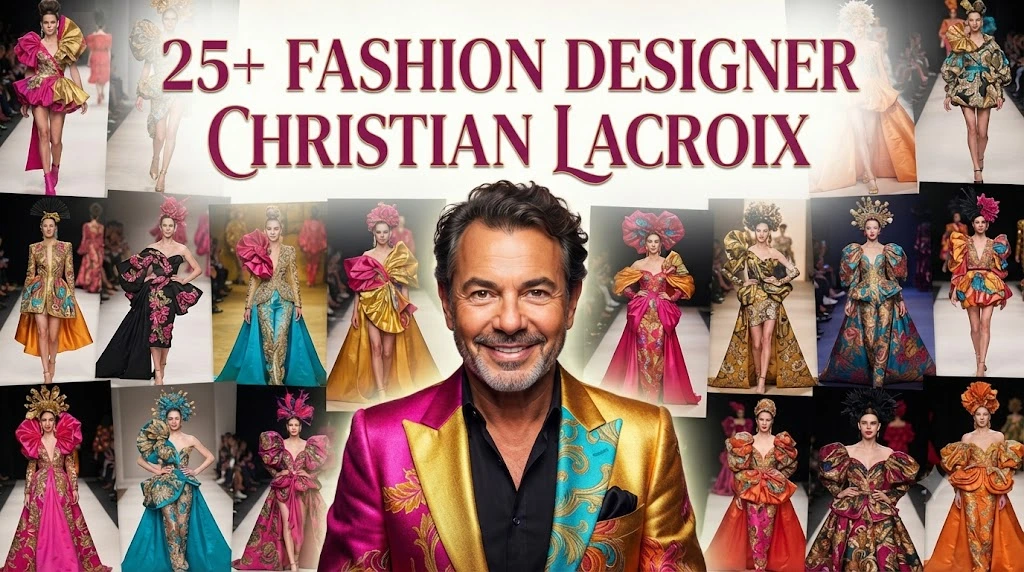
Fashion has always been more than clothing. It is a way to express emotions, tell stories, and preserve moments in time. Some designers create garments that simply look beautiful, while others create pieces that feel like art. Christian Lacroix belongs to the second group. His designs brought colour, drama, history, and imagination together in a way that changed how people viewed luxury fashion.
When many people think about French fashion, they imagine elegance, tradition, and careful craftsmanship. Christian Lacroix added something different: excitement. His collections often felt like a celebration, combining rich fabrics, bold patterns, unexpected colours, and references from different cultures and historical periods.
Understanding his journey is not only useful for fashion lovers but also for students, stylists, and aspiring designers. His career teaches an important lesson: creativity does not come from following every trend. It comes from developing a strong personal vision and having the courage to express it.
This guide explores the life, design philosophy, career achievements, and lasting influence of fashion designer christian lacroix. You will discover what made his work unique, why his couture creations remain memorable, and what modern designers can learn from his approach.
The Early Life and Background of Christian Lacroix
Christian Lacroix was born on 16 May 1951 in Arles, a historic city in the south of France. Growing up in Provence had a major influence on his creative imagination. The region is known for its colourful landscapes, traditional clothing, festivals, architecture, and artistic heritage.
From an early age, Lacroix developed a strong interest in art, history, and costume. Instead of seeing clothing as something purely practical, he viewed it as a connection between people, culture, and storytelling.
His education also reflected his broad creative interests. He studied art history at the University of Montpellier and later continued his studies at the Sorbonne in Paris. He originally considered a career related to museum work, particularly costume history, rather than fashion design.
This background became one of his greatest strengths. While some designers focus mainly on current trends, Lacroix looked deeply into the past for inspiration.
He studied:
- Historical costumes
- Regional traditions
- Theatre clothing
- Decorative arts
- Cultural symbols
- Traditional craftsmanship
These influences later appeared throughout his fashion collections.
Expert Fashion Insight
Many successful designers develop their unique style by combining different fields. Lacroix’s knowledge of art history helped him create garments that felt connected to stories and traditions rather than temporary fashion movements.
How Christian Lacroix Entered the Fashion Industry
Christian Lacroix did not begin his career by immediately creating his own fashion house. Like many influential designers, he first gained experience by working with established names in the industry.
After moving to Paris, Lacroix entered the fashion world through design roles at respected French fashion houses. His early professional experiences helped him understand the technical side of luxury clothing, including:
- Couture construction
- Fabric selection
- Collection development
- Client expectations
- Brand identity
A major turning point came when he joined Hermès and later worked at Jean Patou. At Jean Patou, he became artistic director and gained recognition for his fresh approach to haute couture.
His work attracted attention because it looked different from the minimal and restrained styles that were popular at the time. Lacroix introduced a sense of theatre and celebration into couture.
In 1987, he launched his own fashion house, Christian Lacroix. This marked the beginning of one of the most visually distinctive chapters in modern French fashion.
Why His Early Career Matters
Lacroix’s journey shows that fashion success rarely happens instantly. His understanding of history, craftsmanship, and luxury developed over years of learning and professional experience.
For young designers, his career offers valuable advice:
- Study different creative fields.
- Learn from established professionals.
- Develop technical skills before building a brand.
- Create a design identity that feels personal.
The Signature Style of Christian Lacroix
The style of Christian Lacroix is instantly recognisable because it combines drama, romance, and cultural influences. His designs often rejected simplicity in favour of rich visual storytelling.
While some designers built their reputations around minimalism, Lacroix embraced abundance. He believed clothing could create emotion and transport people into another world.
Some defining elements of his style include:
- Vibrant colours
- Luxurious fabrics
- Intricate embroidery
- Historical references
- Bold patterns
- Romantic silhouettes
- Unexpected combinations
His collections often featured dramatic contrasts. A delicate fabric might appear alongside a strong texture, or a traditional shape might receive a modern interpretation.
Colour as a Creative Language
Colour was one of Lacroix’s strongest design tools. He used shades that many designers avoided combining, creating energetic and memorable looks.
Examples of his colour approach include:
- Deep jewel tones
- Bright Mediterranean shades
- Gold accents
- Rich reds
- Unexpected colour pairings
His use of colour reflected his southern French roots and his love of artistic expression.
Fabrics and Craftsmanship
Lacroix had a deep appreciation for materials. He often worked with luxurious textiles such as:
- Silk
- Velvet
- Brocade
- Lace
- Embroidered fabrics
- Rich decorative materials
For him, fabric was not just a material. It was part of the emotional experience of a garment.
A beautifully constructed piece could communicate elegance, confidence, celebration, or mystery before anyone even noticed the details.
Styling Lesson From Lacroix
Modern stylists can learn from his approach by understanding that memorable fashion does not always come from adding more pieces. It comes from creating harmony between colour, texture, shape, and personality.
A simple outfit can become powerful when each element has a purpose.
Christian Lacroix and the World of Haute Couture
Haute couture represents the highest level of fashion craftsmanship. It involves custom-made garments created with exceptional attention to detail, often requiring many hours of skilled handwork.
Christian Lacroix became one of the most recognised names in haute couture because he brought imagination and theatrical energy to the tradition.
His couture collections were known for creating emotional experiences rather than simply presenting clothing. Runway shows often felt like performances, with carefully chosen music, styling, and presentation.
What Made His Couture Different?
Many couture designers focus on perfection and refinement. Lacroix added another layer: fantasy.
His designs often explored themes such as:
- Historical romance
- Travel and cultural influences
- Theatre
- Celebration
- Art movements
A Lacroix garment could feel like it belonged in a painting, a museum, or a grand performance.
The Importance of Craftsmanship
Behind the dramatic appearance was serious technical skill.
Creating couture requires knowledge of:
- Pattern development
- Hand sewing
- Embroidery
- Draping techniques
- Fabric manipulation
- Tailoring
Lacroix respected traditional craftsmanship while using it to create something modern and expressive.
Common Misunderstanding About Couture
Some people think couture is only about expensive clothing. In reality, couture represents creativity, craftsmanship, and the preservation of specialised fashion skills.
Designers like Lacroix helped keep these traditions alive while showing that they could still feel exciting and relevant.
Expert Advice for Aspiring Designers
Study couture not only for inspiration but also for discipline. The attention to detail, patience, and craftsmanship behind couture pieces can improve every area of fashion design, even everyday clothing.
Christian Lacroix’s Most Famous Collections and Designs
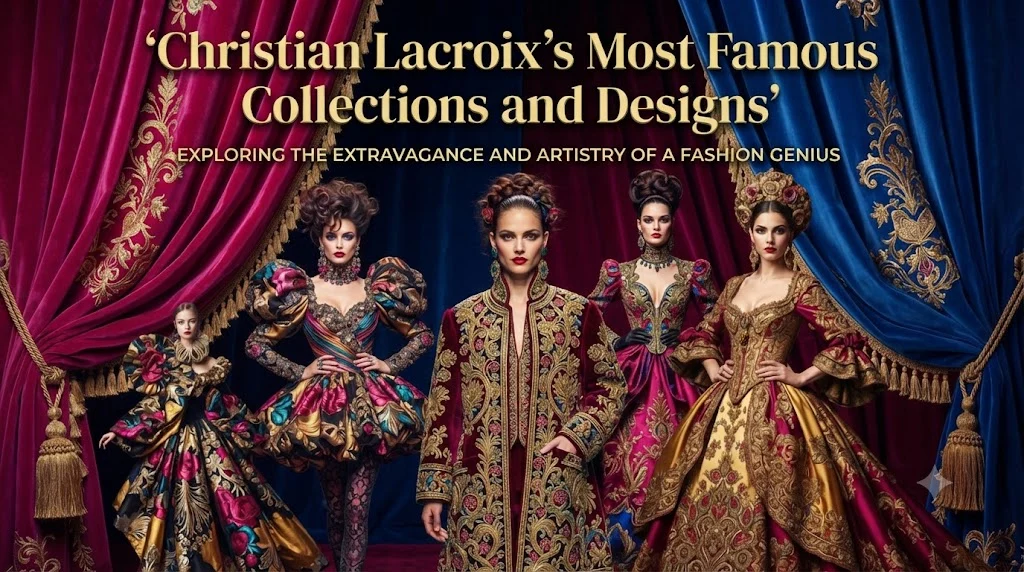
Throughout his career, Christian Lacroix created collections that challenged traditional ideas of luxury fashion. Instead of focusing only on clean lines and classic elegance, he introduced energy, colour, and storytelling into haute couture.
His designs often looked like they came from another world. A single outfit could combine historical references, regional influences, and modern craftsmanship. This ability to mix different inspirations became one of his strongest creative signatures.
For fashion students and designers, studying Lacroix’s collections provides an important lesson: a memorable design often comes from combining unexpected ideas in a thoughtful way.
The Birth of the Christian Lacroix Fashion House
When Christian Lacroix launched his own fashion house in 1987, the fashion world quickly noticed his unusual approach. At the time, many luxury designers were moving toward simpler and more restrained styles. Lacroix offered something completely different.
His first haute couture collection introduced:
- Dramatic silhouettes
- Colourful combinations
- Rich textiles
- Historical influences
- Artistic presentation
The collection gained international attention and helped establish him as one of the most exciting designers of his generation.
His work reminded audiences that fashion could be joyful, expressive, and imaginative.
The Famous “Pouf” Skirt
One of Lacroix’s most recognised creations was the pouf skirt, which became a symbol of his dramatic couture style.
The design featured exaggerated volume and a playful shape inspired by historical clothing. It reflected Lacroix’s interest in combining past fashion traditions with modern creativity.
The pouf skirt demonstrated several important design principles:
- Shape can create emotion.
- Volume can change how a person moves.
- Historical references can feel modern when reinterpreted.
For aspiring designers, this piece is a reminder that originality often comes from looking at familiar ideas from a fresh perspective.
Bridal Couture and Romantic Designs
Christian Lacroix became especially admired for his romantic bridal creations. His wedding gowns often combined traditional elegance with unexpected details.
Instead of creating simple white dresses, he explored:
- Colour accents
- Embroidery
- Decorative fabrics
- Dramatic trains
- Artistic silhouettes
His bridal designs showed that a wedding gown could express personality rather than simply follow tradition.
A bride wearing a Lacroix-inspired design would not only look elegant but would also communicate individuality and confidence.
Theatre, Costume, and Performance Influence
Lacroix’s connection with costume design strongly influenced his fashion work. His understanding of theatre helped him create clothing with movement, drama, and character.
He designed costumes for various artistic productions, including theatre and opera projects. These experiences allowed him to explore how clothing affects storytelling.
This influence appeared in his fashion collections through:
- Dramatic shapes
- Historical references
- Decorative details
- Emotional presentation
Expert Fashion Insight
Great designers often think beyond clothing. They consider the person wearing the garment, the environment around it, and the emotion it creates.
Lacroix understood that fashion could communicate identity before a person even spoke.
The Influence of Christian Lacroix on Modern Fashion
Christian Lacroix’s impact extends beyond the collections he created. His approach changed how many designers think about colour, storytelling, and the relationship between fashion and culture.
Although fashion trends continue to change, his creative principles remain relevant today.
Bringing Emotion Back Into Fashion
One of Lacroix’s biggest contributions was proving that luxury fashion could be emotional and expressive.
During periods when minimalism dominated the industry, he showed that designers could embrace:
- Beauty
- Celebration
- Fantasy
- Cultural inspiration
- Artistic freedom
His work encouraged designers to create clothing that makes people feel something.
Inspiring Maximalist Fashion
Modern maximalist fashion owes much to designers like Lacroix. His fearless use of colour, pattern, and decoration influenced later generations of creatives.
Today’s designers who experiment with:
- Bold prints
- Layered textures
- Statement pieces
- Vintage-inspired silhouettes
often follow a creative path that Lacroix helped popularise.
Supporting Individual Style
Lacroix’s designs were never about making everyone look the same. Instead, they celebrated personality.
This idea remains important for modern fashion consumers. Personal style has become increasingly valuable as people move away from copying trends and focus on expressing who they are.
Influence on Fashion Education
Fashion students often study Lacroix because his work demonstrates important design concepts:
- Colour theory
- Historical research
- Textile exploration
- Creative confidence
- Visual storytelling
His career shows students that technical skill and imagination must work together.
What Modern Designers Can Learn
A designer inspired by Lacroix should remember:
- Research deeply before creating.
- Respect craftsmanship.
- Develop a unique point of view.
- Use inspiration without copying.
- Design with emotion.
These principles apply whether someone creates luxury couture or everyday clothing.
Christian Lacroix’s Approach to Colour, Pattern, and Styling
Colour was not just a decorative element in Christian Lacroix’s work. It was a powerful storytelling tool. He used colour to create atmosphere, highlight craftsmanship, and bring garments to life.
Many designers use colour carefully to create harmony. Lacroix often used colour to create excitement.
His Relationship With Colour
Lacroix was influenced by the colours of southern France, especially the landscapes and traditions of Provence.
His palettes often included:
- Mediterranean blues
- Rich oranges
- Deep purples
- Vibrant reds
- Golden tones
- Earth-inspired shades
These combinations created warmth and energy.
Mixing Unexpected Colours
One reason Lacroix’s work stood out was his confidence in combining colours that many designers considered difficult.
For example, he might combine:
- Jewel tones with soft pastels
- Bright colours with neutral shades
- Warm and cool tones together
The result was often surprising but balanced.
Pattern as Storytelling
Patterns played an important role in his designs. He used prints and decorative elements to add cultural and artistic references.
Patterns could suggest:
- Travel
- History
- Nature
- Tradition
- Celebration
Rather than adding decoration randomly, Lacroix used patterns to strengthen the story behind a collection.
Styling Lessons From Lacroix
Modern stylists can apply his approach in everyday fashion.
For example:
Instead of wearing a completely neutral outfit, add one unexpected element:
- A colourful scarf
- A patterned jacket
- A unique accessory
- A textured handbag
The goal is not to wear everything at once. The goal is to create a balanced look with personality.
Common Styling Mistake
Many people believe bold fashion requires many statement pieces. Lacroix’s work teaches the opposite. A strong focal point often creates more impact than a crowded outfit.
Lessons Fashion Students Can Learn From Christian Lacroix
Christian Lacroix’s career offers valuable lessons for anyone interested in fashion design. His success did not come only from creativity. It came from research, discipline, and a clear understanding of his artistic identity.
Develop Your Own Creative Voice
One of the most important lessons from Lacroix is the value of originality.
Many new designers make the mistake of chasing popular trends. While understanding trends is useful, copying them prevents the development of a personal style.
A stronger approach is:
- Study fashion history.
- Explore different cultures.
- Experiment with materials.
- Question traditional ideas.
- Create designs that reflect your perspective.
Learn the History Behind Fashion
Lacroix’s background in art history influenced his designs significantly.
Fashion students should study:
- Historical garments
- Different cultures
- Art movements
- Traditional crafts
- Architecture
- Theatre design
These subjects provide endless creative inspiration.
Respect Craftsmanship
Modern technology has changed fashion, but craftsmanship remains essential.
Understanding how garments are made helps designers create realistic and functional designs.
Important skills include:
- Sewing knowledge
- Fabric understanding
- Pattern development
- Construction techniques
A creative idea becomes much stronger when supported by technical knowledge.
Be Brave With Creativity
Lacroix never designed to simply blend in. He created work that had personality.
For emerging designers, this means accepting that not everyone will immediately understand every idea.
Creative confidence grows when you:
- Experiment often.
- Accept mistakes.
- Learn from feedback.
- Continue developing your style.
Expert Advice
A strong designer is not someone who creates something completely new every day. A strong designer is someone who learns how to see ordinary things differently and transform them into meaningful ideas.
Christian Lacroix’s Career Achievements and Awards
Christian Lacroix’s career represents one of the most creative chapters in modern French fashion. His achievements were not only measured by commercial success but also by his ability to bring imagination and artistry back into luxury fashion.
From launching his own couture house to designing for major cultural projects, Lacroix built a reputation as a designer who valued creativity over following industry formulas.
His career demonstrates an important truth about fashion: lasting influence comes from creating a unique vision that people remember.
Recognition in the Fashion World
Soon after launching his own fashion house in 1987, Lacroix received significant attention from the international fashion community.
His early success came from his ability to offer something different. At a time when many designers were exploring simplicity and minimalism, Lacroix introduced a world filled with:
- Rich colours
- Historical references
- Decorative craftsmanship
- Romantic silhouettes
- Dramatic presentations
His work quickly positioned him among the leading voices in French haute couture.
The CFDA International Award
One of Lacroix’s major recognitions was receiving the International Award from the Council of Fashion Designers of America (CFDA) in 1986.
This honour recognised his growing influence beyond France and highlighted his contribution to international fashion.
Awards like this helped establish Lacroix as a designer whose creativity appealed to audiences worldwide.
His Role at Jean Patou
Before creating his own fashion house, Lacroix became artistic director at Jean Patou.
This position was a major milestone because it allowed him to develop his creative language on a larger stage.
During this period, he:
- Revitalised the brand’s image
- Introduced a more expressive aesthetic
- Developed his approach to couture
- Gained recognition from fashion critics
His work at Jean Patou became an important foundation for his later success.
Expanding Beyond Fashion Design
Christian Lacroix did not limit himself to clothing. His creative interests extended into many areas, including:
- Costume design
- Interior design
- Hospitality projects
- Theatre productions
- Art collaborations
This reflects his belief that design is connected across different creative fields.
A dress, a room, or a stage costume can all tell a story through colour, shape, and atmosphere.
Expert Fashion Insight
Modern designers can learn from Lacroix’s career by developing skills beyond clothing. Understanding art, architecture, history, and culture can make a designer’s creative perspective much stronger.
The Relationship Between Christian Lacroix and French Fashion History
French fashion has a long tradition of craftsmanship, elegance, and innovation. Designers such as Lacroix became important because they respected this heritage while introducing a fresh creative perspective.
To understand his influence, it helps to see how his work connected with earlier generations of French fashion.
Continuing the Haute Couture Tradition
France has been a centre of haute couture for generations. Traditional couture focuses on:
- Exceptional craftsmanship
- Custom-made garments
- Skilled handwork
- Luxury materials
- Artistic expression
Lacroix embraced these traditions but gave them a more theatrical and colourful personality.
Instead of viewing couture as something formal and distant, he made it feel energetic and emotional.
Connecting Past and Present
One of Lacroix’s greatest strengths was his ability to reinterpret history.
He often explored influences from:
- Renaissance clothing
- 18th-century fashion
- Regional French costumes
- Mediterranean traditions
- Theatre costumes
However, he did not simply recreate historical clothing. He transformed those references into modern fashion.
This approach teaches an important design lesson: inspiration becomes powerful when it is interpreted, not copied.
The Influence of Provence
Lacroix’s southern French upbringing remained a constant source of inspiration.
The landscapes, festivals, and traditions of Provence influenced:
- His colour choices
- His love of decoration
- His appreciation for craftsmanship
- His romantic design approach
Many designers search globally for inspiration, but Lacroix showed that personal surroundings can provide endless creative ideas.
French Fashion With Emotion
Some French fashion traditions emphasise sophistication and restraint. Lacroix added another element: emotion.
His designs encouraged people to experience fashion through:
- Joy
- Nostalgia
- Fantasy
- Celebration
This emotional approach helped expand ideas about what luxury fashion could represent.
Expert Advice for Designers
Your background, memories, and personal experiences can become valuable creative resources. Strong design often begins with authentic connections rather than simply studying what is popular.
Christian Lacroix as a Stylist and Creative Storyteller
Christian Lacroix was not only a fashion designer. He was a storyteller who used clothing as a visual language.
Every collection communicated a mood. The colours, fabrics, silhouettes, and accessories worked together to create a complete world.
This approach is especially valuable for modern stylists who want to create memorable looks.
Fashion as Character Building
Great styling helps people understand personality.
Lacroix approached clothing almost like costume design. He considered:
- Who is wearing this?
- What emotion should the outfit create?
- What story does the look communicate?
- How do individual pieces work together?
This mindset allowed his designs to feel alive.
The Importance of Accessories
Accessories played an important role in completing Lacroix’s vision.
He understood that details could transform an outfit.
Important styling elements included:
- Jewellery
- Headpieces
- Handbags
- Shoes
- Decorative elements
A carefully chosen accessory could change the entire feeling of a look.
Creating a Complete Visual Experience
Modern fashion presentations often focus heavily on individual garments. Lacroix understood that the complete experience matters.
He considered:
- Runway atmosphere
- Music
- Lighting
- Makeup
- Hair styling
- Model presentation
All these elements helped communicate the collection’s message.
Everyday Styling Lessons
Although couture may seem far removed from daily clothing, Lacroix’s styling principles can be applied anywhere.
For example:
A basic black outfit can become more interesting with:
- A colourful statement accessory
- A textured jacket
- A vintage-inspired piece
- An unexpected colour combination
The lesson is not to copy couture directly but to understand the power of personal expression.
Common Styling Mistake
Many people focus only on buying fashionable pieces. Lacroix’s approach shows that styling is about creating relationships between pieces. The way clothing works together often matters more than the individual items.
How Christian Lacroix Influenced Luxury Fashion Brands
Christian Lacroix’s influence can be seen in the way many modern luxury brands approach creativity, presentation, and storytelling.
While every designer develops a different style, Lacroix helped prove that fashion could be artistic, emotional, and culturally inspired.
Encouraging Designers to Embrace Individuality
Lacroix challenged the idea that luxury fashion had to follow strict rules.
His work encouraged designers to explore:
- Personal identity
- Cultural references
- Historical inspiration
- Creative experimentation
This influence can be seen in modern collections that combine traditional craftsmanship with contemporary ideas.
Inspiring Maximalist Design
Today’s interest in expressive fashion, bold colours, and dramatic silhouettes reflects ideas that designers like Lacroix championed.
Maximalist fashion focuses on:
- Rich textures
- Layering
- Strong visual statements
- Artistic combinations
It offers an alternative to minimal design by celebrating creativity and abundance.
Supporting the Value of Craft
Luxury fashion depends on skilled makers, and Lacroix consistently highlighted the importance of craftsmanship.
His work reminded the industry that behind every beautiful garment are people with specialised skills.
These include:
- Embroiderers
- Tailors
- Pattern makers
- Textile specialists
Influence on Emerging Designers
Young designers often study Lacroix because his career demonstrates that success does not require following the same path as everyone else.
His example encourages future creatives to:
- Build a unique identity
- Study widely
- Respect traditional techniques
- Experiment confidently
Expert Fashion Perspective
The strongest designers are not always those who create the simplest or most commercial work. Often, they are the ones who create a clear visual language that people instantly recognise.
Christian Lacroix achieved this through imagination, craftsmanship, and emotional storytelling.
Christian Lacroix’s Business Journey and Brand Evolution
Creating beautiful designs is only one part of building a successful fashion house. Behind every iconic label are years of business decisions, challenges, adaptations, and changes. Christian Lacroix’s journey shows that even highly creative designers must balance artistic vision with the realities of running a global brand.
When Lacroix launched his own fashion house in 1987, expectations were extremely high. The industry saw him as a designer who could bring fresh energy to French couture. His early collections received strong attention because they offered something different from the minimal styles that dominated much of the fashion world.
However, maintaining a luxury fashion house requires more than creative talent. Designers must manage:
- Production costs
- Brand positioning
- Customer expectations
- International markets
- Changing fashion trends
Lacroix experienced both remarkable creative success and difficult business periods, making his career an important example for future designers.
Building a Luxury Identity
From the beginning, the Christian Lacroix brand focused on creating a strong emotional connection with customers.
The brand identity was built around:
- French craftsmanship
- Artistic creativity
- Colourful designs
- Couture traditions
- Individual expression
Unlike brands that focused mainly on timeless minimalism, Lacroix created a world filled with imagination and theatrical beauty.
This strong identity helped people recognise his work immediately. A successful fashion brand needs more than attractive clothing—it needs a clear personality.
Expanding Into Ready-to-Wear Fashion
While haute couture represented the heart of Lacroix’s creativity, the business also expanded into ready-to-wear collections.
Ready-to-wear allowed more customers to experience the designer’s vision through professionally produced garments.
The collections included:
- Women’s clothing
- Men’s fashion
- Accessories
- Fragrances
- Lifestyle products
This expansion reflected a common strategy among luxury fashion houses: using different product categories to reach wider audiences.
Challenges in the Luxury Fashion Industry
The fashion industry is highly competitive, and even famous designers face challenges.
Luxury brands must constantly adapt to:
- Changing customer preferences
- Economic conditions
- New technology
- Global competition
- Shifting fashion trends
Lacroix’s career highlights an important lesson: creative recognition does not always guarantee business stability.
A designer may create extraordinary work while still facing financial and operational challenges behind the scenes.
A Lesson for Fashion Entrepreneurs
For aspiring designers who want to launch their own brands, Lacroix’s experience provides valuable advice:
- Protect your creative identity.
- Understand the business side of fashion.
- Build a strong customer connection.
- Plan production carefully.
- Balance creativity with practical decisions.
A beautiful design is the beginning, but a successful fashion business requires strategy and patience.
Why Christian Lacroix Remains Important Today
Even decades after his most famous collections, Christian Lacroix continues to influence designers, stylists, and fashion enthusiasts around the world.
His importance comes from more than individual garments. It comes from the ideas behind his work.
He showed that fashion could be:
- Artistic
- Emotional
- Cultural
- Historical
- Personal
In an industry where trends change quickly, these principles remain valuable.
His Influence on Creative Freedom
One of Lacroix’s strongest contributions was encouraging designers to embrace creativity without fear.
He proved that fashion does not always need to follow a predictable formula.
Designers today continue exploring ideas that reflect his philosophy:
- Mixing old and new influences
- Combining unexpected colours
- Using fashion as storytelling
- Celebrating craftsmanship
His Impact on Modern Runway Shows
Modern fashion presentations often focus on creating complete experiences rather than simply showing clothes.
This approach connects with Lacroix’s belief that fashion involves atmosphere and emotion.
Today’s runway shows frequently include:
- Artistic backgrounds
- Dramatic lighting
- Themed presentations
- Strong visual storytelling
These elements help audiences connect emotionally with collections.
Appreciation Among Fashion Students
Fashion schools often study Lacroix because his work teaches several important concepts:
Design thinking: A garment should communicate an idea, not just follow a trend.
Research: Historical and cultural knowledge can inspire original designs.
Craftsmanship: Technical skill helps transform creative ideas into reality.
Confidence: Strong designers develop their own point of view.
Why His Work Still Feels Fresh
Many older fashion collections become outdated because they depend heavily on specific trends. Lacroix’s work remains interesting because it focuses on imagination rather than temporary popularity.
A dramatic colour combination or artistic silhouette can still inspire viewers because creativity does not have an expiration date.
How to Apply Lacroix’s Design Principles in Modern Fashion
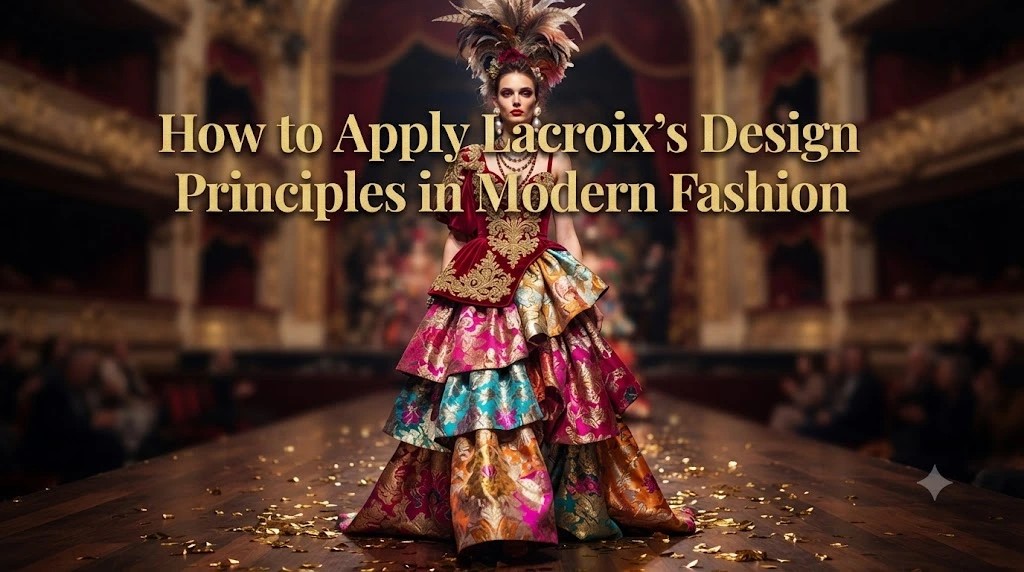
You do not need to create haute couture gowns to learn from Christian Lacroix. His creative principles can help anyone improve their approach to fashion, from students and stylists to everyday clothing enthusiasts.
His methods encourage people to think beyond basic trends and develop a stronger personal style.
Tell a Story Through Clothing
One of Lacroix’s greatest strengths was storytelling.
Before designing a garment, consider:
- What emotion should this piece create?
- Who is the person wearing it?
- What inspiration is behind the design?
- What makes it memorable?
For example, instead of designing a simple summer dress, imagine a concept:
“A Mediterranean-inspired dress influenced by seaside landscapes and traditional craftsmanship.”
This idea creates a clearer creative direction.
Experiment With Colour
Lacroix demonstrated that colour can transform fashion.
Modern designers can experiment by:
- Combining unexpected shades
- Creating seasonal colour stories
- Using accessories for contrast
- Exploring cultural colour influences
The goal is not simply to make an outfit bright. The goal is to create harmony and personality.
Mix Historical and Modern Ideas
Fashion constantly returns to the past for inspiration.
A modern designer can explore:
- Vintage silhouettes
- Traditional textiles
- Historical details
- Classic tailoring
Then reinterpret them with modern materials and practical shapes.
This creates designs that feel familiar but fresh.
Value Craftsmanship
Technology has changed fashion design, but craftsmanship remains important.
Pay attention to:
- Fabric quality
- Construction details
- Finishing techniques
- Comfortable fit
A well-made garment communicates quality before anyone notices the brand name.
Develop a Personal Signature
Perhaps the most important lesson from Lacroix is the importance of identity.
Successful designers are often recognised because they have something unique.
Your signature might come from:
- A favourite colour palette
- A specific silhouette
- A design philosophy
- A cultural influence
- A unique way of combining materials
The goal is not to become another designer. The goal is to become the best version of yourself.
Expert Styling Advice
When creating an outfit, choose one element that expresses personality. It could be a bold jacket, unusual accessory, interesting texture, or meaningful colour. A single intentional choice often creates a stronger impression than wearing many fashionable items without direction.
Conclusion
Christian Lacroix remains one of the most memorable figures in modern fashion because he proved that clothing can be more than something people wear. Through colour, craftsmanship, history, and imagination, he turned fashion into a form of storytelling.
The journey of fashion designer christian lacroix teaches valuable lessons for anyone interested in creativity. His career shows the importance of developing a personal vision, respecting craftsmanship, studying history, and having the confidence to create something different.
From his dramatic haute couture collections to his influence on modern fashion thinking, Lacroix changed how many people viewed luxury design. He reminded the industry that fashion can create emotions, preserve cultural memories, and inspire imagination.
For aspiring designers, his example offers a clear message: originality matters. Trends may come and go, but a strong creative identity can leave a lasting impact.
Whether you are studying fashion, building a personal style, or simply appreciating beautiful clothing, Christian Lacroix’s work encourages you to look at fashion differently. The most powerful designs are not only visually attractive—they tell a story and connect with people.
Frequently Asked Questions
1. Who is Christian Lacroix?
Christian Lacroix is a French fashion designer known for his colourful haute couture creations, dramatic silhouettes, luxurious fabrics, and artistic approach to fashion. He founded his own fashion house in 1987 and became one of the most recognised designers in French fashion.
2. What is Christian Lacroix famous for?
Christian Lacroix is famous for his theatrical couture designs, bold colour combinations, historical influences, romantic silhouettes, and creative use of fabrics. His work is especially known for bringing fantasy and emotion into luxury fashion.
3. What inspired Christian Lacroix’s designs?
His designs were inspired by many sources, including his childhood in Provence, French history, traditional costumes, theatre, art, and different cultures. He often combined historical references with modern fashion ideas.
4. Is Christian Lacroix still designing fashion?
Christian Lacroix continues to influence the creative world through various artistic projects, including costume, design, and cultural collaborations. His fashion legacy remains important even beyond his original couture collections.
5. What can fashion students learn from Christian Lacroix?
Fashion students can learn the importance of creativity, research, craftsmanship, storytelling, and developing a unique design identity. His career shows that successful designers need both artistic vision and technical knowledge.
6. Why is Christian Lacroix important in fashion history?
Christian Lacroix is important because he brought a new level of colour, emotion, and theatrical creativity to haute couture. He challenged traditional ideas of luxury fashion and influenced many designers who followed him.
7. How can I create fashion designs inspired by Christian Lacroix?
You can take inspiration from Lacroix by experimenting with colour, studying historical clothing, combining different textures, focusing on storytelling, and developing your own creative style instead of copying existing designs.