
Some recipes do more than fill a plate. They bring back a feeling.
Grandma’s salmon patties are one of those meals. They remind many people of busy weeknights, family dinners, simple pantry ingredients, and the comforting smell of something golden and crispy cooking in a skillet. You did not need a fancy kitchen or an expensive shopping list. A can of salmon, an egg, a handful of crumbs, and a few everyday seasonings could become a dinner everyone looked forward to.
That is the charm of this grandma-style salmon patties recipe. It is simple, affordable, hearty, and wonderfully familiar.
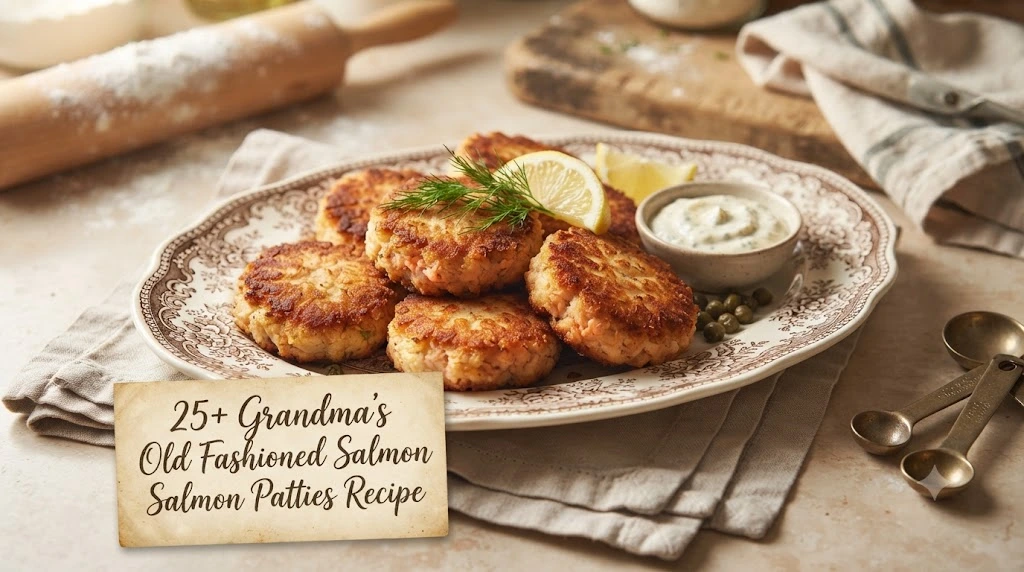
The patties have crisp, browned edges with a tender center full of savory salmon, onion, and seasoning. Serve them with mashed potatoes, green beans, coleslaw, biscuits, or a simple salad, and you have the kind of meal that feels homemade in every sense.
This version keeps the old-fashioned spirit while adding a few practical tips that make the patties easier to shape and less likely to fall apart. You will also learn how to choose canned salmon, whether to remove the bones, how much binder to use, how to get a crisp crust, and what to do when the mixture seems too wet or too dry.
Best of all, you can make the recipe your own without losing what makes it special.
Why Grandma’s Salmon Patties Are So Special
Old-fashioned salmon patties became popular in part because they turned a shelf-stable pantry ingredient into a satisfying meal. Canned salmon was convenient, affordable, and easy to keep on hand, which made it a practical choice for families trying to stretch groceries.
The basic idea remains wonderfully straightforward. Flaked salmon gets combined with a binder such as egg and breadcrumbs or cracker crumbs, along with onion and seasonings. The mixture becomes patties and cooks in a skillet until the outside turns golden brown.
Modern salmon cake recipes still follow this basic structure. Recipes commonly use canned salmon, egg, breadcrumbs, onion, herbs, and seasonings, then pan-fry or bake the patties until crisp.
What makes the old-fashioned version different is its comfort-food simplicity.
You are not trying to hide the salmon under a dozen ingredients. You want the fish to remain the main flavor while onion, pepper, and a little seasoning make it more savory.
That simplicity also makes the recipe flexible. You can use breadcrumbs, crushed crackers, cornmeal, or another suitable binder depending on what you have in the pantry.
The best part comes when you take the first bite. The crust gives way with a gentle crunch, followed by a soft, savory center.
That contrast is what makes a humble salmon patty so satisfying.
Old Fashioned Salmon Patties Ingredients
The ingredient list is short, which is exactly what you want for this type of recipe.
For about 6 medium patties, gather:
- 1 can, about 14.75 ounces, canned salmon, drained.
- 1 large egg.
- ½ cup finely crushed saltine crackers or plain breadcrumbs.
- ¼ cup finely chopped yellow onion.
- 1 tablespoon finely chopped fresh parsley, optional.
- ½ teaspoon salt, or to taste.
- ½ teaspoon black pepper.
- ½ teaspoon paprika.
- 1 teaspoon yellow mustard, optional.
- 1 tablespoon lemon juice, optional.
- 2 to 3 tablespoons neutral cooking oil for frying.
These ingredients create a classic flavor without making the patties overly complicated.
Saltine crackers are especially useful when you want that old-fashioned Southern-style texture. They provide a light, savory crunch and help bind the salmon without making the patties feel too bread-heavy.
Plain breadcrumbs work just as well and may create a slightly more uniform texture.
The onion deserves attention. Chop it very finely so that it softens during cooking and does not create large pieces that weaken the patties.
If you like a stronger onion flavor, you can increase the amount slightly. However, too much raw onion adds moisture, so balance matters.
Fresh parsley adds color and freshness, but it is not essential. Grandma probably made the recipe with whatever happened to be available.
That is part of the charm.
How to Choose the Best Canned Salmon
Canned salmon is the heart of this recipe, so choosing a good can makes a noticeable difference.
You can find several varieties, including pink salmon, sockeye salmon, and other canned salmon products. Pink salmon usually has a milder flavor and is often an economical choice. Sockeye tends to have a deeper color and stronger flavor.
Either can work.
For an easy family-style recipe, look for canned salmon that fits your budget and taste preferences. If you want the patties to have a richer salmon flavor, sockeye can be a good option.
You may also see cans containing skin and bones.
That can surprise people who have only used boneless canned salmon, but the soft bones found in canned salmon are edible because the canning process softens them. Some cooks leave them in, while others remove them because they prefer a smoother texture.
If you are serving children or simply dislike the texture, removing the bones is perfectly reasonable.
Drain the salmon well before mixing it.
This step matters more than it seems. Excess liquid can make the mixture loose and difficult to shape.
Once drained, place the salmon in a bowl and gently flake it with a fork.
Do not turn it into a paste.
You want some texture remaining in the fish.
Grandma’s Traditional Salmon Patties Recipe
Here is the heart of the recipe.
Ingredients:
- 14.75-ounce can of salmon, drained.
- 1 large egg.
- ½ cup crushed saltine crackers.
- ¼ cup finely chopped onion.
- ½ teaspoon black pepper.
- ½ teaspoon paprika.
- ½ teaspoon salt.
- 1 teaspoon yellow mustard, optional.
- 1 tablespoon lemon juice, optional.
- 2 to 3 tablespoons cooking oil.
Instructions:
Drain the salmon thoroughly and place it in a medium mixing bowl.
Use a fork to gently break the salmon into small pieces.
Add the egg, crushed crackers, onion, pepper, paprika, salt, mustard, and lemon juice.
Mix gently until everything comes together.
Let the mixture rest for about 5 minutes. This gives the crackers time to absorb some moisture.
Divide the mixture into about six portions.
Shape each portion into a round patty about ½ to ¾ inch thick.
Heat the oil in a large skillet over medium heat.
When the oil is hot, carefully place the patties into the pan. Do not crowd them.
Cook for about 3 to 4 minutes on the first side, or until the bottom develops a deep golden crust.
Carefully turn the patties with a thin spatula.
Cook the second side for another 3 to 4 minutes, adjusting the heat if the crust becomes dark too quickly.
Transfer the cooked patties to a plate lined with paper towels or a rack.
Serve while hot.
The goal is a crisp outside and tender center.
If your patties brown too quickly, lower the heat. If they remain pale after several minutes, the pan may not be hot enough.
Cooking time varies with patty thickness and pan temperature, so use the appearance and texture as guides.
How to Keep Salmon Patties From Falling Apart
This is probably the biggest problem people encounter when making homemade salmon patties.
The mixture needs enough moisture to hold together, but not so much that it becomes soft and loose.
The first step is draining the salmon well.
The second is using enough binder.
Egg helps hold the mixture together, while crackers or breadcrumbs absorb excess moisture and provide structure.
A useful technique is to let the mixture rest before shaping. The crumbs need a few minutes to absorb liquid from the salmon and egg.
If the mixture still feels too wet, add another tablespoon of crushed crackers.
Do not add a large amount at once.
Add a little, mix gently, and check the texture again.
The mixture should feel moist but firm enough to press into a patty.
If it feels dry and crumbly, add a small amount of beaten egg or a teaspoon of mayonnaise.
Shape the patties firmly enough to hold together, but do not compress them into dense hockey pucks.
Another helpful trick is chilling the shaped patties for 15 to 20 minutes before frying. Chilling gives the mixture additional time to firm up.
When frying, resist the temptation to flip them repeatedly.
One careful flip is usually better than several.
Let the first side develop a crust before trying to turn it.
How to Make Crispy Salmon Patties

Crisp edges are one of the best parts of a homemade salmon patty.
The secret starts before the patties reach the pan.
First, drain the salmon well. Excess moisture works against browning.
Next, use enough binder to create structure without making the mixture overly soft.
Then heat your skillet properly before adding the patties.
The oil should be hot enough to create an immediate sizzle when the salmon mixture touches the pan.
However, avoid extremely high heat. The outside can burn before the center becomes hot.
Medium heat is a good starting point.
Use a thin layer of neutral oil such as vegetable, canola, or avocado oil.
Place the patties into the skillet with some space between them.
Crowding the pan can lower the temperature and make the patties steam rather than fry.
Allow the first side to cook undisturbed.
This is important.
When you move a patty too early, the crust has not had enough time to form, which increases the chance of breaking.
For an extra-crispy exterior, you can lightly coat the formed patties with additional cracker crumbs or breadcrumbs before frying.
That creates another thin layer that browns beautifully.
The result should be golden, crisp, and slightly crunchy around the edges while the inside stays tender.
Salmon Patties With Crackers or Breadcrumbs
Both crackers and breadcrumbs work, but they create slightly different results.
Saltine crackers give the patties a nostalgic flavor. They also make the recipe feel particularly close to the old pantry-style versions many families remember.
Plain breadcrumbs create a softer, more even texture.
Panko breadcrumbs produce a noticeably crunchier coating, especially if you coat the outside before frying.
Here is a simple comparison:
BinderTextureFlavorBest UseSaltine crackersTender and slightly crispSavoryTraditional pattiesPlain breadcrumbsSoft and evenMildEveryday recipePankoVery crispMildExtra-crispy pattiesCornmealSlightly gritty and crispCorn flavorSouthern-style variation
If you want the most nostalgic result, I would start with crushed saltines.
If you want a lighter, crispier exterior, try panko.
The amount of binder matters more than the exact type.
Start with less than you think you need. You can always add more.
Too much binder produces dry patties that taste more like fried crackers than salmon.
The fish should remain the star.
Southern Style Salmon Patties
A Southern-inspired salmon patty often keeps the seasoning simple and focuses on a golden fried crust.
Onion is common, and some cooks add bell pepper, celery, paprika, cayenne, or herbs.
You can create that style without making the recipe complicated.
Try adding:
- 2 tablespoons finely diced green bell pepper.
- 1 tablespoon finely diced celery.
- ¼ teaspoon cayenne pepper.
- ½ teaspoon Old Bay seasoning.
- 1 tablespoon chopped parsley.
Do not add every option at once.
Choose one or two additions so that the salmon remains noticeable.
A little cayenne can give the patties warmth without making them spicy.
Old Bay can add celery, paprika, and savory spice in one step, which makes it convenient.
If you use a seasoning blend that already contains salt, reduce the added salt until you taste the mixture.
Remember that canned salmon and crackers can both contain sodium.
The best Southern-style salmon patties are crispy, savory, and comforting, not overwhelmingly spicy.
Serve them with greens, cornbread, mashed potatoes, or a simple vegetable side for a classic comfort-food dinner.
How to Cook Salmon Patties in a Skillet
A skillet remains one of the best ways to cook traditional salmon patties.
Choose a wide skillet that gives each patty enough room.
Cast iron works particularly well because it holds heat steadily, although a heavy stainless-steel or nonstick skillet can also produce excellent results.
Add enough oil to lightly cover the cooking surface.
Heat the pan over medium heat.
You can test the oil by dropping in a tiny crumb of the salmon mixture. If it sizzles immediately but does not smoke aggressively, you are ready.
Place the patties carefully into the pan.
Cook without moving them for several minutes.
Watch the edges. When they become golden and the patty feels firm enough to turn, slide a thin spatula underneath.
Turn it confidently.
Do not poke at the patty repeatedly.
Cook the second side until golden.
Because canned salmon has already been cooked during processing, the main goal is to heat the patties thoroughly and develop the desired crust. If your mixture includes raw egg, the finished patties should reach a safe internal temperature; USDA guidance lists 160°F for egg dishes, while FDA guidance lists 145°F for fish itself.
A food thermometer is the most reliable way to check.
Once cooked, move the patties to a rack or paper towel-lined plate and serve promptly.
Baked Grandma Style Salmon Patties
You can bake salmon patties when you want less oil or simply prefer to avoid stovetop frying.
Preheat the oven to about 425°F.
Line a baking sheet with parchment paper or lightly grease it.
Shape the patties as usual and place them on the sheet with space between each one.
Lightly brush or spray the tops with oil.
Bake until the patties are heated through and the outside becomes golden, turning them carefully halfway through if needed.
Baking generally produces a slightly different crust from skillet frying.
Pan-frying gives you the deepest browning and the most traditional texture. Baking creates a lighter, more hands-off option.
Some modern salmon patty recipes use baking temperatures around 450°F and cook for roughly 15 to 20 minutes, depending on the recipe and patty size.
Your exact time will depend on thickness and oven performance.
If you want a crispier baked exterior, use a light coating of panko or breadcrumbs and a small amount of oil.
Avoid packing the patties too thickly.
A thinner patty develops more surface area, which means more golden crust.
For a busy weeknight, baked salmon patties can be especially convenient because you can prepare the mixture while the oven heats.
What to Serve With Old Fashioned Salmon Patties

The best side dishes are usually simple.
Salmon patties already bring protein, savory flavor, and a crisp texture. You do not need another complicated dish beside them.
Classic pairings include:
- Creamy mashed potatoes.
- Green beans.
- Coleslaw.
- Cornbread.
- Steamed broccoli.
- Roasted carrots.
- Macaroni and cheese.
- Potato salad.
- Simple garden salad.
- Steamed peas.
For lunch, place one patty on a toasted bun with lettuce, tomato, and tartar sauce.
You can also break the patties into pieces and serve them over a salad.
The versatility makes this recipe useful beyond dinner.
A batch can become lunch the next day, an easy sandwich filling, or a quick protein addition to a grain bowl.
That is one reason salmon cakes remain popular. Modern recipe sources still recommend serving them with salads, vegetables, grains, or buns.
Best Sauces for Salmon Patties
A good sauce can make a simple salmon patty feel completely different.
Tartar sauce is the classic choice.
Its creamy texture and tangy flavor balance the crispy fried exterior beautifully.
You can make a quick homemade version by mixing mayonnaise with chopped pickles, lemon juice, and a little mustard.
For something fresher, try dill sauce.
Combine Greek yogurt or sour cream with fresh dill, lemon juice, salt, and pepper.
A simple lemon mayonnaise is another excellent option.
Mix mayonnaise with lemon zest and juice, then add a small amount of black pepper.
For a spicy version, stir hot sauce into mayonnaise.
You can also serve the patties with:
- Remoulade.
- Garlic aioli.
- Mustard sauce.
- Cucumber-dill sauce.
- Horseradish mayonnaise.
- Simple lemon butter.
Keep the sauce bright rather than extremely sweet.
The salmon already has a naturally rich flavor, and a sauce with acidity helps balance it.
My favorite simple combination is tartar sauce plus a fresh squeeze of lemon.
It takes almost no effort and lets the salmon remain the main attraction.
Common Mistakes When Making Salmon Patties
Even a simple recipe can go wrong if a few details get overlooked.
The most common problem is adding too much binder.
More breadcrumbs do not automatically make stronger patties. Too many can produce a dry, dense result.
Another problem is failing to drain the salmon.
Wet salmon creates a loose mixture, which can fall apart in the skillet.
Some cooks also make the patties too thick.
A very thick patty takes longer to heat through and can become difficult to flip.
Aim for roughly ½ to ¾ inch thickness.
Another mistake is using excessive heat.
High heat may produce a dark crust before the center has warmed properly.
Medium heat gives you more control.
Avoid flipping the patties repeatedly.
Let the first side develop a crust before turning.
Other mistakes include:
- Cutting the onion too large.
- Adding too many wet ingredients.
- Using old cooking oil.
- Overcrowding the skillet.
- Skipping the resting time.
- Pressing the patties down with a spatula.
- Making patties that are too thin.
- Using too much salt when the salmon and crackers are already salty.
If a patty breaks, do not panic.
Let the remaining patties cook a little longer before turning them, and adjust the mixture if necessary.
Most problems have a simple solution.
How to Store and Reheat Salmon Patties
Salmon patties are excellent for meal prep because they store well when handled properly.
After cooking, let them cool enough to refrigerate promptly. Place them in a covered container and refrigerate.
The USDA advises storing opened low-acid canned foods such as fish in the refrigerator for three to four days. It also recommends transferring the contents to a glass or plastic container for better quality, although refrigeration in the original can is considered safe.
For cooked leftovers, follow safe cooling and refrigeration practices and use a clean container.
To reheat, a skillet usually gives the best texture.
Heat a small amount of oil over medium-low heat and warm the patties until hot throughout.
You can also reheat them in an oven or air fryer.
Microwaving works when convenience matters, but it will not recreate the crisp crust from the skillet.
For the best texture, avoid overheating them.
If you know you will have leftovers, consider making the patties slightly thicker than usual so they remain tender when reheated.
You can also freeze cooked patties in a freezer-safe container with parchment between layers.
Thaw them safely in the refrigerator before reheating.
When in doubt about leftovers, prioritize food safety over saving a portion that has been stored too long.
Easy Variations on Grandma’s Salmon Patties
The basic recipe is a wonderful starting point.
Once you know how the mixture should feel, you can adjust it in many ways
For cheesy salmon cakes, add a little finely shredded cheddar.
You can also make mini patties for appetizers.
The key is to change one or two things at a time.
If you add onion, bell pepper, cheese, herbs, sauce, and several seasonings simultaneously, you lose track of what made the original recipe work.
Simple variations usually taste better than overloaded ones.
Why This Recipe Works for Busy Families
There is a practical reason old-fashioned salmon patties remain useful today.
Most of the ingredients can stay in your pantry or refrigerator until you need them.
Canned salmon lasts much longer unopened than fresh fish, and crackers, breadcrumbs, onions, and seasonings are common kitchen staples.
That means dinner can happen without a special trip to the store.
The recipe also scales easily.
For a small family, one can of salmon makes several patties. For a larger gathering, double the mixture and cook in batches.
You can prepare the patties earlier in the day and refrigerate them until dinner.
This is particularly helpful when you are cooking several dishes at once.
The recipe also works well for using ingredients that need attention.
An onion sitting in the pantry? Use it.
A handful of parsley left from another recipe? Add it.
Half a sleeve of crackers? Crush them.
That kind of flexibility is exactly what makes old-fashioned cooking so practical.
Grandma’s recipes often did not depend on exact specialty ingredients. They depended on good instincts and simple techniques.
How to Make This Recipe Taste Like Grandma’s
There is no single universal grandma’s salmon patty recipe.
Every family has its own version.
Some people remember crackers. Others remember breadcrumbs. Some used onion, while others added bell pepper or celery. Some served the patties with ketchup, while others insisted on tartar sauce.
The trick is to focus on the characteristics that make the dish feel homemade.
Use simple ingredients.
Do not over-season the salmon.
Make the patties by hand rather than trying to create perfectly identical rounds.
Let the edges become deeply golden.
Serve them hot.
And do not worry if every patty looks slightly different.
In fact, that is part of the appeal.
A homemade salmon patty should not look like something that came from a factory.
It should look like someone cared enough to make dinner.
If you want to recreate a family recipe from memory, start with the basic formula of salmon, egg, crumbs, onion, seasoning, and oil.
Then think about what you remember.
Was there a little mustard?
Did the patties taste peppery?
Were they thin and crispy or thick and tender?
Did you eat them with mashed potatoes?
Those details can guide your version.
Grandma’s Old Fashioned Salmon Patties Recipe FAQs
Can I use canned salmon with bones for salmon patties?
Yes. Soft bones in commercially canned salmon are generally edible because the canning process softens them. However, you can remove them if you prefer a smoother texture or are serving people who may dislike them.
Why do my salmon patties fall apart when I flip them?
The mixture may contain too much moisture or not enough binder. Drain the salmon thoroughly, let the mixture rest, and add a little more crushed cracker or breadcrumb if necessary. Chilling the shaped patties before frying can also make them easier to handle.
Are salmon patties better with crackers or breadcrumbs?
Both work. Crushed saltines create a nostalgic, savory texture, while breadcrumbs give a more even texture. Panko is a good choice when you want extra crispness.
Can I bake old-fashioned salmon patties instead of frying them?
Yes. Baking is a convenient alternative and uses less oil. Lightly oil the patties and bake them in a hot oven until browned and heated through. Pan-frying generally gives you a deeper, more traditional crust.
How do I make salmon patties crispy?
Drain the salmon well, use a moderate amount of binder, preheat the skillet, avoid overcrowding the pan, and let each side cook undisturbed long enough to develop a golden crust. A light coating of breadcrumbs or panko can add even more crunch.
What sauce goes best with salmon patties?
Tartar sauce is a classic choice. Lemon-dill sauce, remoulade, garlic aioli, mustard sauce, and spicy mayonnaise also work well. A little lemon juice can brighten the entire plate.
How long do cooked salmon patties last in the refrigerator?
Store cooked patties promptly in a covered container and use them within a safe refrigerated storage period. For opened canned fish, USDA guidance recommends three to four days of refrigerator storage.
Can I freeze salmon patties?
Yes. Allow cooked patties to cool appropriately, separate them with parchment, place them in a freezer-safe container, and freeze. Thaw them safely in the refrigerator and reheat until hot throughout.
What can I serve with salmon patties for dinner?
Mashed potatoes and green beans create a classic comfort-food plate. Coleslaw, cornbread, roasted vegetables, potato salad, steamed broccoli, or a simple green salad are also excellent choices.
Can I make salmon patties without eggs?
You can experiment with alternative binders, although the texture will change. Some salmon cake recipes rely on other ingredients and techniques to hold the mixture together. If you remove the egg, make sure your replacement provides enough structure to keep the patties intact.
Conclusion
A plate of old-fashioned salmon patties does not need to be fancy to be memorable. Golden edges, a tender salmon center, a little tartar sauce, and a familiar side dish can create the kind of dinner people remember for years.
That is why this recipe deserves a place in your regular rotation.
Most importantly, it leaves plenty of room for personal touches.
Start with the classic combination of canned salmon, egg, crushed crackers, onion, pepper, and a little seasoning. Drain the salmon well, keep the mixture balanced, shape the patties gently, and let the skillet do the work.
Then serve them hot and enjoy that first crisp bite.
Maybe your version will become the recipe your family asks for again and again.
And someday, someone may take a bite and say that it tastes just like the salmon patties they remember from home.