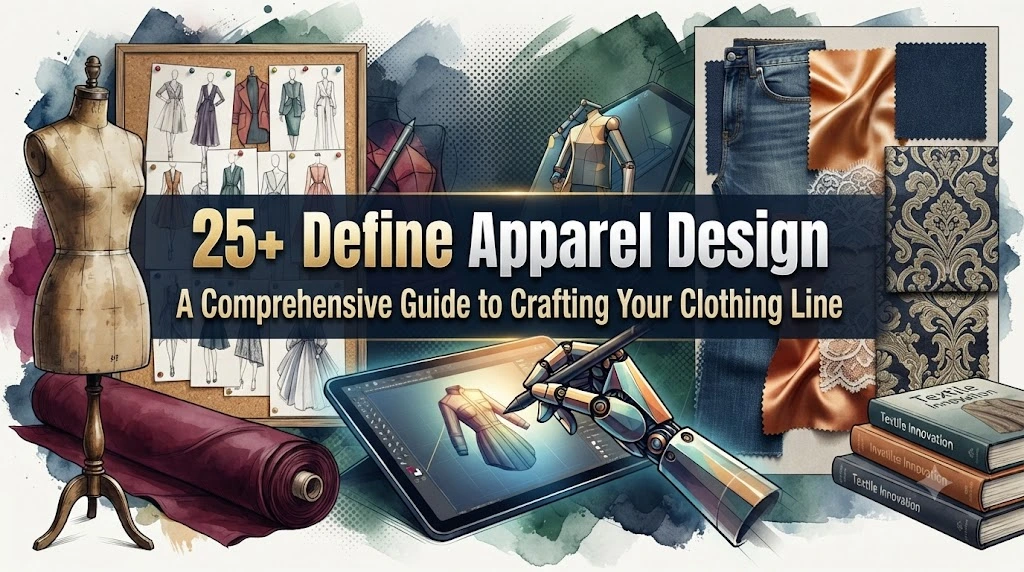
Fashion is more than the clothes we wear. It tells stories, reflects culture, and helps people express who they are without saying a word. Every shirt, dress, jacket, or pair of jeans starts with an idea. That idea is carefully shaped into something people can wear, enjoy, and remember. This creative journey is where apparel design comes to life.
If you’ve ever wondered why some outfits look timeless while others quickly disappear from stores, the answer often lies in thoughtful apparel design. It combines creativity, technical knowledge, market research, and problem-solving to create clothing that people actually want to wear. Whether you’re a student, fashion lover, aspiring designer, or business owner, understanding apparel design gives you a new appreciation for the clothing in your wardrobe.
In this complete guide, you’ll learn what apparel design means, why it matters, how designers work, what skills they need, and how the industry continues to evolve. Along the way, you’ll also discover practical examples, professional insights, and useful tips that explain the entire process in simple language.
What Does Define Apparel Design Mean?
To define apparel design, think of it as the complete process of planning, creating, and developing clothing that balances style, comfort, function, and production. It is much more than drawing attractive outfits. Designers solve real problems by creating garments that fit people’s lifestyles, body shapes, budgets, and fashion preferences.
Apparel design begins with an idea. That idea may come from current fashion trends, cultural influences, customer feedback, seasonal changes, or even everyday life. Designers then transform the concept into wearable clothing through sketches, fabric selection, pattern making, sample development, fitting, and production planning.
For example, imagine designing a winter jacket. It should look fashionable, but it must also keep the wearer warm, allow easy movement, and survive daily use. A successful apparel designer considers all these factors before the jacket reaches store shelves.
In simple words, apparel design combines art, science, creativity, engineering, and business into one profession.
Key Elements of Apparel Design
Good apparel design usually includes:
- Creative design concepts
- Functional garment construction
- Proper fit and sizing
- Fabric selection
- Color coordination
- Trend awareness
- Manufacturing knowledge
- User comfort
- Cost-effective production
- Sustainability considerations
Every successful clothing collection balances these elements instead of focusing on appearance alone.
Expert Tip
Many beginners believe apparel design is only about making beautiful sketches. In reality, experienced designers spend just as much time solving production challenges as creating new styles.
Why Apparel Design Is Important in the Fashion Industry
Without apparel design, the fashion industry would struggle to meet changing customer needs. Every clothing brand depends on designers to create products that match current lifestyles while remaining practical and profitable.
Today’s consumers expect more than attractive clothing. They want garments that fit well, last longer, feel comfortable, and reflect their personal style. Apparel designers make these expectations possible.
For example, athletic clothing has changed dramatically over the past decade. Designers now use lightweight, moisture-wicking fabrics, ergonomic stitching, and flexible materials that improve athletic performance while maintaining a modern appearance.
Apparel Design Drives Innovation
Innovative apparel design has introduced:
- Wrinkle-resistant shirts
- Stretch denim
- Water-repellent jackets
- Recycled fabric collections
- Smart textiles
- Adaptive clothing for people with disabilities
- UV-protective garments
These advancements improve everyday life while opening new opportunities for fashion brands.
Supports Business Growth
Strong apparel design also helps businesses:
- Build recognizable brand identities
- Increase customer loyalty
- Reduce product returns through better fit
- Differentiate from competitors
- Improve seasonal sales
When customers consistently enjoy wearing a brand’s clothing, they often return for future purchases.
Expert Observation
Some of the world’s most successful fashion brands don’t simply follow trends. They create clothing that solves everyday problems, making customers feel confident and comfortable.
The Main Purpose of Apparel Design
At its core, apparel design aims to create clothing that people genuinely enjoy wearing. Every garment should meet specific needs while reflecting personal style and current fashion preferences.
Designers constantly ask important questions during development:
- Who will wear this garment?
- Where will they wear it?
- What weather conditions will they face?
- How should it fit?
- How much should it cost?
- Can it be produced efficiently?
These questions guide every design decision.
Apparel Design Balances Beauty and Function
A stylish dress that tears after one wash is poor design.
Likewise, an extremely durable jacket that feels uncomfortable may never become popular.
Successful apparel design balances:
- Appearance
- Comfort
- Performance
- Durability
- Cost
- Sustainability
- Manufacturing efficiency
Ignoring one area often weakens the entire product.
Practical Example
Imagine office workers who commute by bicycle.
A designer creating clothing for them may include:
- Stretch fabrics for movement
- Hidden reflective details
- Wrinkle-resistant materials
- Breathable construction
- Professional appearance
The result looks polished at work while remaining practical during daily travel.
That is effective apparel design in action.
Common Mistake
Many new designers focus only on runway fashion. However, most clothing sold worldwide serves everyday needs rather than high-fashion events.
The Core Principles of Apparel Design
Every successful garment follows a set of design principles that help create balance, visual appeal, and functionality. These principles guide designers from the first sketch to the final product.
Understanding them also helps consumers recognize why certain outfits naturally look more attractive than others.
Balance
Balance creates visual stability.
Designers carefully distribute colors, details, pockets, seams, and decorative elements so that garments feel harmonious instead of cluttered.
For example, a heavily decorated jacket often looks better with simple trousers.
Proportion
Proportion refers to the relationship between different parts of a garment.
Examples include:
- Sleeve length
- Collar size
- Pocket placement
- Pant width
- Jacket length
Well-balanced proportions improve both appearance and comfort.
Emphasis
Every outfit should have a focal point.
This could be:
- A bold collar
- Unique embroidery
- Statement buttons
- Interesting fabric texture
- Eye-catching print
Too many focal points compete for attention and reduce overall impact.
Rhythm
Rhythm creates movement throughout a garment.
Repeating design elements such as stitching patterns, pleats, stripes, or color blocks guides the eye naturally across the outfit.
Harmony
Harmony brings all design elements together.
Fabric, color, silhouette, trims, and accessories should complement one another instead of competing.
A harmonious design feels intentional rather than random.
Functionality
Modern apparel design always considers practical use.
Questions include:
- Is the fabric breathable?
- Can the wearer move comfortably?
- Is it easy to wash?
- Will it last through repeated use?
Fashion without function rarely succeeds in everyday markets.
Expert Styling Advice
The most wearable outfits often appear effortless. That’s usually because skilled designers carefully applied these principles behind the scenes, allowing the clothing to feel balanced without drawing attention to the design process itself.
Types of Apparel Design
Apparel design is a broad field. Designers often specialize in one category because each type of clothing has different goals, materials, and customer expectations. A bridal gown requires a completely different design process than a pair of running shorts.
Understanding these categories helps you appreciate how much planning goes into the clothes you wear every day.
Fashion Apparel Design
Fashion apparel focuses on style, trends, and personal expression. Designers create collections that reflect seasonal colors, silhouettes, and consumer preferences.
Common examples include:
- Dresses
- Blouses
- Jackets
- Jeans
- Skirts
- Formal wear
These garments often change with fashion seasons while maintaining the brand’s unique identity.
Casual Wear Design
Casual clothing is designed for everyday comfort. Although it may look simple, creating well-fitting casual wear requires careful attention to movement, durability, and fabric performance.
Popular casual apparel includes:
- T-shirts
- Hoodies
- Polo shirts
- Sweatpants
- Shorts
- Denim
A great casual outfit should feel comfortable from morning until night.
Sportswear and Activewear Design
Activewear has become one of the fastest-growing segments of the fashion industry. Designers focus on improving movement, breathability, and performance without sacrificing style.
Important design considerations include:
- Stretchability
- Moisture management
- Lightweight construction
- Ventilation
- Ergonomic seams
- Compression where needed
For example, a yoga outfit should stretch naturally with every pose while remaining supportive and comfortable.
Children’s Apparel Design
Designing clothing for children involves much more than reducing adult sizes.
Children’s garments must prioritize:
- Safety
- Soft fabrics
- Easy dressing
- Freedom of movement
- Durability
- Easy washing
Buttons, drawstrings, and decorative accessories must also meet safety standards.
Luxury and Couture Design
Luxury apparel emphasizes craftsmanship, premium materials, and exclusive designs.
These garments often feature:
- Hand embroidery
- Custom tailoring
- High-quality fabrics
- Detailed finishing
- Limited production
Although couture attracts media attention, it represents only a small part of the overall fashion market.
Sustainable Apparel Design
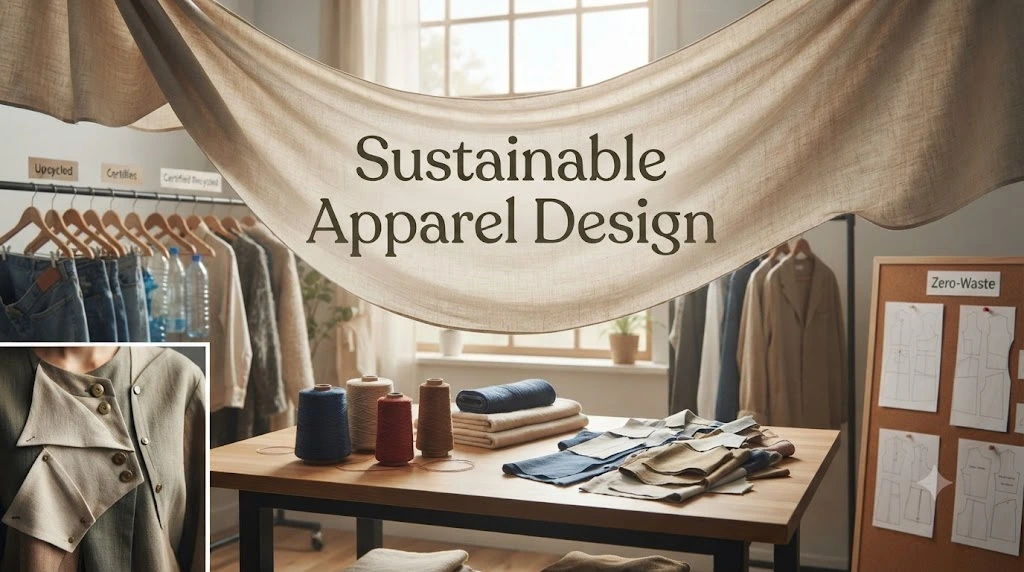
As environmental awareness grows, many designers now focus on reducing waste and creating more responsible clothing.
Sustainable design may involve:
- Organic fibers
- Recycled textiles
- Low-impact dyes
- Zero-waste pattern cutting
- Ethical manufacturing
- Durable construction
The goal is to create clothing that lasts longer while reducing environmental impact.
Expert Insight
Successful designers rarely limit themselves to creativity alone. They understand the specific needs of the people who will wear their clothing, whether those customers are athletes, office workers, children, or luxury shoppers.
The Apparel Design Process Step by Step
Many people imagine fashion designers simply sketching beautiful outfits. In reality, apparel design follows a structured process that combines creativity with technical planning. Every step influences the quality of the final garment.
Skipping even one stage can lead to poor fit, production delays, or disappointing customer experiences.
Step 1: Research and Inspiration
Every collection begins with research.
Designers explore:
- Fashion trends
- Consumer behavior
- Cultural influences
- Seasonal colors
- Market demand
- Competitor collections
- Fabric innovations
Inspiration can come from architecture, nature, travel, art, music, or even everyday street fashion.
Step 2: Defining the Target Customer
Before drawing the first sketch, designers identify who the clothing is for.
Questions include:
- What age group will wear it?
- What is their lifestyle?
- What is their budget?
- What climate do they live in?
- What problems should the clothing solve?
Knowing the audience keeps the entire collection focused.
Step 3: Sketching Design Ideas
Designers translate concepts into rough sketches. These drawings help visualize silhouettes, proportions, and design details.
Modern designers often use digital illustration software, but many still begin with pencil sketches because they allow ideas to flow quickly.
At this stage, creativity is encouraged. Not every sketch will become a finished product.
Step 4: Choosing Fabrics and Materials
Fabric selection plays a major role in the success of a garment.
Designers evaluate:
- Weight
- Texture
- Stretch
- Breathability
- Durability
- Cost
- Care requirements
A beautiful design can fail if paired with the wrong material.
Step 5: Pattern Making
Patterns serve as the blueprint for clothing construction.
Professional pattern makers transform sketches into accurate templates that determine:
- Shape
- Measurements
- Seam placement
- Fit
- Construction details
Even small pattern errors can affect the finished garment.
Step 6: Sample Development
A prototype garment is created before mass production.
This sample allows designers to examine:
- Fit
- Comfort
- Appearance
- Fabric behavior
- Construction quality
Several revisions are often necessary before approval.
Step 7: Fittings and Adjustments
Real people wear the sample garments so designers can identify issues that aren’t visible on paper.
They may adjust:
- Sleeve length
- Waist placement
- Shoulder width
- Hemline
- Neckline
- Pocket position
Professional fitting sessions often make the biggest difference between average clothing and exceptional clothing.
Step 8: Production Planning
Once the design is finalized, manufacturers prepare for large-scale production.
This includes:
- Fabric ordering
- Quality standards
- Cost calculations
- Manufacturing timelines
- Packaging
- Distribution planning
At this stage, precision becomes essential.
Expert Tip
Experienced designers expect multiple revisions. Rarely does the first sample become the final product. Improving the garment through testing is a normal part of professional apparel design.
Essential Skills Every Apparel Designer Needs
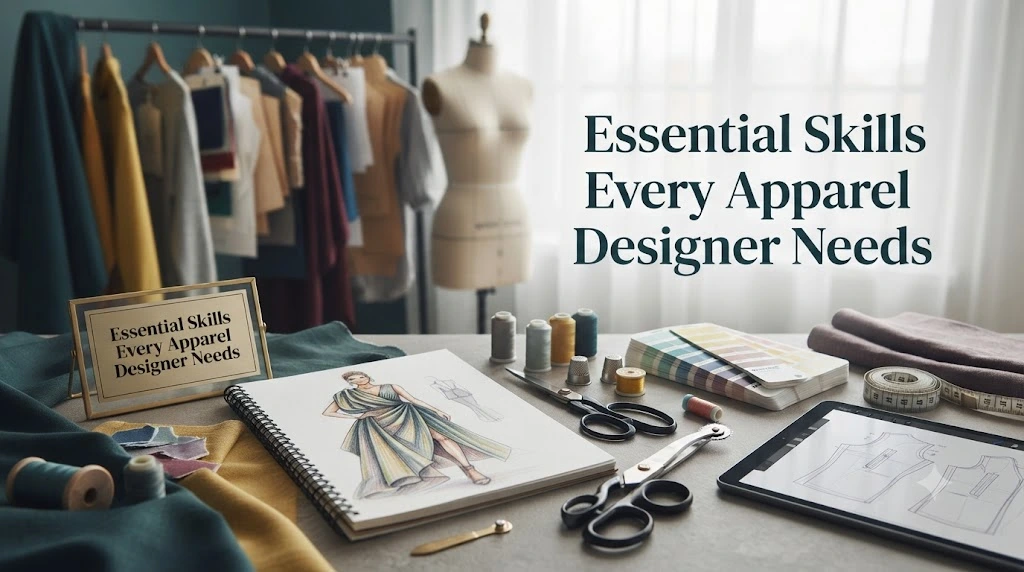
Creativity is only one part of becoming a successful apparel designer. The profession requires a balanced mix of artistic ability, technical knowledge, communication, and business awareness.
The strongest designers continue learning throughout their careers because fashion trends, technology, and consumer expectations constantly evolve.
Creative Thinking
Designers must generate original ideas while keeping garments practical.
Creative thinking helps them:
- Develop fresh concepts
- Solve design challenges
- Combine colors effectively
- Create unique collections
- Stand out in competitive markets
Originality remains one of the industry’s greatest strengths.
Drawing and Visualization
Although digital tools have become common, sketching remains an important skill.
Quick sketches help designers:
- Communicate ideas
- Test concepts
- Present collections
- Explain details to manufacturers
Perfect artistic ability is less important than clearly expressing design ideas.
Understanding Fabrics
Every fabric behaves differently.
Professional designers understand:
- Fiber properties
- Stretch characteristics
- Fabric weight
- Texture
- Drape
- Durability
This knowledge prevents costly design mistakes.
Pattern Making Basics
Even when specialists create production patterns, designers benefit from understanding pattern construction.
It helps them:
- Improve garment fit
- Communicate with technical teams
- Solve fitting problems
- Create production-ready designs
Technical knowledge strengthens creative decisions.
Trend Analysis
Fashion changes quickly.
Successful designers study:
- Consumer preferences
- Retail performance
- Social media influence
- Street fashion
- Seasonal forecasts
However, they avoid copying trends directly. Instead, they adapt trends to fit their brand’s identity.
Communication Skills
Apparel designers work with many professionals, including:
- Pattern makers
- Textile suppliers
- Manufacturers
- Marketing teams
- Buyers
- Retailers
Clear communication prevents misunderstandings during production.
Time Management
Fashion operates on strict deadlines.
Designers often manage:
- Multiple collections
- Sampling schedules
- Factory timelines
- Trade shows
- Product launches
Strong organization ensures projects stay on track.
Business Awareness
Designers must understand more than fashion.
They also consider:
- Pricing
- Manufacturing costs
- Customer demand
- Profit margins
- Inventory planning
Beautiful clothing has little value if customers cannot afford it or businesses cannot produce it profitably.
Common Mistake
Many aspiring designers spend years improving their sketching skills but ignore garment construction and fabric knowledge. In the real world, technical expertise is just as valuable as artistic talent.
How Fabric Selection Influences Apparel Design
Fabric is often called the foundation of apparel design—and for good reason. The same design can look and feel completely different depending on the material used. Choosing the right fabric affects comfort, appearance, durability, cost, and customer satisfaction.
Professional designers usually select fabrics early in the design process because the material influences nearly every decision that follows.
Fabric Determines the Garment’s Shape
Some fabrics hold their structure, while others flow naturally.
For example:
- Cotton poplin creates crisp shirts.
- Linen gives a relaxed, breathable look.
- Silk drapes softly for elegant dresses.
- Denim provides structure for jeans and jackets.
- Wool offers warmth and shape for coats.
A designer must understand how each fabric behaves before finalizing a design.
Comfort Matters Just as Much as Style
Consumers expect clothing to feel as good as it looks.
Designers evaluate qualities such as:
- Softness
- Breathability
- Stretch
- Warmth
- Moisture absorption
- Weight
A stylish garment that feels uncomfortable is unlikely to become a customer favorite.
Durability Affects Customer Satisfaction
High-quality apparel should maintain its appearance after repeated wear and washing.
Designers consider:
- Colorfastness
- Resistance to pilling
- Tear strength
- Shrinkage
- Wrinkle resistance
Selecting durable materials helps build trust in a brand.
Sustainability Starts with Fabric Choices
Many fashion brands now prioritize environmentally responsible textiles.
Popular sustainable options include:
- Organic cotton
- Hemp
- Bamboo blends
- Recycled polyester
- TENCEL™ Lyocell
- Recycled wool
These materials can reduce environmental impact while maintaining quality and comfort.
Fabric Influences Production Costs
Every fabric affects manufacturing expenses.
Factors include:
- Material price
- Availability
- Cutting efficiency
- Sewing difficulty
- Shipping weight
- Waste percentage
Experienced designers balance quality with affordability to create products that appeal to both customers and businesses.
Expert Styling Advice
Before buying clothing, gently touch the fabric and imagine wearing it for several hours. A garment may look attractive on a hanger, but the fabric ultimately determines how comfortable and practical it will be in everyday life.
Fashion Trends and Their Impact on Apparel Design
Fashion trends influence what people buy, wear, and share. However, trends are not simply copied from runway shows. Apparel designers study consumer behavior, social changes, technology, and cultural movements before deciding which trends deserve a place in a new collection.
A successful designer knows the difference between a short-lived trend and a timeless style. This balance helps create clothing that remains relevant even after the latest fashion craze fades.
Where Fashion Trends Come From
Trends can begin almost anywhere. Designers often find inspiration in places that have little to do with traditional fashion.
Common sources include:
- Street style
- Social media platforms
- Music and entertainment
- Art and architecture
- Travel and different cultures
- Sporting events
- Seasonal lifestyle changes
For example, the growing popularity of remote work led many brands to design clothing that combines the comfort of loungewear with the polished look of office attire.
Trend Forecasting in Apparel Design
Professional brands rarely wait until a trend becomes popular. They rely on trend forecasting to predict what customers will want months or even years in advance.
Forecasting includes analyzing:
- Consumer shopping habits
- Fabric innovations
- Color preferences
- Economic conditions
- Global fashion events
- Lifestyle changes
This research helps brands prepare collections before demand reaches its peak.
Balancing Trends with Brand Identity
Not every trend suits every brand.
A luxury fashion label may focus on timeless tailoring, while a youth-focused brand might embrace bold prints and oversized silhouettes. Smart designers adapt trends in a way that matches their brand’s personality rather than following every new idea.
This approach builds customer trust and strengthens brand recognition.
Avoiding Trend Overload
One common mistake is adding too many trendy details to a single garment. An outfit filled with oversized graphics, bright colors, dramatic cuts, and excessive embellishments can quickly feel outdated.
Instead, experienced designers often choose one standout feature and keep the remaining elements clean and balanced.
Expert Tip
If you’re building a wardrobe, invest in classic pieces such as a well-fitted blazer, dark jeans, and a white shirt. Then add trendy accessories or seasonal colors to refresh your look without replacing your entire closet.
Technology in Modern Apparel Design
Technology has transformed apparel design in remarkable ways. Designers now create, test, and refine garments faster than ever before. While creativity remains essential, digital tools have made the design process more accurate and efficient.
Technology also allows brands to respond quickly to changing customer demands while reducing production waste.
Digital Fashion Illustration
Many designers use specialized software to create professional sketches and technical drawings.
Digital illustration offers several advantages:
- Faster revisions
- Precise measurements
- Easy color changes
- Better communication with manufacturers
- Organized design libraries
Although hand sketching is still valuable, digital tools have become a standard part of the modern design workflow.
3D Garment Visualization
One of the biggest innovations in apparel design is 3D clothing simulation.
Instead of sewing multiple physical samples, designers can visualize garments on virtual models. This allows them to evaluate:
- Fit
- Fabric drape
- Proportions
- Movement
- Construction details
As a result, brands save both time and material costs.
Computer-Aided Pattern Making
Traditional pattern making remains important, but computer-aided design (CAD) software improves speed and accuracy.
Benefits include:
- Faster grading for multiple sizes
- Accurate measurements
- Easier modifications
- Efficient pattern storage
- Reduced production errors
These improvements help manufacturers maintain consistent quality across thousands of garments.
Smart Textiles and Wearable Technology
Modern apparel design increasingly includes technology within the garment itself.
Examples include:
- Fitness-tracking sportswear
- Heated jackets
- UV-sensitive fabrics
- Temperature-regulating materials
- Moisture-monitoring athletic clothing
These innovations combine fashion with practical functionality.
Artificial Intelligence in Fashion
Artificial intelligence supports designers by analyzing customer preferences, predicting trends, and improving inventory planning.
AI can help brands:
- Forecast demand
- Recommend color palettes
- Analyze sales patterns
- Reduce overproduction
- Personalize shopping experiences
However, AI cannot replace human creativity. Original ideas, emotional storytelling, and artistic vision still come from designers.
Expert Observation
Technology works best when it supports creativity instead of replacing it. The most successful apparel designers combine digital tools with strong design fundamentals and a deep understanding of their customers.
Sustainable Apparel Design Practices
Sustainability has become one of the most important topics in apparel design. Consumers are paying closer attention to how clothing is made, what materials are used, and how long garments last.
For designers, sustainability is no longer just a trend. It is a responsibility that influences every stage of the design process.
Choosing Better Materials
The environmental impact of a garment often begins with its fabric.
Many designers now choose materials such as:
- Organic cotton
- Recycled polyester
- Hemp
- Linen
- Bamboo blends
- Recycled wool
These fabrics can reduce resource consumption while maintaining quality and performance.
Designing for Longevity
One of the simplest ways to support sustainability is to create clothing that lasts.
Designers achieve this by focusing on:
- Strong stitching
- Durable fabrics
- Timeless silhouettes
- Quality construction
- Easy care instructions
A jacket worn for ten years creates far less waste than one replaced after a single season.
Reducing Fabric Waste
Traditional garment production often leaves behind unused fabric scraps.
Modern techniques help minimize waste through:
- Efficient pattern layouts
- Zero-waste pattern cutting
- Fabric recycling
- Upcycling leftover materials
- Careful production planning
Even small improvements can significantly reduce environmental impact.
Ethical Manufacturing
Responsible apparel design also considers the people who make the clothing.
Many brands now prioritize:
- Safe working conditions
- Fair wages
- Reasonable working hours
- Transparent supply chains
- Responsible sourcing
Ethical manufacturing strengthens both brand reputation and consumer trust.
Encouraging Responsible Consumption
Designers can also educate customers about caring for their clothing.
Simple advice includes:
- Wash garments only when necessary.
- Follow care labels.
- Repair minor damage instead of replacing garments.
- Donate clothing that is no longer needed.
- Buy quality over quantity.
These habits extend the life of clothing and reduce unnecessary waste.
Common Mistake
Some brands describe products as “eco-friendly” without making meaningful improvements. Genuine sustainable apparel design requires responsible decisions throughout the entire production process, not just attractive marketing.
Expert Tip
When shopping, pay attention to construction quality rather than buying several inexpensive garments. A smaller wardrobe filled with durable, versatile pieces often provides better value over time.
Career Opportunities in Apparel Design
Apparel design offers far more career options than many people realize. While some designers dream of launching their own fashion labels, others build rewarding careers in product development, textile innovation, merchandising, or technical design.
The industry values creativity, but it also rewards problem-solving, communication, and technical expertise.
Fashion Designer
Fashion designers create clothing collections for brands or private clients.
Their responsibilities often include:
- Researching trends
- Sketching concepts
- Selecting fabrics
- Reviewing samples
- Collaborating with production teams
Some specialize in women’s wear, menswear, children’s clothing, or sportswear.
Technical Designer
Technical designers focus on transforming creative ideas into production-ready garments.
They work on:
- Garment measurements
- Construction details
- Fit corrections
- Production specifications
- Quality standards
This role requires excellent attention to detail.
Pattern Maker
Pattern makers convert design sketches into accurate templates used for garment production.
Their work directly affects:
- Fit
- Comfort
- Manufacturing efficiency
- Size consistency
Strong mathematical and technical skills are especially valuable in this profession.
Textile Designer
Textile designers create the fabrics that apparel designers use.
They develop:
- Prints
- Weaves
- Surface textures
- Fabric patterns
- Color combinations
Their creativity influences the appearance of entire fashion collections.
Fashion Merchandiser
Merchandisers bridge the gap between design and business.
Their responsibilities include:
- Product planning
- Market analysis
- Inventory management
- Pricing strategies
- Sales forecasting
They help ensure that collections meet customer demand while remaining profitable.
Costume Designer
Costume designers create clothing for:
- Films
- Television
- Theater
- Commercials
- Live performances
Their work combines historical research, storytelling, and fashion design.
Entrepreneur and Brand Owner
Many experienced designers eventually launch their own fashion labels.
Running a clothing brand requires knowledge of:
- Branding
- Marketing
- Manufacturing
- Customer service
- Financial management
- E-commerce
Although entrepreneurship brings challenges, it also offers creative freedom.
Skills That Employers Value
Regardless of the career path, employers often look for candidates who can demonstrate:
- Creativity
- Technical garment knowledge
- Strong communication
- Problem-solving ability
- Teamwork
- Time management
- Digital design skills
- Adaptability
A strong portfolio showcasing original work is often more important than formal qualifications alone.
Expert Advice
If you’re considering a career in apparel design, start building your portfolio early. Include sketches, finished garments, fabric experiments, and technical drawings. Employers want to see not only your creativity but also your ability to turn ideas into wearable products.
Common Challenges in Apparel Design
Apparel design is exciting, but it also comes with challenges. Designers must balance creativity, customer expectations, production costs, and tight deadlines. Even experienced professionals face obstacles throughout the design process.
Understanding these challenges helps aspiring designers prepare for real-world situations instead of expecting every project to go smoothly.
Balancing Creativity and Practicality
A creative design may look impressive on paper, but it also needs to be wearable.
Designers often ask:
- Is it comfortable?
- Can it be produced efficiently?
- Will customers actually buy it?
- Does it fit the target market?
The best garments combine originality with everyday usability.
Keeping Up With Changing Trends
Fashion moves quickly. A trend that is popular today may lose appeal by the time a collection reaches stores.
Designers stay informed by:
- Following industry reports
- Observing street fashion
- Listening to customer feedback
- Studying retail performance
- Monitoring social media trends
At the same time, they avoid relying entirely on trends and continue developing timeless designs.
Managing Production Costs
Every design decision affects the final price of a garment.
Costs include:
- Fabric
- Trims
- Labor
- Packaging
- Shipping
- Quality control
Designers often revise details to keep products affordable without reducing quality.
Achieving Consistent Fit
One of the biggest reasons customers return clothing is poor fit.
Designers spend significant time testing garments on different body types to improve:
- Comfort
- Mobility
- Size consistency
- Overall appearance
A well-fitting garment creates customer confidence and reduces returns.
Meeting Sustainability Goals
Consumers increasingly expect brands to produce clothing responsibly. However, using sustainable materials while maintaining quality and competitive pricing can be challenging.
Designers must find practical solutions that support both environmental goals and business success.
Expert Tip
Treat every challenge as a learning opportunity. Many successful collections are the result of multiple revisions, thoughtful feedback, and careful testing—not perfect first attempts.
Tips for Beginners Learning Apparel Design
Starting a career in apparel design may feel overwhelming, but every skilled designer begins with the basics. Building strong habits early can make the learning process more enjoyable and prepare you for long-term success.
Instead of trying to master everything at once, focus on improving one skill at a time.
Learn the Fundamentals
Before experimenting with complex designs, understand the core principles of apparel design.
Study topics such as:
- Color theory
- Fabric properties
- Garment construction
- Pattern making
- Sewing techniques
- Fashion illustration
A solid foundation makes advanced concepts much easier to understand.
Practice Sketching Regularly
You do not need to be a professional artist to become an excellent designer. What matters most is your ability to communicate ideas clearly.
Try sketching:
- Everyday outfits
- New clothing concepts
- Different silhouettes
- Design details such as collars, sleeves, and pockets
The more you practice, the more confident you will become.
Improve Your Sewing Skills
Even basic sewing knowledge helps designers understand how garments are assembled.
Working with fabric teaches valuable lessons about:
- Seam placement
- Fabric behavior
- Construction techniques
- Fit adjustments
Hands-on experience often leads to better design decisions.
Build a Strong Portfolio
A portfolio showcases your abilities and creative thinking.
Include a variety of work, such as:
- Fashion sketches
- Technical drawings
- Mood boards
- Fabric selections
- Finished garments
- Personal design projects
Focus on quality rather than quantity.
Stay Curious
Fashion constantly evolves. Continue learning through:
- Books
- Industry magazines
- Fashion exhibitions
- Online courses
- Design competitions
- Clothing analysis in retail stores
Observing successful garments can teach valuable design lessons.
Accept Constructive Feedback
Every designer receives criticism.
Instead of taking feedback personally, use it to improve your skills. Honest reviews often reveal opportunities that you may have overlooked.
Expert Styling Advice
Study clothing already hanging in your wardrobe. Notice how seams are placed, why certain fabrics feel more comfortable, and how different cuts flatter the body. Everyday garments can become some of your best learning tools.
The Future of Apparel Design
The future of apparel design is shaped by innovation, sustainability, and changing consumer expectations. While fashion trends will continue to evolve, the industry’s focus is shifting toward creating clothing that is smarter, more responsible, and more personalized.
Designers who embrace new ideas while respecting timeless design principles will be well-positioned for success.
Greater Focus on Sustainability
Consumers are becoming more aware of the environmental impact of fashion.
Future collections are likely to feature:
- Recycled materials
- Biodegradable textiles
- Circular fashion systems
- Low-impact manufacturing
- Longer-lasting garments
Sustainability will become a standard expectation rather than a unique selling point.
Personalized Clothing
Advances in technology allow brands to offer products tailored to individual preferences.
Customers may increasingly choose:
- Custom sizing
- Personalized colors
- Fabric options
- Unique design details
- Made-to-order garments
This approach improves customer satisfaction while reducing excess inventory.
Digital Fashion and Virtual Design
Digital fashion is opening new possibilities for designers.
Virtual garments are already being used for:
- Online gaming
- Social media content
- Digital marketing
- Virtual fashion shows
- Product visualization
These innovations allow designers to experiment creatively without producing physical samples.
Smarter Materials
Textile innovation continues to expand.
Future fabrics may offer features such as:
- Improved temperature regulation
- Enhanced durability
- Better moisture control
- Self-cleaning properties
- Increased recyclability
These developments will improve both comfort and performance.
Human Creativity Will Always Matter
Despite rapid technological progress, creativity remains the heart of apparel design.
Computers can assist with data analysis and production, but they cannot replace imagination, emotional storytelling, or the ability to create designs that connect with people on a personal level.
The future belongs to designers who combine creative thinking with technical expertise and a deep understanding of consumer needs.
Expert Observation
Fashion has always reflected society. As lifestyles, technology, and environmental priorities continue to change, apparel design will evolve alongside them while remaining a powerful form of self-expression.
Conclusion
To define apparel design is to understand the thoughtful process of transforming creative ideas into clothing that people enjoy wearing every day. It is a discipline that blends artistic vision with technical knowledge, fabric science, garment construction, and market awareness. Every successful design balances appearance, comfort, functionality, durability, and affordability.
From researching trends and selecting fabrics to developing patterns and refining garment fit, apparel designers make countless decisions before a product reaches consumers. Their work influences not only fashion but also confidence, comfort, sustainability, and personal identity.
As the industry continues to embrace digital technology, ethical production, and innovative materials, the role of apparel designers becomes even more important. Whether you dream of becoming a designer, starting a clothing brand, or simply understanding how fashion works, learning about apparel design offers valuable insights into one of the world’s most creative and influential industries.
The best apparel design is never just about making clothes. It is about solving problems, meeting real needs, and creating garments that help people feel comfortable, confident, and authentic every time they get dressed.
Frequently Asked Questions (FAQs)
1. What is the simple definition of apparel design?
Apparel design is the process of planning, creating, and developing clothing that combines style, comfort, function, and manufacturability. It involves everything from research and sketching to fabric selection, pattern making, and production.
2. What skills are required for apparel design?
Successful apparel designers need a combination of creative and technical skills, including fashion illustration, fabric knowledge, pattern making, sewing basics, color theory, communication, trend analysis, and problem-solving.
3. Is apparel design the same as fashion design?
Not exactly. Fashion design is a broader field that includes clothing, accessories, footwear, and overall fashion concepts. Apparel design specifically focuses on designing wearable garments for different purposes and markets.
4. Why is fabric selection important in apparel design?
Fabric determines how a garment looks, feels, fits, and performs. Choosing the right material affects comfort, durability, appearance, maintenance, and production costs, making it one of the most important decisions in the design process.
5. What are the main stages of the apparel design process?
The typical process includes market research, inspiration, concept development, sketching, fabric selection, pattern making, sample creation, fitting, revisions, and final production planning.
6. Can I learn apparel design without attending fashion school?
Yes. Many designers develop their skills through online courses, books, workshops, sewing practice, and personal projects. Building a strong portfolio and gaining practical experience are often just as important as formal education.
7. What is the future of apparel design?
The future of apparel design focuses on sustainability, digital design tools, smart textiles, personalized clothing, and ethical manufacturing. While technology will continue to improve efficiency, human creativity and innovation will remain essential to creating meaningful fashion.