Fashion is more than fabric, colours, and trends. It is a way people express their personality, celebrate special moments, and feel confident in their own skin. Behind every beautiful outfit, there is a creative professional who turns ideas into designs that connect with real people.
Many aspiring designers dream about creating clothing collections, working with fashion brands, or building their own labels. However, the daily life of a fashion designer includes much more than drawing sketches or choosing attractive colours. Designers research trends, understand customers, select materials, solve production challenges, and work with different teams to bring their ideas to life.
Understanding fashion designer job responsibilities helps students, career changers, and fashion enthusiasts see what this profession truly involves. A successful designer combines creativity with technical knowledge, business awareness, and strong communication skills.
Whether you want to work in luxury fashion, ready-to-wear clothing, sustainable fashion, costume design, or independent fashion businesses, knowing the responsibilities of the role gives you a clearer path toward success.
This guide explores the complete duties of a fashion designer, from the first design idea to the final product. You will learn what designers do daily, which skills they need, common challenges they face, and how professionals create fashion that customers love.
Understanding the Main Role of a Fashion Designer
A fashion designer creates clothing and accessories by combining artistic vision with practical knowledge. Their main goal is to develop products that look attractive, feel comfortable, and meet customer needs.
A designer does not simply follow trends. Instead, they study lifestyles, cultural influences, customer preferences, and market changes to create meaningful designs.
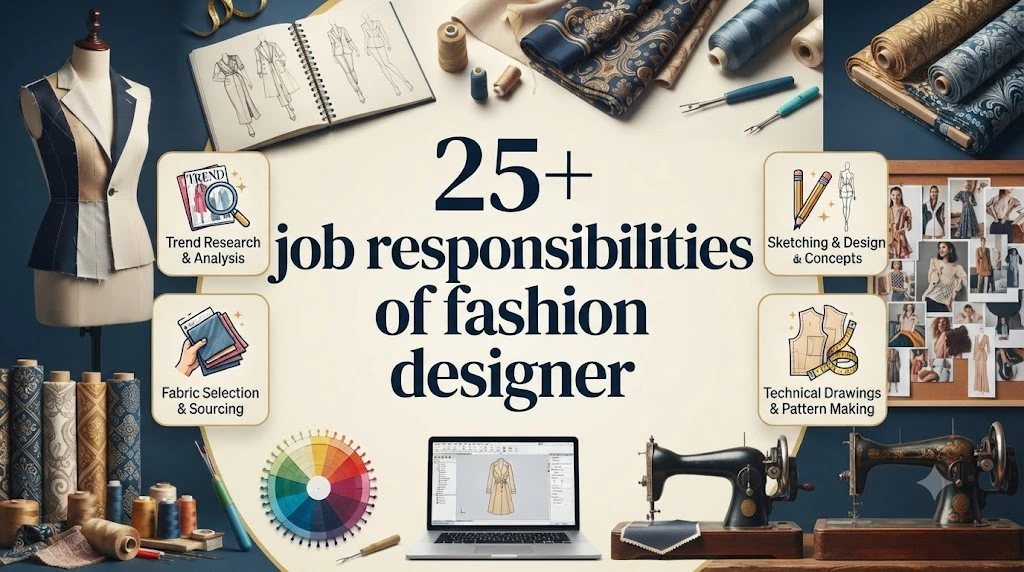
The role usually involves:
- Creating original clothing concepts.
- Researching fashion trends and customer preferences.
- Selecting suitable fabrics and materials.
- Developing design sketches and technical drawings.
- Working with production teams.
- Reviewing samples and improving designs.
- Maintaining brand identity.
For example, a designer creating a winter collection must consider more than appearance. They need to think about warmth, fabric quality, comfort, colours, manufacturing costs, and what customers actually want to wear.
Professional designers often spend time observing the world around them. Street fashion, architecture, travel, art, nature, and cultural traditions can all inspire new collections.
The best designers understand that fashion is not only about making something beautiful. It is about creating clothing that solves a customer’s needs and tells a story.
Daily Tasks and Routine Responsibilities of Fashion Designers
A fashion designer’s daily schedule changes depending on the project stage. Some days involve creative brainstorming, while others focus on meetings, production decisions, or reviewing samples.
Typical daily responsibilities include:
- Checking current fashion trends.
- Creating new design ideas.
- Drawing fashion illustrations.
- Selecting colours and fabrics.
- Communicating with team members.
- Reviewing garment samples.
- Making design adjustments.
A designer may begin the morning by researching upcoming trends and checking customer feedback. Later, they might meet with pattern makers to discuss fitting issues or review fabric samples with suppliers.
Many people imagine designers working alone, but modern fashion design is highly collaborative. Designers regularly work with:
- Pattern makers.
- Textile specialists.
- Tailors.
- Manufacturers.
- Fashion buyers.
- Marketing teams.
- Photographers and stylists.
Strong organisation skills help designers manage multiple projects at the same time. Missing deadlines can affect production schedules, fashion shows, and product launches.
An expert tip for new designers is to create a structured workflow. Keeping organised notes, design files, fabric samples, and project timelines makes the creative process smoother.
Fashion Research and Trend Analysis Responsibilities
One of the most important responsibilities of a fashion designer is understanding what influences customer choices. Designers spend significant time researching trends before creating new collections.
Fashion research involves studying:
- Colour trends.
- Fabric innovations.
- Consumer behaviour.
- Cultural influences.
- Fashion shows.
- Social media styles.
- Competitor designs.
Trend research does not mean copying what is popular. Skilled designers identify patterns and use them to create fresh ideas.
For example, if sustainable clothing becomes popular, a designer may explore recycled fabrics, natural dyes, and ethical production methods while creating a unique collection.
Fashion forecasting also plays an important role. Designers often predict what customers may want months or even years ahead.
Useful research methods include:
- Visiting fashion exhibitions.
- Following industry publications.
- Studying customer reviews.
- Observing street style.
- Analysing sales data.
A common mistake among beginners is chasing every trend. Great designers balance current trends with their own creative identity.
The strongest collections usually combine market awareness with originality.
Creating Fashion Concepts and Design Ideas
Turning inspiration into a complete fashion concept is one of the most creative parts of a designer’s work. Designers develop ideas before creating actual garments.
The design process often starts with:
- Inspiration research.
- Mood boards.
- Colour palettes.
- Fabric selection.
- Sketch development.
- Collection themes.
A mood board helps designers organise their vision. It may include images, textures, colours, patterns, and references that represent the feeling of a collection.
For example, a designer creating a summer collection might use ocean colours, lightweight fabrics, and relaxed silhouettes to create a fresh seasonal theme.
Fashion designers must think about the customer while developing ideas. A luxury eveningwear designer and a sportswear designer may use completely different approaches because their audiences have different needs.
Expert designers ask important questions:
- Who will wear this design?
- Where will they wear it?
- Does the design provide comfort?
- Does it match the brand identity?
Creative ideas become successful when they connect with real people.
Fashion Sketching and Technical Design Responsibilities
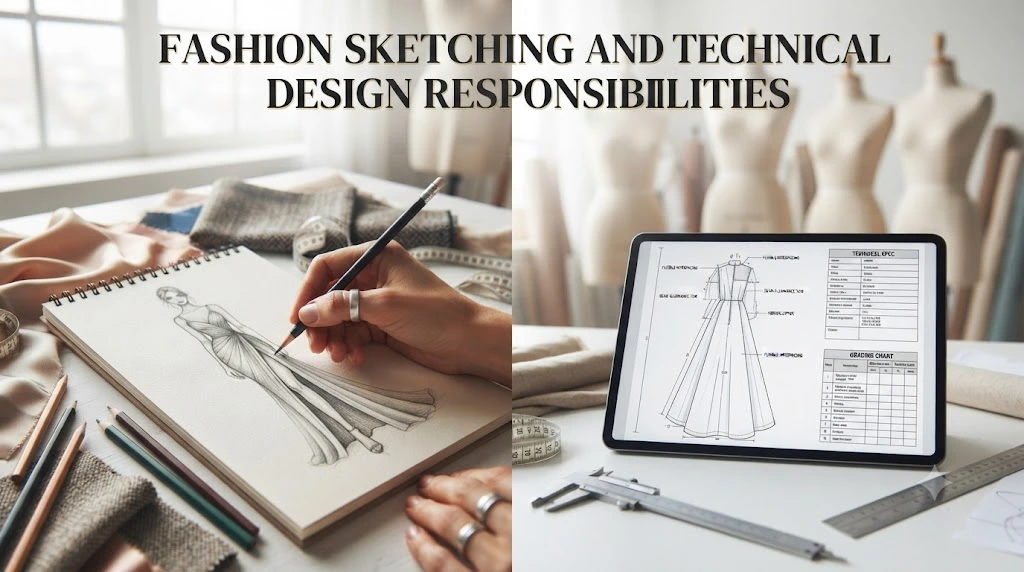
Fashion sketching allows designers to communicate their ideas visually. Before creating a garment, designers often create illustrations that show shape, style, and details.
Important sketching responsibilities include:
- Drawing clothing designs.
- Showing garment details.
- Creating front and back views.
- Adding colour concepts.
- Preparing technical drawings.
Technical drawings are especially important because manufacturers need accurate information to create the final product.
A technical sketch may include details such as:
- Measurements.
- Stitching instructions.
- Fabric information.
- Construction details.
- Placement of buttons, zips, or decorations.
Many designers now use digital tools alongside traditional drawing methods. Software helps create precise designs and makes communication with production teams easier.
However, creativity remains the foundation. Technology supports the designer’s vision but does not replace imagination.
Beginners often make the mistake of focusing only on beautiful sketches. A professional designer must also understand whether the design can realistically be produced.
Fabric Selection and Material Management Duties
Choosing the right fabric is one of the most important responsibilities of a fashion designer. Fabric affects the appearance, comfort, quality, and cost of a garment.
Designers consider:
- Texture.
- Weight.
- Durability.
- Colour performance.
- Sustainability.
- Production requirements.
For example, a flowing evening dress may require lightweight fabric that moves beautifully, while a winter coat needs a material that provides warmth and structure.
Fashion designers often work closely with textile suppliers to discover new materials and understand fabric performance.
Important fabric knowledge includes:
- Natural fibres such as cotton, silk, and wool.
- Synthetic materials such as polyester and nylon.
- Sustainable fabrics made from recycled or eco-friendly sources.
Poor fabric selection can affect the entire collection. A beautiful design may fail if the material does not support the intended shape.
Professional designers test fabrics before final production. They check how materials react to washing, movement, and different lighting conditions.
This attention to detail separates professional designers from beginners.
Garment Production and Quality Control Responsibilities
A fashion designer’s work does not end after creating a design concept. Turning an idea into a finished garment requires careful planning, teamwork, and quality control.
During production, designers work closely with manufacturers and production teams to ensure the final product matches the original vision.
Key production responsibilities include:
- Reviewing garment samples.
- Checking measurements and fitting.
- Approving fabric quality.
- Making design adjustments.
- Solving production problems.
- Ensuring final products meet quality standards.
Sample reviews are an important part of the process. A first sample may not always look exactly like the original design. The designer studies the sample, identifies problems, and suggests improvements.
For example, a jacket may look perfect in a sketch but feel uncomfortable when worn. The designer may need to adjust the shape, fabric, or construction method to improve the final result.
Quality control helps protect a brand’s reputation. Customers expect clothing to look good, feel comfortable, and last through regular use.
A common mistake among new designers is focusing only on appearance. Professional designers understand that quality, comfort, and durability are equally important.
Responsibilities of a Fashion Designer in Team Collaboration
Fashion design is rarely a solo activity. Designers work with many professionals who help transform creative ideas into finished products.
Strong teamwork allows fashion projects to move smoothly from concept to completion.
Fashion designers often collaborate with:
- Pattern makers.
- Tailors.
- Textile experts.
- Production managers.
- Fashion buyers.
- Marketing teams.
- Photographers.
- Stylists.
Clear communication helps prevent mistakes. A designer must explain ideas properly so every team member understands the expected outcome.
For example, if a designer wants a specific sleeve shape or fabric finish, they need to communicate those details clearly to the production team.
Successful designers also respect the expertise of others. A pattern maker may suggest a better construction method, or a textile specialist may recommend a more suitable fabric.
Listening to professional advice improves the final design.
One important career lesson is that fashion success comes from collaboration. A talented designer with strong teamwork skills often achieves better results than someone who works without considering others.
Customer Research and Fashion Market Responsibilities
Fashion designers create products for people, so understanding customers is a major responsibility. A design may be creative, but it must also connect with the target audience.
Customer research helps designers understand:
- Buying habits.
- Lifestyle preferences.
- Fashion needs.
- Price expectations.
- Comfort requirements.
For example, a designer creating office clothing needs to consider professional appearance, comfort during long workdays, and practical features.
Customer research methods include:
- Studying market reports.
- Reviewing customer feedback.
- Analysing sales trends.
- Observing social media discussions.
- Understanding competitor products.
Successful designers balance creativity with customer expectations.
A common mistake is designing only according to personal taste. While personal style matters, professional designers create collections that customers can relate to and enjoy wearing.
The best fashion pieces often combine the designer’s vision with the customer’s lifestyle.
Fashion Branding and Collection Development Duties
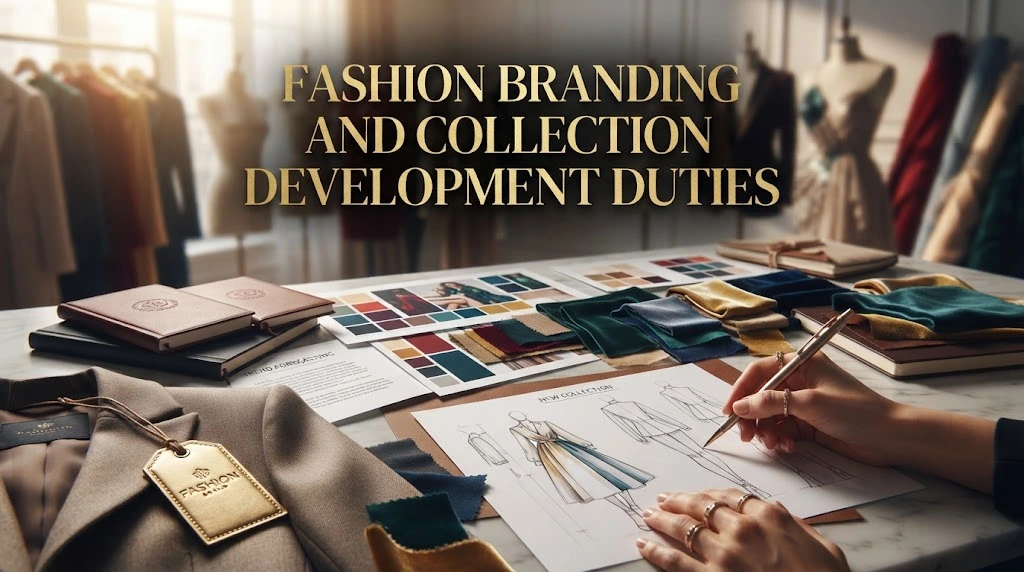
Fashion designers often contribute to building a brand’s identity. A successful collection should communicate a clear message and create an emotional connection with customers.
Collection development responsibilities include:
- Creating a design theme.
- Maintaining brand style.
- Planning seasonal collections.
- Selecting consistent colours and materials.
- Creating a complete fashion story.
A collection is not simply a group of individual garments. Each piece should work together and represent a shared idea.
For example, a luxury brand may focus on elegance, premium materials, and detailed craftsmanship. A streetwear brand may focus on comfort, youth culture, and bold designs.
Designers help shape how customers see a brand.
Important branding elements include:
- Visual identity.
- Design consistency.
- Customer experience.
- Product quality.
- Brand values.
A strong collection can help a brand stand out in a competitive fashion market.
Expert designers understand that people often buy emotions, not just clothing. A great design makes customers feel confident, stylish, and connected.
Sustainable Fashion Responsibilities of Modern Designers
Sustainability has become an important part of modern fashion design. Customers increasingly care about where clothing comes from, how it is made, and its impact on the environment.
Many designers now focus on responsible practices such as:
- Using eco-friendly materials.
- Reducing fabric waste.
- Supporting ethical production.
- Creating long-lasting designs.
- Choosing responsible suppliers.
Sustainable fashion requires designers to think differently. Instead of creating clothing that quickly loses value, designers focus on quality pieces that customers can use for longer.
For example, a designer may create a timeless jacket using recycled materials instead of producing a short-term trend item.
Modern designers also explore innovative solutions, including:
- Organic fabrics.
- Recycled textiles.
- Digital sampling.
- Waste reduction techniques.
Sustainability is not only an environmental responsibility. It also helps brands build trust with customers.
A common mistake is treating sustainability as only a marketing idea. Professional designers understand that genuine responsibility requires thoughtful decisions throughout the design process.
Fashion Designer Responsibilities in Digital Fashion and Technology
Technology has changed how designers create, present, and produce fashion. Modern fashion professionals need to understand digital tools and new industry developments.
Digital responsibilities may include:
- Creating computer-based fashion illustrations.
- Developing 3D garment designs.
- Preparing digital presentations.
- Using fashion design software.
- Exploring virtual fashion concepts.
Digital tools allow designers to test ideas faster and communicate more effectively with teams around the world.
For example, a designer can create a 3D version of a garment, adjust the fit, experiment with colours, and review the design before producing a physical sample.
Technology also supports sustainability by reducing unnecessary prototypes and material waste.
Important digital skills include:
- Computer-aided design.
- Graphic design software.
- Digital pattern creation.
- 3D fashion modelling.
Designers who ignore technology may struggle to compete in the modern industry. However, technology works best when combined with creativity and human understanding.
The future of fashion belongs to designers who can blend artistic skills with digital innovation.
Managing Deadlines and Fashion Project Responsibilities
Fashion designers often manage multiple projects at the same time. Meeting deadlines is essential because fashion operates around seasons, collections, launches, and events.
Project management responsibilities include:
- Planning design schedules.
- Organising tasks.
- Tracking production progress.
- Communicating deadlines.
- Managing changes.
A designer preparing a fashion show collection may need to coordinate sketches, fabric orders, fittings, photography, and final presentations within a limited time.
Strong organisation prevents unnecessary stress and production delays.
Helpful habits include:
- Creating project timelines.
- Prioritising important tasks.
- Keeping design files organised.
- Maintaining communication with teams.
A common mistake among creative professionals is underestimating the importance of planning. Creativity needs structure to become successful.
Great designers know when to explore ideas and when to make decisions.
Common Challenges Faced by Fashion Designers
Fashion design can be exciting, but it also comes with challenges. Understanding these difficulties helps aspiring designers prepare for real industry situations.
Common challenges include:
- Meeting tight deadlines.
- Managing creative pressure.
- Balancing trends with originality.
- Handling production issues.
- Managing customer expectations.
- Staying updated with industry changes.
Creative pressure is one of the biggest challenges. Designers often need to create fresh ideas repeatedly while maintaining quality.
For example, a designer working for a seasonal brand may need to develop several collections each year while keeping the designs unique.
Successful designers develop strategies to handle pressure, such as:
- Maintaining inspiration sources.
- Planning projects early.
- Taking feedback positively.
- Continuing skill development.
Challenges are part of growth. Each problem teaches designers how to become more skilled and professional.
Skills Needed to Perform Fashion Designer Responsibilities Successfully
Fashion designers need a combination of creative, technical, and personal skills. Developing these abilities improves career opportunities and professional confidence.
Important skills include:
- Creativity.
- Fashion illustration.
- Fabric knowledge.
- Sewing understanding.
- Trend research.
- Communication.
- Time management.
- Problem-solving.
- Digital design skills.
- Business awareness.
Creative skills help designers create original ideas. Technical skills help them turn those ideas into real products.
Soft skills are equally important. A designer who communicates well and manages time effectively can work better with teams.
Continuous learning is essential because fashion never stays the same.
Professional designers regularly improve their knowledge through:
- Fashion workshops.
- Industry events.
- Online courses.
- Design experiments.
- Collaboration projects.
The strongest designers never stop developing their skills.
Career Growth Opportunities After Learning Fashion Designer Responsibilities
Understanding the responsibilities of a fashion designer opens the door to many career paths. The fashion industry offers opportunities in design, management, entrepreneurship, and creative leadership.
Possible career positions include:
- Junior fashion designer.
- Senior fashion designer.
- Fashion consultant.
- Creative director.
- Costume designer.
- Textile designer.
- Fashion entrepreneur.
Many designers eventually create their own fashion brands. Others build careers within established companies.
Career growth usually depends on:
- Experience.
- Portfolio strength.
- Industry connections.
- Creativity.
- Business knowledge.
Building a strong reputation takes time. Successful designers often spend years improving their craft and understanding customers.
A valuable recommendation for beginners is to focus on learning rather than chasing quick success. Strong skills create long-term opportunities.
Conclusion
Fashion design is a career built on creativity, dedication, and understanding people. The responsibilities of a fashion designer go far beyond creating attractive clothing. Designers research trends, develop concepts, choose materials, manage production, collaborate with teams, and create products that connect with customers.
Understanding fashion designer job responsibilities gives aspiring professionals a realistic view of this exciting industry. A successful designer combines artistic imagination with technical knowledge, communication skills, and business awareness.
The most memorable designers are those who create more than clothing. They create confidence, express emotions, and help people feel comfortable in their own style.
With continuous learning, practical experience, and genuine passion, a fashion designer can build a rewarding career that leaves a lasting impact.
FAQs About Fashion Designer Job Responsibilities
What does a fashion designer do every day?
A fashion designer researches trends, creates designs, selects fabrics, develops samples, works with teams, and reviews garments to ensure quality.
What are the main responsibilities of a fashion designer?
The main responsibilities include designing clothing, researching trends, choosing materials, creating sketches, managing production, and improving final products.
Do fashion designers only create clothing designs?
No. Fashion designers may also work on accessories, textiles, costumes, branding, product development, and fashion technology.
What skills are important for fashion designer responsibilities?
Important skills include creativity, communication, fabric knowledge, technical design ability, trend awareness, digital skills, and problem-solving.
How does a fashion designer work with other professionals?
Designers collaborate with pattern makers, manufacturers, textile experts, marketers, stylists, and other teams to complete fashion projects.
What challenges do fashion designers face?
Common challenges include meeting deadlines, managing creative pressure, understanding customer needs, and keeping up with changing fashion trends.
Can fashion designers work independently?
Yes. Many designers work as freelancers, start their own brands, or create independent fashion collections after gaining experience.