There are evenings when you want a cocktail that feels special without turning the kitchen into a science lab. You open a bottle of bourbon, reach for the bitters, cut a piece of citrus, and suddenly the whole mood changes. A good bourbon cocktail can feel warm, familiar, and quietly luxurious all at once.
That is the beauty of classic bourbon cocktails. They do not need a long ingredient list to make an impression. Bourbon already brings vanilla, caramel, oak, spice, fruit, and warmth to the glass. The right supporting ingredients simply help those flavors shine.
Maybe you already have a favorite Old Fashioned. Maybe you always order a Manhattan when you go out. Or perhaps you have a bottle of bourbon sitting on your shelf because you like whiskey but have never figured out what to do with it beyond pouring it over ice.
You are in the right place.
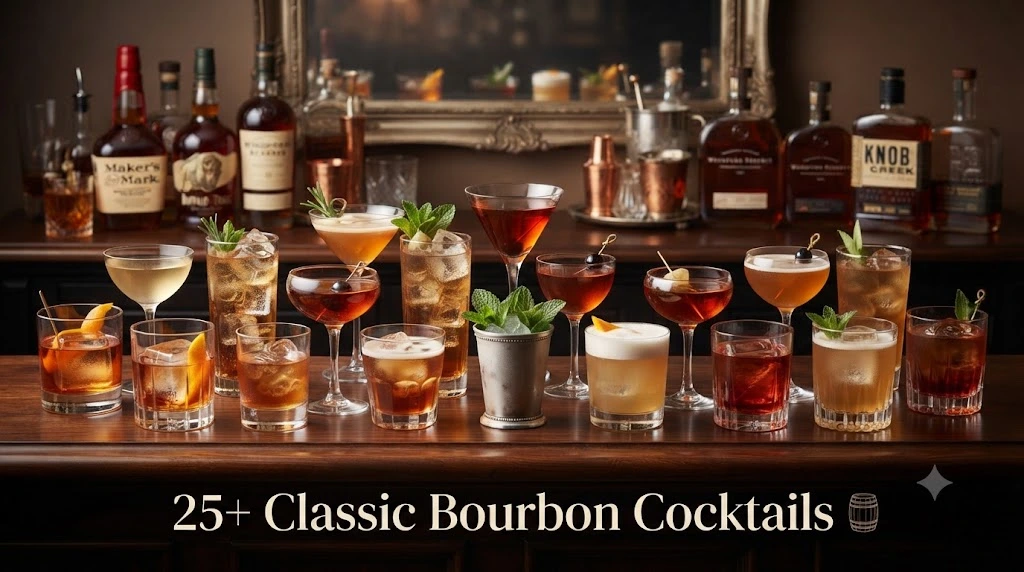
This guide covers the essential bourbon drinks worth knowing, from the timeless Old Fashioned and Manhattan to the refreshing Mint Julep, bright Whiskey Sour, bitter Boulevardier, and several less obvious choices. You will also learn how to choose bourbon, balance sweetness and acidity, select the right glass, use ice properly, and avoid the small mistakes that can make a good cocktail taste flat.
The recipes below focus on classic technique rather than complicated tricks. You do not need professional equipment or a wall of expensive bottles. With a few reliable ingredients and a little attention to proportions, you can make excellent bourbon cocktails at home.
What Makes Bourbon Cocktails Classic
A classic cocktail earns its place because people keep returning to it. Trends come and go, but certain combinations remain useful because they balance flavor so well.
Bourbon works particularly well in classic cocktails because it has enough body to stand up to sugar, citrus, bitters, vermouth, herbal ingredients, and bitter liqueurs. You can make a drink that highlights the whiskey or one that uses the whiskey as part of a larger flavor structure.
The International Bartenders Association lists several whiskey-based classics, including the Old Fashioned, Manhattan, Boulevardier, Mint Julep, and Whiskey Sour. Their official recipes also show how different techniques can create completely different drinks from a whiskey base.
Most classic bourbon cocktails fall into a few useful families:
- Spirit-forward drinks, such as the Old Fashioned.
- Stirred vermouth cocktails, such as a bourbon-style Manhattan.
- Sour cocktails, such as the Whiskey Sour.
- Herbal and refreshing drinks, such as the Mint Julep.
- Bitter, complex cocktails, such as the Boulevardier.
- Tall, refreshing drinks, such as bourbon highballs and mules.
Understanding these families makes cocktail selection easier. Instead of memorizing dozens of recipes, you learn what kind of drink you are in the mood for.
Old Fashioned Bourbon Cocktail
The Old Fashioned is probably the best place to start if you want to understand bourbon cocktails.
The drink is wonderfully simple. The IBA recipe calls for 45 ml of bourbon or rye whiskey, one sugar cube, a few dashes of bitters, and a little water. The drink gets stirred with ice and finished with orange and a cocktail cherry.
For a home version, try:
- 2 ounces bourbon.
- 1 teaspoon simple syrup, or one small sugar cube.
- 2 to 3 dashes aromatic bitters.
- Orange peel.
- Large ice cube.
Add the sugar and bitters to a rocks glass. Add the bourbon and ice, then stir until the drink feels cold and slightly diluted.
Express the orange peel over the surface. Rub the peel around the rim if you enjoy a stronger citrus aroma, then drop it into the glass.
The important part is not the garnish. Balance is everything.
If the drink tastes too hot, stir it longer. If it tastes too sweet, reduce the syrup next time. If it tastes flat, try a fresher orange peel or a slightly bolder bourbon.
One common mistake is treating an Old Fashioned like a fruit cocktail. You do not need orange juice, several cherries, or a large amount of syrup. The whiskey should remain clearly noticeable.
Bourbon Manhattan
The Manhattan traditionally uses rye whiskey, but bourbon creates a softer, rounder variation that many whiskey drinkers enjoy.
The IBA’s current Manhattan specification calls for rye whiskey, sweet red vermouth, and a dash of bitters, stirred with ice and strained into a chilled cocktail glass with a cocktail cherry.
For a bourbon version, try:
- 2 ounces bourbon.
- 1 ounce sweet vermouth.
- 2 dashes aromatic bitters.
- Cocktail cherry for garnish.
Add everything to a mixing glass with plenty of ice. Stir for about 20 to 30 seconds, then strain into a chilled coupe or Nick & Nora glass.
The difference between an Old Fashioned and a Manhattan is easy to understand.
An Old Fashioned uses sugar to soften the whiskey directly. A Manhattan uses sweet vermouth, which contributes sweetness, herbal notes, spice, fruit, and complexity.
That makes the Manhattan a great choice when you want something deeper and more aromatic.
The biggest mistake is shaking it. A classic Manhattan is a stirred drink. Shaking introduces more aeration and can create a different texture and appearance.
If you want a richer bourbon Manhattan, choose a bourbon with enough proof and flavor to stand beside the vermouth rather than disappearing behind it.
Bourbon Whiskey Sour
The Whiskey Sour is the answer when you want bourbon with freshness and brightness.
The IBA version combines bourbon, fresh lemon juice, sugar syrup, and optional egg white. It is shaken with ice and strained, with orange and a maraschino cherry used as garnish.
A practical home recipe is:
- 2 ounces bourbon.
- ¾ ounce fresh lemon juice.
- ½ to ¾ ounce simple syrup.
- Egg white, optional.
- Orange peel or slice.
- Cocktail cherry, optional.
Add the bourbon, lemon juice, syrup, and egg white if using it to a shaker. Shake first without ice if you want a fuller foam, then add ice and shake again.
Strain over fresh ice.
The secret is using fresh lemon juice. Bottled lemon juice usually lacks the bright aroma and clean acidity that make a good sour so refreshing.
Sweetness should balance the lemon rather than hide it. If your bourbon is naturally sweet, start with less syrup.
Egg white is optional. It does not simply add decoration; it changes the texture by creating a soft, silky foam.
If you want a lighter, simpler drink, skip the egg white and focus on getting the sweet-sour balance right.
Kentucky Mint Julep
The Mint Julep is one of the most recognizable bourbon cocktails, particularly because of its strong connection to Kentucky and the Kentucky Derby.
The IBA recipe uses bourbon, fresh mint, powdered sugar, and water, then serves the drink over cracked ice with a mint garnish.
A simple home version uses:
- 2½ ounces bourbon.
- 1 teaspoon sugar or a small amount of simple syrup.
- Fresh mint.
- Crushed or cracked ice.
Gently press the mint with sugar and water. Do not destroy the leaves. You want to release the fragrant oils, not turn the mint into green paste.
Add bourbon and fill the glass with crushed ice. Stir until the outside of the glass becomes cold and frosty.
Then add a generous mint sprig.
That garnish matters more than you might think. Bring the mint close to your nose before taking a sip and the drink immediately feels more refreshing.
A common mistake is over-muddling the mint. Aggressive muddling can release bitter flavors from the leaves.
For the best result, handle mint gently and use plenty of fresh ice.
Bourbon Boulevardier
The Boulevardier is ideal for people who enjoy bitter cocktails.
Think of it as a whiskey-driven cousin of the Negroni. The IBA recipe uses bourbon or rye, bitter red liqueur, and sweet red vermouth, stirred and strained into a chilled glass with an orange zest garnish.
A classic starting point is:
- 1½ ounces bourbon.
- 1 ounce bitter red liqueur.
- 1 ounce sweet vermouth.
- Orange twist.
Combine the ingredients in a mixing glass with ice. Stir until properly chilled, then strain.
The flavor is bold. You get bourbon’s warmth, vermouth’s herbal sweetness, and a firm bitter note from the liqueur.
If that sounds intimidating, adjust the ratio slightly toward bourbon. This gives the whiskey more room to speak.
The orange peel is not optional in spirit. It adds a bright aromatic contrast to the bitter ingredients.
The Boulevardier is especially good in cooler weather, when a darker, richer drink feels appropriate.
If you already love Negronis, this is one of the easiest bourbon cocktails to add to your home rotation.
Bourbon Sazerac
The Sazerac occupies an interesting place in whiskey cocktail history. Modern versions commonly use rye whiskey, although bourbon can create a softer variation.
The IBA’s current recipe uses Cognac and absinthe, while noting that rye whiskey replaced Cognac historically as it became harder to obtain after the American Civil War.
For a bourbon-focused variation, you can use:
- 2 ounces bourbon.
- 1 sugar cube or a small amount of simple syrup.
- 2 to 3 dashes aromatic bitters.
- A small amount of absinthe for rinsing.
- Lemon peel.
Rinse a chilled rocks glass with absinthe and discard the excess. Stir the bourbon, sugar, and bitters with ice, then strain into the prepared glass.
Express lemon oil over the drink and discard or add the peel according to your preference.
The absinthe rinse should be subtle. You are not trying to make an anise-flavored cocktail.
This is a drink where aroma does a lot of work. The combination of lemon oil, bitters, whiskey, and a faint herbal note creates a complex experience without adding a long list of ingredients.
If you have never tried a Sazerac, start with a light absinthe rinse.
Bourbon Gold Rush
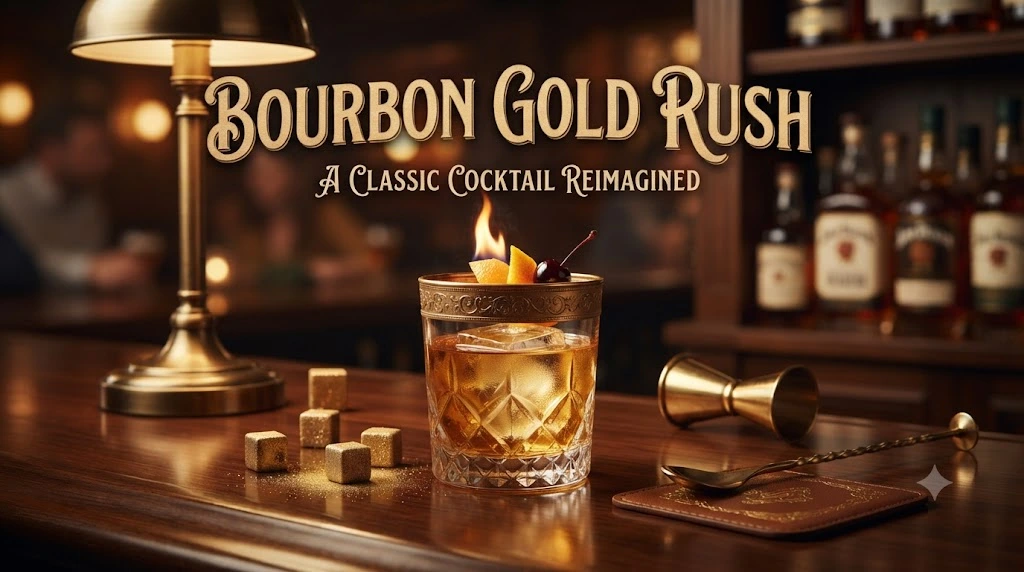
The Gold Rush is a modern classic built around a wonderfully simple combination: bourbon, fresh lemon juice, and honey syrup.
It is an excellent choice when you want something bright and easy but do not want to make a traditional Whiskey Sour.
For one drink, use:
- 2 ounces bourbon.
- ¾ ounce fresh lemon juice.
- ¾ ounce honey syrup.
- Lemon peel.
Shake everything with ice and strain over fresh ice in a rocks glass.
Honey gives the drink a rounder sweetness than standard simple syrup. It also pairs naturally with bourbon’s vanilla and oak notes.
The most important technique is making the honey syrup thin enough to mix easily. Equal parts honey and warm water work well as a starting point.
Let the mixture cool before using it.
The Gold Rush is especially useful for beginners because the recipe is forgiving. If the first version tastes too tart, add a little more honey syrup. If it tastes too sweet, increase the lemon slightly.
That makes it a good gateway cocktail for bourbon beginners.
Bourbon Paper Plane
The Paper Plane is not as old as the Old Fashioned or Manhattan, but it has become a widely recognized modern classic.
It combines bourbon with bitter and citrus-driven ingredients to create a bright, balanced drink.
A typical equal-parts structure uses:
- Bourbon.
- Amaro.
- Aperitivo.
- Fresh lemon juice.
Add equal amounts to a shaker with ice. Shake well and strain into a chilled coupe.
The result is very different from an Old Fashioned.
Instead of emphasizing the whiskey’s oak and vanilla, the Paper Plane creates a balanced conversation between whiskey, citrus, bitterness, and herbal sweetness.
This is an excellent choice when you want a bourbon cocktail that does not taste like a heavy whiskey drink.
Fresh lemon matters here because the acidity keeps the other ingredients from becoming overly rich.
For presentation, use a chilled coupe and keep the garnish simple. The drink already has a beautiful warm color.
Bourbon Brown Derby
The Brown Derby is a useful cocktail when you want to combine bourbon with grapefruit.
Its basic structure is straightforward:
- Bourbon.
- Fresh grapefruit juice.
- Honey syrup.
Shake the ingredients with ice and strain into a chilled glass.
The grapefruit brings a slightly bitter citrus character that works surprisingly well with bourbon.
If you find lemon-based whiskey drinks too sharp, grapefruit can offer a softer and more aromatic alternative.
Use fresh grapefruit juice whenever possible. Fresh juice gives you better aroma and a more lively flavor.
The honey syrup should provide enough sweetness to balance the grapefruit without making the drink heavy.
A useful trick is to taste the grapefruit juice before making the cocktail. Grapefruits vary significantly in sweetness and bitterness.
If the juice tastes very tart, you may need slightly more honey syrup. If it tastes naturally sweet, use less.
This is a perfect example of why cocktail recipes are starting points, not unbreakable laws.
Bourbon Highball and Whiskey Ginger
Not every good bourbon cocktail needs to be complicated.
A bourbon highball combines whiskey with a larger amount of a carbonated mixer, creating a tall, refreshing drink.
For a simple bourbon highball:
- 2 ounces bourbon.
- 4 to 6 ounces chilled sparkling water.
- Large ice.
- Lemon peel.
Build the drink in a tall glass filled with ice. Add bourbon, top with sparkling water, and stir gently.
For a Whiskey Ginger, replace the sparkling water with ginger ale or ginger beer.
The result is lighter and more refreshing than an Old Fashioned.
This is an excellent drink for warm afternoons, casual dinners, or people who are still learning to enjoy bourbon.
The key is keeping the mixer cold and the ice plentiful.
Warm soda and melting ice can make a highball taste flat very quickly.
Use a tall glass, fresh ice, and a citrus garnish. The drink should feel clean, cold, and effortless.
How to Choose Bourbon for Cocktails
You do not need the most expensive bourbon on the shelf to make a great cocktail.
In fact, an extremely delicate or expensive bottle may not be the best choice when several strong ingredients are involved.
For an Old Fashioned, look for bourbon with enough character to remain noticeable after dilution and sweetening.
For a Manhattan, a bourbon with spice and structure works well because vermouth adds its own sweetness and herbal flavor.
For a Whiskey Sour, you can use a slightly softer bourbon because lemon and syrup create a stronger flavor framework.
A useful home-bar strategy is to keep two bottles:
- One versatile bourbon for everyday cocktails.
- One favorite bourbon for sipping or spirit-forward drinks.
That gives you flexibility without filling your shelf with bottles you rarely use.
You should also pay attention to proof.
A slightly higher-proof bourbon can work beautifully in an Old Fashioned or Manhattan because dilution from ice softens the alcohol while leaving plenty of flavor behind.
But higher proof is not automatically better.
The best bourbon for a cocktail is the one that fits the recipe and your palate.
Bourbon Cocktail Ice, Glassware, and Garnishes
Good ingredients can still produce a disappointing drink if the technique is careless.
Ice is particularly important.
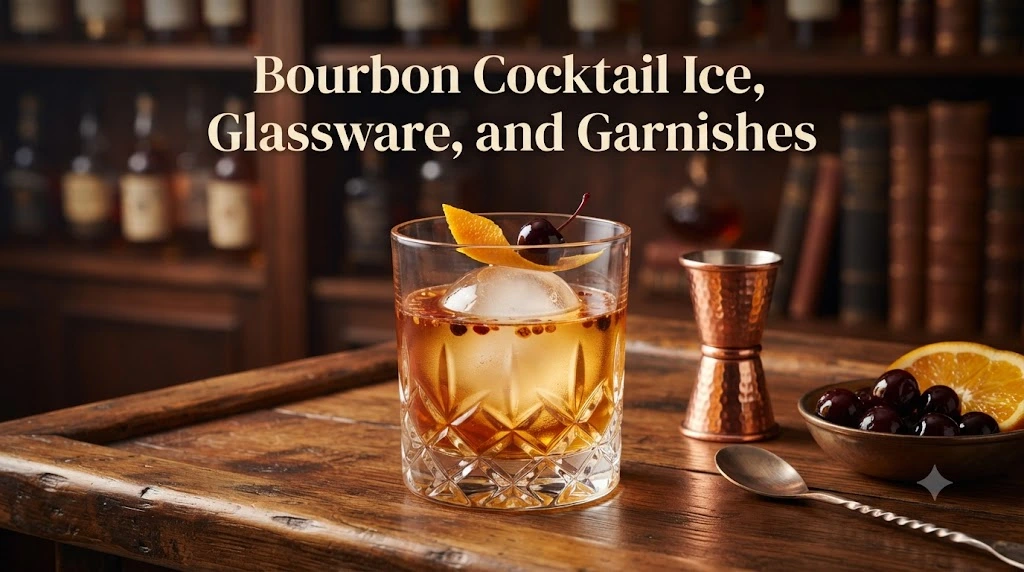
For stirred cocktails such as the Old Fashioned, Manhattan, and Boulevardier, use large, solid ice cubes whenever possible. They chill the drink while controlling dilution.
For a Mint Julep, crushed or cracked ice is part of the experience. The IBA specifically calls for cracked ice, while other respected recipes use crushed ice.
Shaken cocktails such as Whiskey Sours need enough ice to chill the drink quickly.
Glassware should match the cocktail.
Use:
- A rocks glass for Old Fashioneds and Boulevardiers.
- A chilled coupe or cocktail glass for Manhattans and Paper Planes.
- A julep cup or suitable rocks glass for Mint Juleps.
- A tall glass for highballs.
- A rocks glass for many Whiskey Sour variations.
Garnishes should serve a purpose.
Orange peel works beautifully with bourbon because its aroma complements the whiskey. Lemon peel adds brightness. Mint creates freshness. A cocktail cherry provides a sweet fruit finish.
Avoid turning every drink into a fruit salad.
Simple presentation usually looks more professional.
How to Balance Sweetness, Bitterness, and Acidity
Cocktail balance becomes much easier once you understand what each ingredient is doing.
Sugar reduces the perception of alcohol and acidity. Citrus adds brightness and tension. Bitters add aromatic depth and complexity. Vermouth adds sweetness, herbs, spice, and fortified-wine character.
Bourbon brings the foundation.
If a drink feels too hot, it may need more dilution or slightly more sweetness.
If it tastes too sweet, increase acidity where appropriate or reduce the sweetener.
If it tastes sour, add a little more sweetener.
If it tastes flat, bitters or citrus aroma may help.
If it tastes watery, you may have over-diluted it.
This is why tasting is part of cocktail making.
Do not simply follow a recipe and assume the first result must be perfect. Taste, adjust, and learn what your palate likes.
The ingredients themselves also vary. One lemon can be more acidic than another. One bourbon can taste sweeter than another. One vermouth can be richer or more herbal than another.
Great bartending is partly the ability to respond to those differences.
Common Mistakes With Bourbon Cocktails
Most disappointing bourbon cocktails fail because of small technique problems rather than expensive ingredient choices.
One common mistake is using too much sweetener. Sugar should support the whiskey, not bury it.
Another is failing to dilute stirred cocktails properly. Bourbon straight from the bottle can taste harsh when mixed with sugar and bitters. Proper stirring adds controlled dilution and temperature.
Shaking a drink that should be stirred is another frequent problem. Manhattans and Boulevardiers traditionally benefit from stirring because the goal is a clear, silky, spirit-forward cocktail.
Other mistakes include:
- Using stale or poorly stored vermouth.
- Using warm mixers in highballs.
- Using cloudy, rapidly melting ice.
- Over-muddling fresh herbs.
- Adding too much garnish.
- Using bottled citrus when fresh juice is available.
- Free-pouring ingredients without learning the correct proportions.
- Choosing an expensive bourbon simply because it is expensive.
- Ignoring dilution.
- Serving every bourbon cocktail in the same glass.
Vermouth deserves special attention. Unlike distilled spirits, it is a fortified wine and should generally be refrigerated after opening.
Freshness matters.
If your Manhattan suddenly tastes dull even though you changed nothing else, check the vermouth before blaming the bourbon.
Best Bourbon Cocktails for Beginners
If you are new to bourbon, start with drinks that let you understand the spirit without overwhelming you.
The best progression is usually:
Start with a Whiskey Ginger or highball. It introduces bourbon with plenty of refreshing dilution.
Move to a Whiskey Sour. You learn how bourbon interacts with citrus and sweetness.
Try an Old Fashioned. You begin to taste the whiskey more clearly.
Try a Mint Julep. You experience bourbon with fresh herbs and crushed ice.
Try a Manhattan. You learn how fortified wine and bitters transform whiskey.
Finish with a Boulevardier. You explore bitterness and more complex flavor.
This progression is useful because each cocktail teaches something different.
You learn dilution from the highball, acidity from the sour, sweetness and bitters from the Old Fashioned, aroma from the Julep, fortified wine from the Manhattan, and bitterness from the Boulevardier.
That is more valuable than memorizing twenty recipes.
Once you understand those six drinks, you can look at almost any bourbon cocktail and make a reasonable guess about how its ingredients will behave.
Classic Bourbon Cocktails for Different Occasions
The right cocktail depends on the moment.
For a quiet evening at home, an Old Fashioned is difficult to beat. It is slow, simple, and spirit-forward.
For dinner, a Manhattan works beautifully because it is aromatic without being overly refreshing or sweet.
For a summer gathering, a Mint Julep or bourbon highball feels more appropriate.
For a relaxed brunch or afternoon event, a Whiskey Sour offers citrus brightness.
For an evening when you want something darker and more complex, choose a Boulevardier.
For guests who claim they do not like whiskey, try a Paper Plane or Whiskey Sour. Citrus and other flavors can make bourbon more approachable.
For someone who already loves bourbon, serve the Old Fashioned with a good large cube of ice and a fresh orange peel.
A thoughtful host does not need to offer twenty drinks.
Offer two or three cocktails that suit the occasion, and make them well.
That is usually more memorable than a huge menu full of inconsistent drinks.
How to Build a Simple Bourbon Cocktail Bar
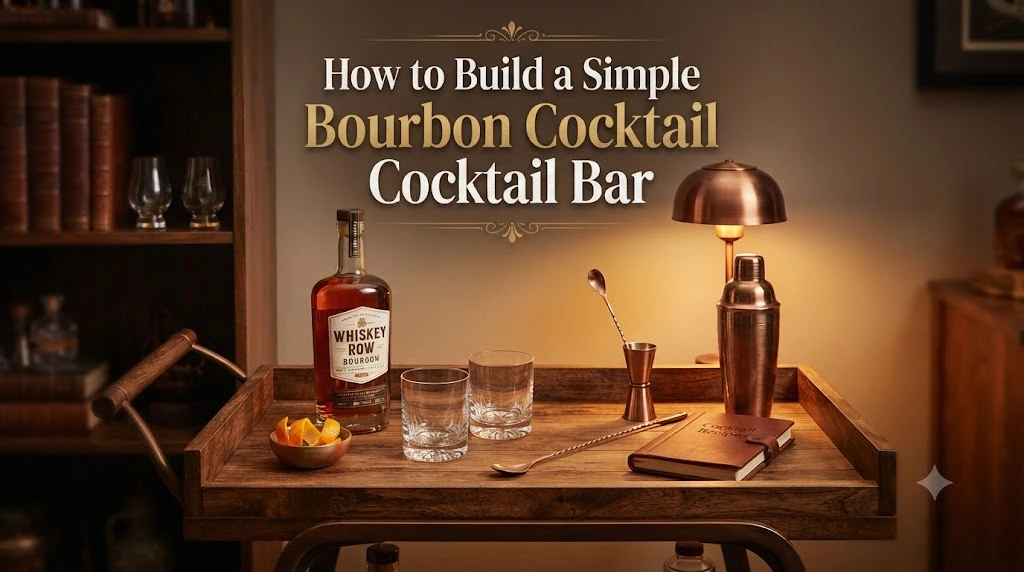
You can make a surprisingly large number of drinks with a small collection of ingredients.
Start with a bourbon you enjoy.
Then add:
- Aromatic bitters.
- Sweet vermouth.
- Fresh lemons.
- Fresh oranges.
- Fresh mint.
- Simple syrup ingredients.
- Honey.
- A bitter red aperitivo.
- A cocktail cherry.
- Plenty of good ice.
With that small setup, you can make Old Fashioneds, Manhattans, Whiskey Sours, Mint Juleps, Boulevardiers, Gold Rushes, Brown Derbys, and several variations.
You do not need every type of bitters or every flavored liqueur.
Build your bar gradually.
Buy something new when you have a specific cocktail in mind rather than purchasing bottles because they look interesting.
This saves money and makes your home bar more practical.
You should also keep your tools simple:
- Jigger.
- Mixing glass.
- Bar spoon.
- Shaker.
- Strainer.
- Citrus peeler.
- Muddler.
- Good glassware.
A small, well-used bar is better than a large collection of ingredients gathering dust.
Classic Bourbon Cocktails FAQs
What is the most classic bourbon cocktail?
The Old Fashioned is one of the most iconic choices. The International Bartenders Association lists it with bourbon or rye whiskey, sugar, bitters, water, ice, and an orange and cherry garnish.
What are the best bourbon cocktails for beginners?
A Whiskey Sour, Whiskey Ginger, Old Fashioned, and Mint Julep are excellent starting points. They introduce different bourbon styles without requiring complicated techniques.
Can I use bourbon instead of rye in a Manhattan?
Yes. The IBA specifies rye for its Manhattan, but bourbon creates a softer, rounder variation. The basic combination of whiskey, sweet vermouth, and bitters remains the same.
What bourbon is best for an Old Fashioned?
Choose a bourbon that you enjoy on its own and that has enough flavor to stand up to dilution, sugar, and bitters. A moderately priced, flavorful bottle often makes more sense than using an expensive sipping bourbon.
Should bourbon cocktails be shaken or stirred?
It depends on the recipe. Stir spirit-forward drinks such as an Old Fashioned, Manhattan, and Boulevardier. Shake drinks containing citrus, such as a Whiskey Sour or Gold Rush.
What is the difference between an Old Fashioned and a Whiskey Sour?
An Old Fashioned combines whiskey with sugar and bitters and focuses on the spirit. A Whiskey Sour combines bourbon with fresh lemon juice and sweetener, creating a brighter sweet-and-sour profile. The IBA’s recipes reflect this difference.
What ingredients should I keep at home for bourbon cocktails?
Start with bourbon, aromatic bitters, sweet vermouth, lemons, oranges, mint, sugar or simple syrup ingredients, and quality ice. Add a cocktail cherry and a bitter red aperitivo if you want to expand into more recipes.
Conclusion
The best classic bourbon cocktails are not necessarily the strongest or most complicated. They are the drinks that make you appreciate how a few well-chosen ingredients can change the personality of a familiar spirit.
Start with the Old Fashioned if you want bourbon front and center. Choose the Whiskey Sour for brightness, the Manhattan for depth, the Mint Julep for freshness, and the Boulevardier when you want something bitter and sophisticated.
Then pay attention to the details. Measure your ingredients. Use fresh citrus. Chill your glass when appropriate. Treat dilution as an ingredient rather than an accident. Keep vermouth fresh, handle herbs gently, and use garnishes with purpose.
Most of all, do not feel pressured to chase expensive bottles or complicated techniques. A good bourbon, fresh ingredients, proper ice, and a balanced recipe will take you a long way.
That is what makes these drinks classics. They are simple enough to make at home, distinctive enough to remember, and flexible enough to become your own.