
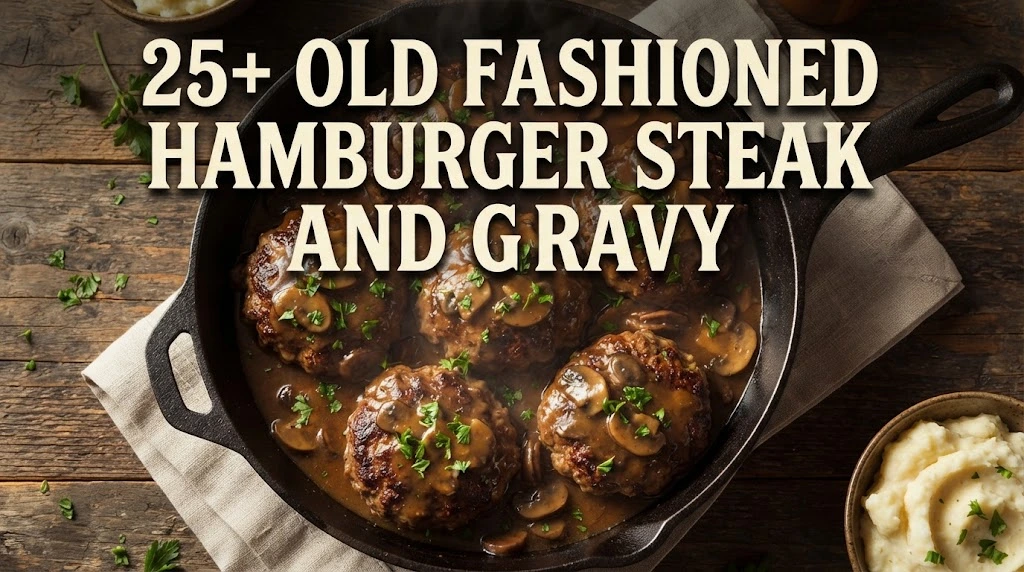
There are some dinners that do more than fill your stomach. They bring back a feeling. Old fashioned hamburger steak and gravy is one of those meals—the kind that reminds you of a family kitchen, a warm plate waiting at the table, and gravy that somehow makes everything taste better.
This is simple country-style comfort food at its best. Seasoned ground beef gets shaped into tender patties, browned until beautifully crusted, and then finished in a savory onion gravy. Serve it over mashed potatoes, rice, or even buttered noodles, and you have a hearty dinner without needing expensive ingredients.
The best part is that you do not need fancy equipment or advanced cooking skills. A heavy skillet, a few pantry staples, and a little patience are enough.
After making this dish, you will also understand why small details matter. Proper browning gives the beef more flavor. Cooking the onions slowly makes the gravy sweeter and deeper. And letting the hamburger steaks finish cooking gently in the gravy keeps them moist instead of dry.
So if you are craving an old-fashioned homemade dinner that tastes like it came from a well-loved family recipe box, this one deserves a place at your table.
What Is Old Fashioned Hamburger Steak and Gravy?
Hamburger steak is essentially seasoned ground beef formed into thick patties and cooked like a steak. Instead of serving the patties with a hamburger bun and typical toppings, you serve them as a sit-down dinner with a rich gravy.
The gravy usually includes onions, beef broth or stock, and a thickener such as flour. Some versions use milk or cream for a creamy sauce, while others keep the gravy dark, savory, and onion-forward.
This dish is closely associated with Southern and American home cooking because it uses inexpensive ingredients to create a filling meal.
A traditional plate might include:
- Hamburger steak patties
- Brown onion gravy
- Creamy mashed potatoes
- Green beans or peas
- Cornbread or dinner rolls
The name can be slightly confusing because hamburger steak is not made from a whole cut of steak. Ground beef is the main ingredient, but the patties are seasoned and shaped to resemble individual steaks.
That distinction is useful when shopping. You do not need sirloin steaks, ribeye, or another expensive cut. Ground beef works perfectly.
Ingredients for Homemade Hamburger Steak and Gravy
The beauty of this recipe comes from ordinary ingredients. You probably already have many of them in your kitchen.
For the hamburger steaks, you will need:
- 1 ½ pounds ground beef
- ½ medium yellow onion, finely chopped
- 1 large egg
- ½ cup breadcrumbs
- 1 teaspoon Worcestershire sauce
- 1 teaspoon garlic powder
- ½ teaspoon onion powder
- 1 teaspoon salt
- ½ teaspoon black pepper
- 1 tablespoon cooking oil
For the onion gravy:
- 1 large yellow onion, thinly sliced
- 2 tablespoons butter
- 2 tablespoons all-purpose flour
- 2 cups beef broth
- 1 teaspoon Worcestershire sauce
- ½ teaspoon garlic powder
- Salt and black pepper to taste
You can adjust the seasonings to suit your family. For example, a little smoked paprika adds warmth, while a pinch of dried thyme gives the gravy a subtle herbal note.
For the beef, 80/20 ground beef is an excellent choice because the extra fat adds flavor and helps prevent the patties from becoming dry.
If you prefer leaner beef, you can use 85/15. Just avoid overcooking it.
How to Make Old Fashioned Hamburger Steak and Gravy
Start by preparing the hamburger patties. Place the ground beef, chopped onion, egg, breadcrumbs, Worcestershire sauce, garlic powder, onion powder, salt, and pepper in a large bowl.
Mix everything gently with your hands or a fork until the ingredients come together. Do not knead the meat like bread dough. Overmixing can make the finished patties dense and tough.
Divide the mixture into four to six portions, depending on the size you want. Shape each portion into a thick oval or round patty about ¾ inch thick.
Heat the oil in a large skillet over medium-high heat. A cast-iron skillet works particularly well because it holds heat evenly, but a heavy stainless-steel or nonstick skillet can also work.
Place the patties in the hot skillet without crowding them. Cook for about 3–4 minutes per side, or until they develop a deep brown crust.
They do not need to be completely cooked through at this point. You will finish them in the gravy.
Remove the patties and place them on a plate.
Now reduce the heat to medium. Add the butter and sliced onions to the same skillet. Cook the onions for several minutes, stirring occasionally, until they soften and begin to turn golden.
This step deserves patience. Rushing the onions can leave you with sharp-tasting gravy. Give them time to develop color.
Sprinkle the flour over the onions and stir constantly for about one minute. This creates the base for the gravy.
Slowly pour in the beef broth while stirring. Scrape the browned bits from the bottom of the skillet as you go. Those browned pieces are packed with flavor.
Add Worcestershire sauce, garlic powder, black pepper, and a little salt if needed.
Return the hamburger steaks to the skillet. Lower the heat, cover loosely, and simmer for about 10–15 minutes, or until the patties reach a safe internal temperature and the gravy thickens.
Taste the gravy before serving. If it tastes flat, it may need a little more salt. If it tastes too salty, add a small splash of unsalted broth or water.
Serve immediately over mashed potatoes or another favorite side.
How to Make the Best Onion Gravy
The gravy can make or break this dish. A good onion gravy should taste savory, beefy, and slightly sweet from the cooked onions, with enough body to coat the back of a spoon.
Start with the same skillet used for the hamburger steaks. The browned bits left behind after cooking the beef are valuable. They add the deep flavor that makes homemade gravy taste different from a quick packet mix.
Cook the onions slowly enough to soften them completely. You do not necessarily need deeply caramelized onions, but they should develop some golden color.
Once the onions are ready, add flour and cook it briefly. This removes the raw flour taste.
Then add beef broth gradually. Pouring it in slowly while whisking or stirring helps prevent lumps.
For an especially smooth gravy, use room-temperature or warm broth. Cold broth can still work, but gradual addition becomes more important.
A few practical gravy tips:
- Too thin? Simmer uncovered for a few extra minutes.
- Too thick? Add beef broth a tablespoon or two at a time.
- Too salty? Dilute with unsalted broth or water.
- Too bland? Add a little Worcestershire sauce, black pepper, or salt.
- Lumpy? Whisk firmly while the gravy simmers.
Do not judge the thickness too early. Gravy continues to thicken as it cooks and also becomes thicker as it cools slightly on the plate.
How to Keep Hamburger Steaks Tender and Juicy
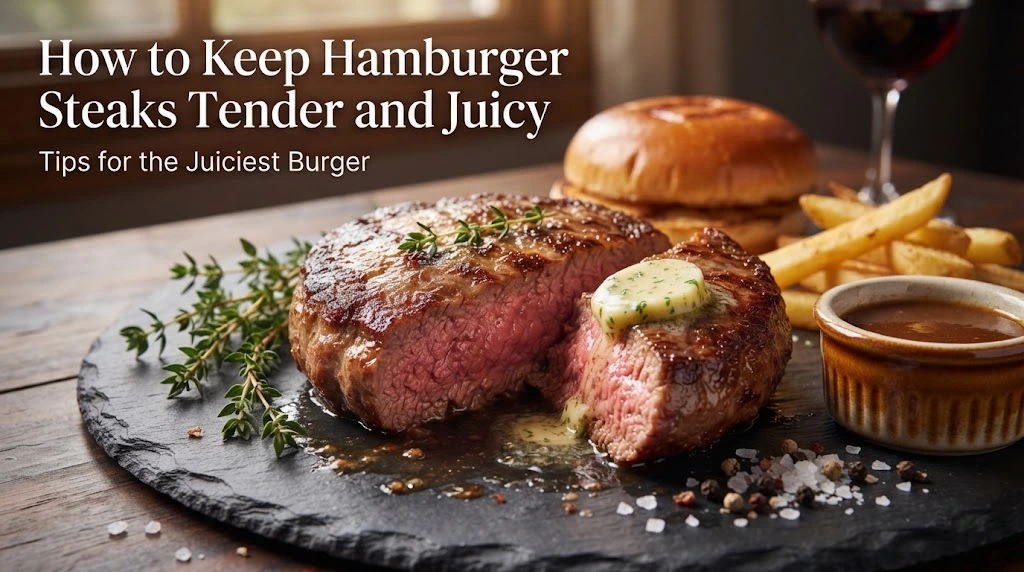
Dry hamburger steak usually comes from one of three problems: overmixing, overcooking, or using very lean meat without enough moisture.
When combining the ingredients, mix only until everything is evenly distributed. The more you work ground beef, the tighter its texture can become.
The egg and breadcrumbs help bind the patties and give them a softer texture. The chopped onion also adds moisture and flavor.
Another important detail is patty thickness. Very thin patties cook quickly and can dry out before they develop a good crust. Aim for roughly ¾ inch thickness.
Do not flatten the patties repeatedly with a spatula while they cook. Pressing them forces flavorful juices out into the pan.
Instead, let them brown undisturbed for several minutes before flipping.
Finally, use an instant-read thermometer when possible. Ground beef should reach 160°F (71°C) internally for food safety.
The thermometer is more reliable than guessing from color. Ground beef can look brown before it reaches the recommended temperature, and the opposite can also happen.
Why Browning the Beef Matters
You might be tempted to throw the raw hamburger patties directly into the gravy. Technically, you can cook them that way, but you will miss an important layer of flavor.
Browning creates a rich roasted flavor through chemical reactions that occur when the surface of the meat gets hot enough. In practical kitchen terms, this is why browned meat tastes more savory and satisfying.
It also leaves flavorful browned bits in the skillet.
Those bits become part of your gravy when you add the broth and scrape the pan.
For the best crust, make sure the skillet is properly heated before adding the patties. If the pan is too cool, the beef may release liquid and begin steaming instead of browning.
Avoid overcrowding the skillet, too. If necessary, brown the patties in batches.
You are looking for a deep golden-brown exterior, not a burnt crust.
A little color goes a long way in a recipe this simple.
The Best Ground Beef for Hamburger Steak
For old-fashioned hamburger steak, 80/20 ground beef is one of the safest choices for flavor and texture.
The 80/20 ratio means approximately 80 percent lean meat and 20 percent fat. That fat helps keep the patties juicy while also contributing flavor during browning.
Ground chuck is another excellent option because it tends to have a good balance of meat and fat.
If you only have 90/10 ground beef, you can still make excellent hamburger steaks. Be more careful with cooking time because leaner beef can dry out faster.
Here is a simple guide:
- 80/20: Rich, juicy, flavorful
- 85/15: Slightly leaner but still moist
- 90/10: Leaner and more likely to dry out
- 93/7: Very lean; use extra care to avoid overcooking
Avoid choosing ground beef solely because it has the lowest fat percentage. For a comfort-food recipe like this, a little fat is part of what makes the meal satisfying.
If you want to reduce the fat, serve smaller portions with plenty of vegetables rather than sacrificing all the moisture in the patties.
Best Side Dishes for Hamburger Steak and Gravy
Mashed potatoes are the classic choice because they give the gravy somewhere to go. A forkful of creamy potato covered with onion gravy is exactly the kind of combination that makes this meal feel complete.
But potatoes are not your only option.
White rice works especially well if you prefer a lighter texture. The grains absorb the gravy without competing with the beef.
Egg noodles are another practical choice, particularly when you want something quick.
For vegetables, choose sides that bring color and freshness to the plate:
- Southern-style green beans
- Steamed broccoli
- Roasted carrots
- Buttered corn
- Peas
- Sautéed cabbage
- Simple garden salad
A warm dinner roll is useful for soaking up the last spoonfuls of gravy.
For a classic family-style dinner, I would serve hamburger steak with mashed potatoes, green beans, and warm rolls. It feels familiar without requiring an entire afternoon in the kitchen.
Southern-Style Variations You Can Try
There is no single universal version of hamburger steak and gravy. Families often change the recipe based on what they have in the pantry and what they grew up eating.
For a creamier Southern-style gravy, replace part of the beef broth with milk or a small amount of heavy cream. Keep the heat moderate so the dairy stays smooth.
For a mushroom version, sauté sliced mushrooms with the onions before adding the flour and broth. Mushrooms add a deep savory flavor that pairs naturally with beef.
For a stronger onion flavor, use extra yellow onions and cook them until soft and golden.
If you enjoy a little heat, add a pinch of cayenne pepper or a few drops of hot sauce.
You can also change the herbs. Thyme, parsley, and a small amount of rosemary can work well, although the classic version does not need many herbs.
Another useful variation is adding a small splash of Worcestershire sauce to the gravy. It brings acidity and umami without making the sauce taste obviously different.
The important rule is to change one or two things at a time. That way, you can tell which variation actually improves the recipe for your family.
Common Mistakes When Making Hamburger Steak

Even an easy recipe can go wrong if a few small details get overlooked.
Mistake 1: Overmixing the meat. This creates dense patties. Mix gently and stop once everything is combined.
Mistake 2: Skipping the browning step. Browning builds the flavor foundation for both the beef and gravy.
Mistake 3: Cooking the onions too quickly. High heat can burn the outside while leaving the center underdeveloped. Medium heat gives you more control.
Mistake 4: Adding flour without cooking it. Raw flour can leave a noticeable taste. Cook it with the onions and butter for about a minute.
Mistake 5: Pouring broth in too quickly. Gradual addition helps create smooth gravy.
Mistake 6: Overcooking the patties. Ground beef needs to reach a safe temperature, but cooking far beyond that can make it dry.
Mistake 7: Salting without tasting. Beef broth and Worcestershire sauce can contain plenty of sodium. Taste before adding a lot of extra salt.
Mistake 8: Using a tiny pan. Crowded patties steam instead of brown. Give each patty enough room.
These mistakes are easy to avoid once you know what to watch for.
How to Make Hamburger Steak Ahead of Time
Hamburger steak is a good make-ahead dinner because the flavors often become even more blended after resting.
You can prepare the patties several hours ahead and keep them covered in the refrigerator until you are ready to cook.
You can also make the entire dish ahead of time. After cooking, cool it promptly and refrigerate it in a covered container.
When reheating, use a skillet over medium-low heat and add a small splash of beef broth or water if the gravy has become too thick.
Avoid blasting the patties with high heat. Gentle reheating helps prevent the beef from becoming tough.
For food safety, refrigerate leftovers within two hours of cooking and keep your refrigerator at 40°F (4°C) or below.
Cooked leftovers are generally best used within 3–4 days when properly refrigerated.
You can also freeze cooked hamburger steak and gravy in airtight freezer-safe containers. Leave a little room for expansion, and label the container with the date.
Thaw frozen leftovers in the refrigerator before reheating for the most even results.
How to Thicken or Fix Hamburger Steak Gravy
A gravy that does not turn out perfectly is usually easy to rescue.
If your gravy is too thin, let it simmer uncovered. Evaporation will naturally concentrate the sauce and increase its thickness.
If you need a faster solution, mix a small amount of flour with cold water to make a smooth slurry, then whisk it gradually into the simmering gravy. Never dump dry flour directly into hot liquid at the end because it can create lumps.
Cornstarch can also thicken gravy. Mix it with cold water first, then add the slurry gradually.
If the gravy becomes too thick, simply loosen it with beef broth or water. Add liquid in small amounts so you do not accidentally turn it watery.
If the flavor tastes weak, check the seasoning before adding more liquid. Sometimes the gravy simply needs salt and black pepper.
A small splash of Worcestershire sauce can also add depth.
If the gravy tastes too salty, avoid trying to fix it by adding lots of extra ingredients. Dilute it with unsalted broth or water, then taste again.
The goal is a gravy that is thick enough to cling to the hamburger steak but loose enough to spread easily over mashed potatoes.
How to Serve Hamburger Steak Like a Classic Comfort-Food Dinner
Presentation matters, even with humble food.
Start with a generous spoonful of mashed potatoes in the center of the plate. Place the hamburger steak beside or slightly on top of the potatoes.
Then spoon the onion gravy over the beef and potatoes.
Do not drown the entire plate. A controlled amount of gravy looks better and lets each part of the meal keep its own texture.
Add a green vegetable on the side for color. Green beans are especially fitting because their fresh, slightly crisp texture balances the richness of the beef and gravy.
For a family dinner, serve the remaining gravy in a small bowl at the table. Someone will almost certainly want extra.
If you are serving guests, warm the plates first and garnish the finished dish with a little chopped fresh parsley. It is not necessary for flavor, but it adds a fresh pop of color.
This is one of those meals where simple presentation works best. You do not need restaurant-style decoration.
Expert Tips for Better Hamburger Steak Every Time
After making this dish several times, a few techniques consistently make the biggest difference.
First, keep the meat cold while you shape the patties. Cold ground beef is easier to handle and less likely to become sticky.
Second, make the patties slightly larger than you think you need. They shrink somewhat during cooking.
Third, make a shallow indentation in the center of each patty with your thumb. This can help the patty maintain a more even shape as it cooks.
Fourth, season every component thoughtfully. The meat, onions, and gravy should each taste good on their own.
Fifth, use the same skillet for the entire dish whenever practical. Moving from beef to onions to gravy allows the flavors left in the pan to build naturally.
Sixth, taste the gravy before serving. This final check takes only a few seconds and can make a noticeable difference.
Finally, do not rush the last simmer. Once the hamburger steaks return to the gravy, gentle cooking gives the flavors time to come together.
My biggest practical tip is simple: do not chase perfection. This is a rustic home-cooked meal. A little extra onion, a slightly darker crust, or a thicker spoonful of gravy is part of its charm.
Old Fashioned Hamburger Steak and Gravy Recipe Card
Here is the complete recipe in a quick-reference format.
Prep time: 15 minutes Cook time: 30–35 minutes Servings: 4–6
Ingredients
Hamburger steaks
- 1 ½ pounds 80/20 ground beef
- ½ medium onion, finely chopped
- 1 egg
- ½ cup breadcrumbs
- 1 teaspoon Worcestershire sauce
- 1 teaspoon garlic powder
- ½ teaspoon onion powder
- 1 teaspoon salt
- ½ teaspoon black pepper
- 1 tablespoon cooking oil
Onion gravy
- 1 large yellow onion, thinly sliced
- 2 tablespoons butter
- 2 tablespoons all-purpose flour
- 2 cups beef broth
- 1 teaspoon Worcestershire sauce
- ½ teaspoon garlic powder
- Black pepper to taste
- Salt, if needed
Directions
- Combine the ground beef, chopped onion, egg, breadcrumbs, Worcestershire sauce, garlic powder, onion powder, salt, and pepper.
- Mix gently until just combined.
- Form the mixture into four to six thick patties.
- Heat oil in a large skillet over medium-high heat.
- Brown the patties for about 3–4 minutes per side. Remove them from the skillet.
- Lower the heat to medium and add butter and sliced onions.
- Cook until the onions soften and develop light golden color.
- Sprinkle flour over the onions and stir for about one minute.
- Slowly add beef broth while stirring and scraping the browned bits from the skillet.
- Add Worcestershire sauce, garlic powder, and black pepper.
- Return the hamburger steaks to the skillet.
- Cover loosely and simmer over low heat for 10–15 minutes, until the beef reaches 160°F (71°C) internally.
- Taste and adjust the gravy seasoning.
- Serve hot over mashed potatoes, rice, or noodles.
For the best texture, let the hamburger steaks rest for a few minutes before serving. The gravy will also settle into the ideal consistency during that short rest.
Frequently Asked Questions About Hamburger Steak and Gravy
1. Is hamburger steak the same as Salisbury steak?
They are very similar, but the terms are not always used in exactly the same way. Both commonly use seasoned ground beef shaped into patties and served with gravy.
Salisbury steak often includes more specific ingredients and a richer, more structured gravy, while hamburger steak can be a simpler home-style preparation.
2. Can I use ground turkey instead of beef?
Yes. Ground turkey can replace ground beef, although the flavor and texture will be different.
Because turkey is often leaner, avoid overcooking it. Season it generously and consider adding a little olive oil or another source of moisture to help keep the patties tender.
3. Why are my hamburger steaks falling apart?
The mixture may not have enough binding ingredients, or the patties may be too delicate when you turn them.
Egg and breadcrumbs help hold the mixture together. Chilling the shaped patties for about 15–20 minutes before cooking can also make them easier to handle.
4. Can I make hamburger steak without breadcrumbs?
Yes. Breadcrumbs are helpful but not absolutely required.
You can use crushed crackers, quick oats, or another suitable binder. If you leave them out completely, handle the patties gently because they may be more fragile.
5. What is the best onion for hamburger steak gravy?
Yellow onions are an excellent all-purpose choice. They become soft and slightly sweet as they cook while still providing plenty of savory flavor.
White onions can also work. Sweet onions create a noticeably sweeter gravy, so use them if that flavor suits your preference.
6. Can I freeze hamburger steak and gravy?
Yes. Cool the cooked dish promptly, transfer it to an airtight freezer-safe container, and label it with the date.
For the best quality, use frozen leftovers within a few months. Thaw them in the refrigerator and reheat gently with a splash of broth if the gravy has thickened.
7. What should I serve with hamburger steak and gravy?
Mashed potatoes are the classic choice, but rice, egg noodles, roasted potatoes, or buttered noodles also work well.
For vegetables, green beans, peas, corn, broccoli, carrots, or sautéed cabbage provide a good balance to the rich beef and gravy.
Conclusion
Old-fashioned hamburger steak and gravy proves that a memorable dinner does not need complicated ingredients or expensive cuts of meat.
The real secret is technique. Use flavorful ground beef, handle it gently, brown the patties properly, give the onions enough time to soften, and build the gravy in the same skillet. Those small steps create the deep, homemade flavor people expect from classic comfort food.
Serve the finished hamburger steaks over creamy mashed potatoes with a simple vegetable on the side, and you have a meal that feels both familiar and satisfying.
And perhaps that is why this recipe has such staying power. It is affordable, practical, filling, and genuinely comforting. It tastes like the kind of dinner someone made because they wanted everyone at the table to leave happy.