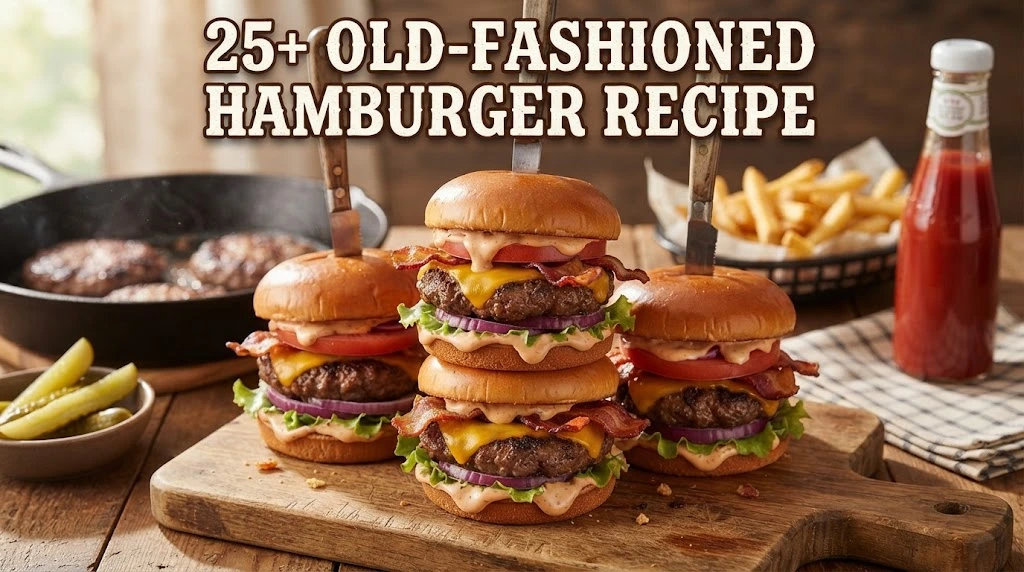
My dad had one rule at the grill: never touch the burger while it’s cooking. He’d stand there guarding the patties like they were made of gold, and honestly, the burgers he made tasted better than anything I’ve had at a restaurant since. That’s the thing about an old-fashioned hamburger recipe — it doesn’t need fancy sauces or trendy toppings. It just needs good beef, simple seasoning, and someone who knows not to mess with a good thing while it’s cooking.
If you’ve been chasing that classic diner-style burger flavor and coming up short, this guide will get you there. No gimmicks, no unnecessary ingredients. Just the real technique behind a hamburger that tastes like it came off a backyard grill in 1965, because that’s basically what it is.
What Is an Old-Fashioned Hamburger Recipe?
An old-fashioned hamburger recipe is a simple, classic approach to making a beef patty using ground beef, basic seasoning, and minimal mix-ins, cooked on a griddle, skillet, or grill until it develops a deep, flavorful crust. It’s the style of burger diners and backyard cookouts perfected long before gourmet burger toppings became trendy.
The focus is on the beef itself, not a long list of add-ins. Salt, pepper, maybe a little onion or Worcestershire sauce, and that’s about it. The magic comes from technique: the right beef-to-fat ratio, proper seasoning timing, and a hot enough cooking surface to build real flavor through a good sear.
This style stands in contrast to newer trends like stuffed burgers or heavily seasoned patties loaded with breadcrumbs and eggs, which change the texture into something closer to a meatloaf patty. Old-fashioned hamburgers stay simple, beefy, and straightforward.
The History Behind the Old-Fashioned Hamburger
The hamburger’s roots trace back to the late 1800s and early 1900s in the United States, evolving from ground beef sandwiches served at fairs, lunch counters, and early diners. By the 1920s and 1930s, chains like White Castle helped standardize the hamburger as an affordable, quick American meal.
The classic backyard hamburger, though, really took off in the 1950s alongside the rise of home grilling culture. Families gathered around charcoal grills, and the hamburger became a symbol of casual, easy summer cooking. Recipes stayed intentionally simple, since the goal was good flavor without much fuss.
That simplicity is exactly what defines an old-fashioned hamburger today. It’s not about complicated technique. It’s about respecting good beef and not overcomplicating something that was never meant to be complicated in the first place.
Ingredients You Need for a Classic Hamburger
The ingredient list here is short, and that’s intentional. Every ingredient earns its place.
Core ingredients:
- Ground beef (80/20 blend recommended)
- Salt
- Freshly ground black pepper
- Worcestershire sauce (optional, but traditional in many old recipes)
- Onion, finely grated or minced (optional)
- Butter or oil, for the cooking surface
- Classic hamburger buns
- Traditional toppings: lettuce, tomato, onion, pickles, mustard, ketchup, American cheese
A quick note on keeping it simple: Resist the urge to add breadcrumbs, eggs, or a long list of seasonings to the meat itself. Old-fashioned hamburgers rely on the natural flavor of well-seasoned beef, not a mixture of fillers. The fewer ingredients you add directly into the meat, the more the beef flavor comes through.
Step-by-Step Old-Fashioned Hamburger Recipe
Here’s a straightforward, classic method that produces a juicy, flavorful patty every time.
Ingredients (makes 4 burgers):
- 1 1/2 pounds ground beef (80/20 blend)
- 1 teaspoon salt
- 1/2 teaspoon black pepper
- 1 tablespoon Worcestershire sauce (optional)
- 4 hamburger buns
- Butter, for toasting buns
- Toppings of choice
Instructions:
- Divide the ground beef into 4 equal portions, about 6 ounces each.
- Gently shape each portion into a patty about 3/4 inch thick and slightly wider than your bun, since patties shrink while cooking.
- Press a shallow dimple into the center of each patty with your thumb. This keeps the burger from puffing up into a dome shape as it cooks.
- Season both sides generously with salt and pepper right before cooking, not in advance.
- Heat a cast-iron skillet or griddle over medium-high heat until very hot.
- Place the patties on the hot surface and let them cook undisturbed for 3 to 4 minutes.
- Flip once, add cheese if using, and cook for another 3 to 4 minutes for medium doneness.
- While the burgers finish cooking, toast the buns in butter in a separate pan until golden.
- Let the burgers rest for 2 minutes before assembling.
- Build your burger with your favorite classic toppings and serve immediately.
Expert tip: That thumbprint dimple in the center of the patty makes a bigger difference than most people expect. Without it, burgers puff up in the middle and cook unevenly, leaving you with a dome-shaped patty that doesn’t sit flat on the bun.
How to Choose the Best Ground Beef for Burgers
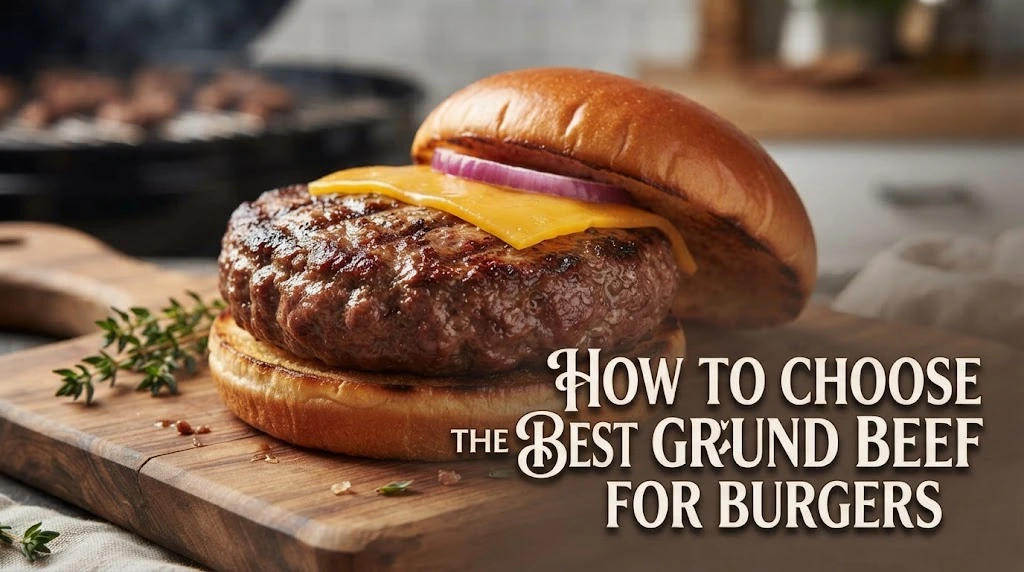
The beef you choose matters more than almost any other decision in this recipe.
- 80/20 ground beef (80% lean, 20% fat) is widely considered the sweet spot for burgers, offering enough fat for juiciness without becoming greasy.
- Chuck is the classic cut used for burger blends, prized for its balance of beef flavor and fat content.
- Avoid extra-lean ground beef (90/10 or leaner) for burgers, since the lower fat content leads to dry, crumbly patties.
- Freshly ground beef from a butcher counter often has better flavor and texture than pre-packaged ground beef, since it hasn’t been sitting as long.
- Grass-fed beef has a leaner profile and slightly different flavor, so if you use it, consider adding a small amount of extra fat, like a pat of butter mixed in, to keep the patty moist.
Recommendation: If you’re buying pre-ground beef, always check the label for the fat percentage. If you’re having beef ground fresh, ask for a blend that’s roughly 20% fat for the most reliable results.
How to Form the Perfect Patty
The way you handle the meat has a direct impact on the final texture of your burger.
- Handle the meat as little as possible. Overworking ground beef develops the proteins too much, leading to a dense, tough patty instead of a tender one.
- Use a light touch when shaping. Gently press the meat into shape rather than compacting it firmly.
- Make patties slightly larger than your bun. Beef shrinks as it cooks, so starting slightly oversized keeps the finished burger properly sized.
- Keep the thickness consistent, ideally around 3/4 inch, so the patty cooks evenly throughout.
- Chill shaped patties for 15 minutes before cooking if your kitchen is warm. This helps them hold their shape better on a hot cooking surface.
Expert Tips for Juicy, Flavorful Burgers
A handful of small habits separate a good burger from a truly great one.
- Season right before cooking, not in advance. Salting ground beef too early draws out moisture and can lead to a denser texture.
- Don’t press down on the patty while it cooks. This is one of the most common burger mistakes, and it squeezes out the flavorful juices you worked hard to keep in.
- Flip only once. Constant flipping prevents a good crust from forming and can dry the patty out.
- Use a hot cooking surface. A properly preheated skillet or grill creates the deep, caramelized crust that defines old-fashioned burger flavor.
- Let the burger rest for a couple of minutes after cooking, which allows the juices to redistribute instead of running out the moment you bite in.
Common Mistakes That Ruin Homemade Hamburgers
These mistakes show up again and again, even among people who cook burgers regularly.
- Using beef that’s too lean. Low-fat ground beef almost always results in a dry, crumbly patty.
- Overmixing or overworking the meat. This develops the proteins too much and creates a tough, dense texture instead of a tender one.
- Pressing the patty with a spatula while cooking. This forces out the juices that keep the burger moist and flavorful.
- Cooking on a surface that’s not hot enough. A weak sear leaves you with a gray, steamed-looking patty instead of a flavorful, browned crust.
- Skipping the rest period after cooking. Cutting or biting into a burger immediately lets all the juices spill out instead of staying in the meat.
Why Are My Hamburgers Dry or Falling Apart?
These two problems come up constantly, and they usually trace back to a few specific causes.
Dry burgers almost always come from using ground beef that’s too lean, or from overcooking past medium doneness. Stick with an 80/20 blend and use a meat thermometer to avoid guessing.
Burgers that fall apart are usually a sign of handling the meat too gently, without enough compacting to hold the patty together, or flipping too early before a crust has formed. A light touch matters, but the patty still needs enough structure to hold up during cooking.
Overworking the meat can also cause issues, though in the opposite direction. Overworked meat can become tough and dense while somehow still crumbling apart on the grill grates, since the fat has been pushed out unevenly during mixing.
Cooking temperature that’s too low contributes to both problems. A properly hot surface helps form a crust quickly, which holds the patty together and locks in moisture from the very first minute of cooking.
Best Cooking Methods: Grill vs. Skillet vs. Griddle
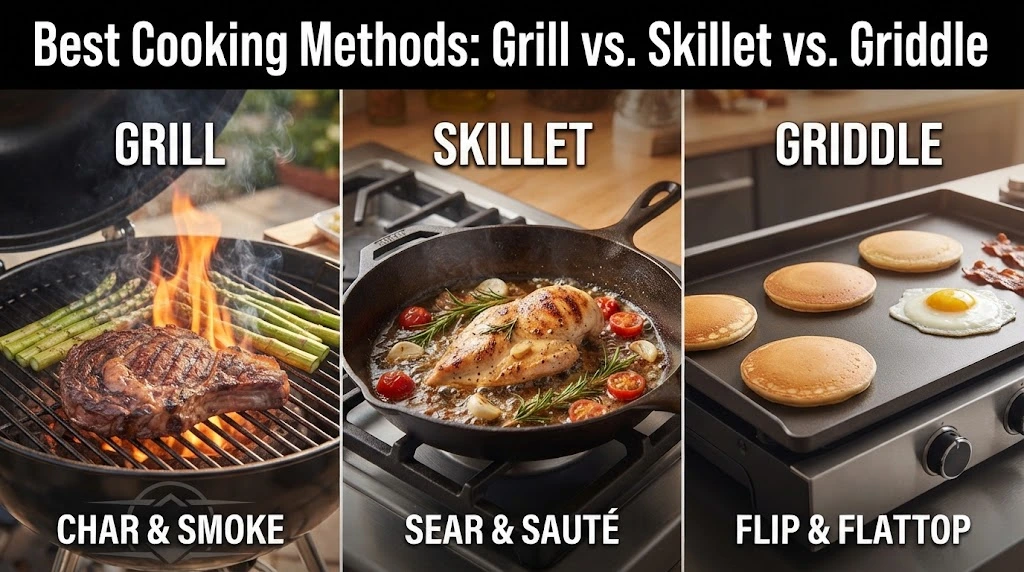
Each cooking method brings something slightly different to the final burger.
- Grilling adds a smoky char and classic outdoor flavor, though it can be harder to control heat evenly compared to indoor methods.
- Cast-iron skillet produces an excellent, even sear and works well year-round, regardless of weather.
- Flat-top griddle is the closest to classic diner-style cooking, offering consistent heat and plenty of surface area for multiple burgers at once.
- Broiling is a solid indoor alternative when grilling isn’t an option, though it won’t produce quite the same crust as direct contact cooking.
Recommendation: If you’re after that true old-fashioned diner flavor, a cast-iron skillet or flat-top griddle will get you closest, since the direct, even contact creates a better crust than most home grills.
Burger Doneness and Internal Temperature Guide
Cooking a burger to the right doneness is about both safety and flavor.
- Medium-rare (125°F to 130°F): Warm, red center. Only recommended with high-quality, freshly ground beef from a trusted source.
- Medium (135°F to 140°F): Pink center, juicy texture. This is the most popular doneness level for classic burgers.
- Medium-well (145°F to 150°F): Slightly pink center, firmer texture.
- Well-done (160°F and above): No pink, fully cooked through. The USDA recommends cooking ground beef to at least 160°F to ensure food safety.
Expert tip: Use an instant-read meat thermometer inserted into the side of the patty for an accurate reading. Guessing by color alone isn’t reliable, especially with thicker patties.
Classic Old-Fashioned Hamburger Toppings and Build Order
The way you layer a burger actually affects how it tastes and holds together.
- Bottom bun, lightly toasted and buttered
- Mustard and ketchup, applied directly to the warm bun so they slightly melt into it
- Beef patty, fresh off the grill or skillet
- American cheese, melted directly on the patty while it’s still cooking
- Pickles and onion, for crunch and sharpness
- Lettuce and tomato, added last to prevent the bun from getting soggy
- Top bun, toasted to match the bottom
Styling tip: Placing lettuce directly against the bottom bun, underneath the patty, creates a barrier that helps prevent the bun from getting soggy from the burger’s juices, especially useful if you’re not serving it immediately.
Choosing the Right Bun
The bun matters more than people usually give it credit for.
- Classic sesame seed buns are the traditional choice for old-fashioned hamburgers, offering a soft texture with just enough structure to hold everything together.
- Potato rolls have become popular for their slightly sweet flavor and extra-soft texture, though they’re a bit softer than the traditional diner-style bun.
- Toast the bun before building your burger. This small step adds texture contrast and helps the bun hold up better against toppings and juices.
- Avoid buns that are too large or dense, since they can overpower the beef flavor instead of complementing it.
Make-Ahead and Freezer Tips for Hamburger Patties
Prepping patties in advance makes weeknight cooking and cookouts much easier.
- Shape patties ahead of time and store them stacked with parchment paper between each one in the refrigerator for up to 24 hours before cooking.
- To freeze uncooked patties: Wrap each one individually in plastic wrap, then place them in a freezer bag. They’ll keep well for up to 3 months.
- Thaw frozen patties in the refrigerator overnight before cooking for the most even results. Cooking directly from frozen works in a pinch, but it takes longer and can cook unevenly.
- Season fresh patties right before cooking, even if they were shaped in advance, for the best flavor.
Expert tip: Press that signature thumbprint dimple into the center before freezing, not after thawing. It’s much easier to do while the meat is soft and pliable.
Best Side Dishes to Serve with Old-Fashioned Hamburgers
A classic burger deserves classic sides to match.
- French fries or crispy potato wedges are the most traditional pairing, and for good reason.
- Classic coleslaw adds crunch and a tangy contrast to the rich, savory burger.
- Baked beans round out a backyard cookout spread perfectly.
- Corn on the cob, especially in summer, complements the smoky, grilled flavor of the burger.
- A simple garden salad works well if you want a lighter side to balance out the meal.
Whether you’re serving a quick weeknight dinner or hosting a full backyard cookout, these sides keep the meal feeling authentic to the old-fashioned burger experience.
Conclusion
An old-fashioned hamburger recipe proves that some of the best food doesn’t need to be complicated. Good beef, honest seasoning, a hot cooking surface, and a little patience get you a burger that tastes better than most restaurant versions, and it takes less than 20 minutes from start to finish. Get the fundamentals right — choose the right fat ratio, handle the meat gently, and resist the urge to press down while it cooks — and you’ll end up with a burger that tastes exactly like the ones that made this recipe a classic in the first place.
Frequently Asked Questions
What is the best ground beef ratio for old-fashioned hamburgers?
An 80/20 blend, meaning 80% lean meat and 20% fat, is widely considered ideal for juicy, flavorful burgers. Leaner blends tend to dry out during cooking and lose much of that classic beefy flavor.
Why do old-fashioned hamburgers get a dimple pressed into the center?
Pressing a shallow dimple into the center of the patty prevents it from puffing up into a dome shape as it cooks. This keeps the burger flat and helps it cook more evenly.
Should I add eggs or breadcrumbs to an old-fashioned hamburger recipe?
No, classic old-fashioned hamburgers typically skip fillers like eggs and breadcrumbs, relying instead on well-seasoned beef alone. Adding fillers changes the texture into something closer to a meatloaf patty.
What temperature should hamburgers be cooked to?
The USDA recommends cooking ground beef to an internal temperature of at least 160°F to ensure it’s safe to eat. Using an instant-read thermometer is the most reliable way to check doneness.
Why do my homemade burgers fall apart on the grill?
This usually happens from handling the meat too gently without enough structure, or from flipping the patty before a proper crust has formed. Let the burger cook undisturbed for several minutes before attempting to flip it.
Can I freeze hamburger patties before cooking them?
Yes, shaped raw patties freeze well for up to 3 months when wrapped individually and stored in a freezer bag. Thaw them in the refrigerator overnight for the most even cooking results.
What’s the difference between a smash burger and an old-fashioned hamburger?
A smash burger is pressed thin against a hot griddle for maximum surface crust, while an old-fashioned hamburger keeps a thicker, juicier patty with a more traditional, gentle sear. Both are delicious, but they offer distinctly different textures and eating experiences.