
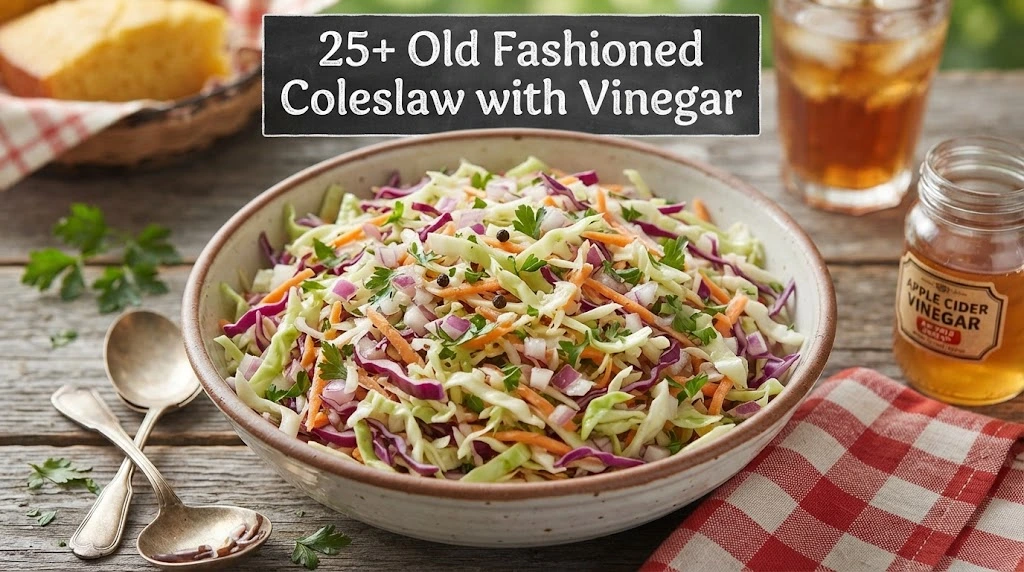
There is something deeply comforting about a bowl of crisp, tangy coleslaw sitting beside a plate of fried chicken, pulled pork, barbecue ribs, or a summer picnic spread. The best versions are not complicated. They are fresh, crunchy, slightly sweet, and sharp enough to wake up the rest of the meal.
An old fashioned coleslaw with vinegar is especially good when you want something lighter than a creamy mayonnaise-based slaw. Instead of coating the cabbage in a thick dressing, this traditional-style recipe uses vinegar, a little sugar, seasoning, and oil to create a bright dressing that soaks into the vegetables.
It is the kind of side dish that gets better when it has a little time to rest. The cabbage softens slightly while keeping some crunch, the carrots become more flavorful, and the sweet-and-sour dressing reaches every bite.
This style of coleslaw is also wonderfully practical. You can make it ahead, take it to a barbecue, serve it with sandwiches, or keep a container in the refrigerator for an easy side during the week.
The secret is balance. Too much vinegar can make the slaw harsh. Too much sugar can make it taste like a sweet salad. The cabbage should remain the star, with the dressing adding just enough flavor to make every bite refreshing.
What Makes Old Fashioned Vinegar Coleslaw Different?
Traditional vinegar coleslaw stands apart from creamy coleslaw because the dressing does not depend on mayonnaise.
Instead, the dressing usually combines vinegar, sugar, oil, salt, and pepper, sometimes with mustard or other simple seasonings. The result is crisp, tangy, and refreshing rather than rich and creamy.
Classic recipes vary from family to family. Some use white vinegar for a clean, sharp flavor. Others use apple cider vinegar for a softer acidity and mild fruitiness.
You may also find recipes that include:
- Shredded green cabbage
- Red cabbage
- Carrots
- Thinly sliced onion
- Bell pepper
- Celery
- Mustard
- Celery seed
- Black pepper
- Vegetable oil
- Granulated sugar
- Apple cider vinegar
The texture is one of the biggest differences. Because there is no thick mayonnaise dressing weighing down the vegetables, vinegar slaw tends to stay bright and crunchy.
That makes it particularly useful alongside rich foods. A plate of smoky barbecue and buttery cornbread can feel heavy, but a sharp cabbage slaw cuts through those flavors and gives the meal some freshness.
It is also a good option for people who simply prefer the taste of vinegar over mayonnaise.
Easy Old Fashioned Coleslaw With Vinegar Recipe
This recipe gives you a dependable sweet-and-tangy base that you can adjust to your taste.
Ingredients
For the vegetables:
- 1 medium head green cabbage, finely shredded
- 2 medium carrots, grated or julienned
- 1/4 small red onion, very thinly sliced
For the vinegar dressing:
- 1/2 cup apple cider vinegar
- 1/4 cup vegetable oil
- 1/4 cup granulated sugar
- 1 teaspoon salt
- 1/2 teaspoon black pepper
- 1 teaspoon yellow mustard
- 1/2 teaspoon celery seed, optional
Instructions
First, shred the cabbage into thin, even pieces. Add the cabbage, carrots, and onion to a large bowl.
In a small saucepan, combine the vinegar, oil, sugar, salt, pepper, mustard, and celery seed. Warm the mixture gently over low heat, stirring until the sugar dissolves.
You do not need to boil the dressing. Once the sugar has dissolved and everything is combined, remove it from the heat.
Pour the warm dressing over the vegetables and toss thoroughly. Make sure the dressing reaches the cabbage at the bottom of the bowl.
Cover the slaw and refrigerate it for at least 1 hour. For stronger flavor, let it rest for several hours before serving.
Toss it again before serving and taste. If it seems too sharp, add a small amount of sugar. If it tastes too sweet, add a little more vinegar.
This recipe makes a crisp, tangy slaw with enough sweetness to balance the acidity without turning it into a sugary salad.
The Best Cabbage for Traditional Vinegar Slaw
Green cabbage is the classic choice for an old-fashioned vinegar slaw because it has a firm texture and mild flavor.
Choose a cabbage that feels heavy for its size and has crisp, tightly packed leaves. Avoid heads with extensive browning, wilted outer leaves, or soft spots.
Red cabbage can add beautiful color and a slightly stronger flavor. You can replace part of the green cabbage with red cabbage rather than using only red cabbage.
Napa cabbage can work, but it has a softer structure and does not provide exactly the same traditional crunch. If you use it, reduce the resting time because it can soften more quickly.
Pre-shredded coleslaw mix is another convenient option. It can save considerable preparation time, especially when you are making slaw for a large gathering.
However, freshly shredded cabbage often gives you better control over thickness and texture.
For the best texture, cut the cabbage into thin strips rather than large chunks. Thin slices allow the vinegar dressing to coat the vegetables evenly while still leaving enough structure for a satisfying crunch.
A sharp chef’s knife makes this job much easier, but a food processor with a shredding attachment can save time when preparing a large batch.
How to Make the Sweet and Tangy Vinegar Dressing
The dressing determines whether your slaw tastes balanced or simply tastes like vinegar.
The basic formula is acid + sweetness + fat + seasoning.
Vinegar provides acidity. Sugar balances that acidity. Oil softens the sharpness and gives the dressing a smoother mouthfeel. Salt and pepper bring the flavors together.
Apple cider vinegar is an excellent choice when you want a rounded, slightly fruity flavor. White vinegar gives you a cleaner and sharper taste.
You can also experiment with red wine vinegar, although it will change the color and flavor of the finished slaw.
The dressing should taste a little stronger than you want the finished slaw to taste. Once it mixes with a large quantity of cabbage, the vegetables dilute and absorb some of that flavor.
Still, avoid making it aggressively sour.
A useful approach is to taste the dressing before adding it to the cabbage. Ask yourself three questions:
- Is the vinegar too sharp?
- Is the sweetness enough to balance it?
- Does the seasoning taste noticeable but not overwhelming?
If all three answers feel right, you are on the right track.
Why Warm Dressing Works So Well

Many people simply whisk together a cold vinegar dressing and pour it over the cabbage. That can work, but warming the dressing offers an advantage.
When you gently heat the vinegar, oil, sugar, and seasonings, the sugar dissolves more easily. The flavors also blend together before they reach the cabbage.
You are not trying to cook the vegetables. The dressing should be warm, not boiling hot.
Pouring the warm dressing over shredded cabbage also helps it penetrate the surface of the vegetables. The cabbage begins absorbing the sweet-and-tangy mixture while it rests.
This is one reason old-fashioned vinegar slaw often tastes better after several hours than it does immediately after mixing.
However, do not leave the finished slaw sitting at room temperature for hours. Once prepared, refrigerate it promptly and keep it chilled until serving.
If you prefer an extra-crisp texture, allow the dressing to cool before mixing it with the vegetables. The flavor will still develop during refrigeration, but the cabbage will soften more slowly.
Both methods work. The choice depends on whether you prefer maximum flavor absorption or maximum crunch.
How Long Should Vinegar Coleslaw Sit Before Serving?
Patience makes a noticeable difference with vinegar-based slaw.
You can eat it immediately, but the flavor will usually seem somewhat separate at first. The dressing needs time to work its way into the cabbage and carrots.
One hour in the refrigerator is a good minimum for a quick meal.
Two to four hours often gives you a more developed flavor while keeping plenty of crunch.
For some traditional preparations, overnight refrigeration works beautifully. The cabbage becomes softer and more seasoned without necessarily becoming mushy.
The exact timing depends on how finely you shred the vegetables and how much dressing you use.
If you like very crisp coleslaw, serve it after a shorter resting period.
If you prefer a softer, more deeply seasoned slaw, refrigerate it longer.
Always toss the slaw before serving because the dressing can collect at the bottom of the container.
If the cabbage has released a lot of liquid, you can drain a little before serving. Do not drain everything, though. That liquid carries much of the flavor.
Apple Cider Vinegar vs. White Vinegar
Choosing the right vinegar is one of the easiest ways to customize this recipe.
Apple cider vinegar has a mellow acidity and subtle fruit notes. It pairs particularly well with cabbage, carrots, barbecue sauce, pulled pork, and grilled meats.
White distilled vinegar is sharper and more direct. It gives the slaw a classic tang and works well when you want the vinegar flavor to stand out.
If you are making vinegar coleslaw for the first time, apple cider vinegar is often the easier choice because its flavor is slightly softer.
For a sharper old-fashioned profile, use white vinegar.
You can also combine them. For example, use mostly apple cider vinegar with a small amount of white vinegar to increase the acidity without making the dressing overly harsh.
Avoid choosing vinegar based only on what you have in the pantry. Different vinegars have different strengths and flavors, so you may need to adjust the sugar accordingly.
The best vinegar is ultimately the one that creates the balance you enjoy.
How to Keep Vinegar Coleslaw Crisp
Nobody wants coleslaw that turns watery and limp.
The good news is that vinegar-based slaw can stay quite crisp when you handle the vegetables properly.
Start with fresh cabbage. Older cabbage naturally loses some of its firmness.
After shredding, you can lightly salt the cabbage and let it sit for a short period. This draws out some excess moisture. Rinse it if needed, then dry it thoroughly before dressing.
However, do not overdo this step. Removing too much moisture can make the cabbage limp and reduce the fresh texture you want.
Another important factor is dressing quantity. Adding far more dressing than the cabbage can absorb will leave liquid at the bottom of the bowl.
For a crisp slaw, add the dressing gradually. You can always add more, but removing excess dressing is much harder.
Use a large bowl when mixing. A crowded bowl makes it difficult to distribute the dressing evenly without crushing the cabbage.
Finally, keep the slaw refrigerated. Cold temperatures help preserve its texture and freshness.
Common Mistakes When Making Vinegar Coleslaw
Vinegar coleslaw uses simple ingredients, but a few mistakes can throw off the balance.
Using too much vinegar
More acidity does not automatically mean better flavor. If the dressing makes you squint after one taste, it will probably overwhelm the cabbage.
Adding too much sugar
Sugar should balance the vinegar rather than turn the slaw into a sweet salad.
Cutting the cabbage too thick
Large pieces do not absorb the dressing as evenly and can make the slaw harder to eat.
Using too much oil
Oil should soften the dressing, not make the vegetables greasy.
Serving immediately
Freshly mixed slaw can taste sharp and disconnected. Give it some time to rest.
Forgetting to taste before serving
Vinegar strength varies, and cabbage size varies too. Taste the finished slaw and make a small adjustment if necessary.
Adding too many ingredients
Classic slaw does not need a long list of vegetables and spices. Extra ingredients can easily distract from the sweet-and-tangy cabbage.
A simple recipe is often the most forgiving because you can clearly identify what needs adjustment.
How to Make Southern-Style Vinegar Coleslaw
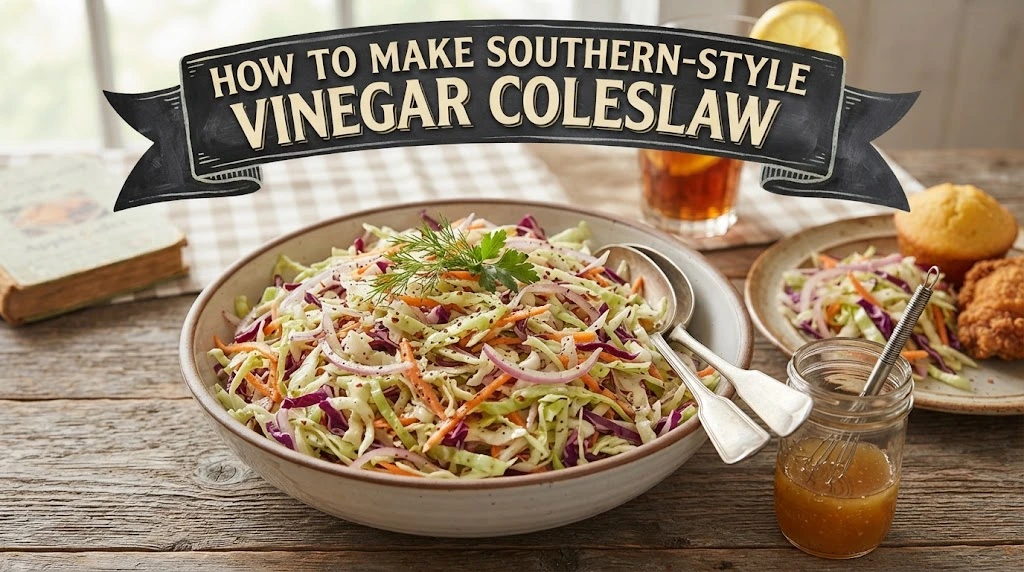
Southern-style vinegar slaw often leans toward a sweet, tangy, crisp flavor that pairs naturally with barbecue and fried foods.
The exact recipe varies across households and regions, so there is no single formula that defines every Southern version.
A typical approach emphasizes:
- Green cabbage
- Carrots
- Vinegar
- Sugar
- Oil
- Salt
- Black pepper
- Mustard or celery seed
Some cooks use a warm dressing, while others mix everything cold.
The key is to create enough acidity to cut through rich foods while keeping the sweetness noticeable.
Southern vinegar slaw works particularly well with smoked pork because the acidity refreshes the palate between bites of fatty meat.
It is also excellent with fried chicken. The crisp cabbage and tangy dressing provide contrast to the crunchy, savory coating.
If you are serving it at a barbecue, make it several hours ahead. The flavors have time to develop while you focus on the main dishes.
Just keep it refrigerated and serve it cold or slightly chilled.
Vinegar Coleslaw Without Mayonnaise
One of the biggest reasons people choose this style of coleslaw is that it does not require mayonnaise.
That makes the recipe lighter in texture and gives it a brighter flavor.
It is also convenient when you are preparing food for a gathering where mayonnaise-based salads may not be everyone’s preference.
A vinegar dressing can be made with simple pantry ingredients:
- Vinegar
- Sugar
- Oil
- Salt
- Pepper
- Mustard, if desired
You can also adjust the recipe to suit different dietary preferences. For example, use a suitable plant-based oil and check ingredient labels if you need to avoid specific allergens.
Without mayonnaise, the cabbage remains visible and crisp instead of being covered in a thick white dressing.
This makes vinegar slaw especially attractive as a side dish for summer meals. It feels refreshing rather than heavy.
It also pairs nicely with grilled vegetables, fish, sandwiches, burgers, and tacos.
The absence of mayonnaise does not mean the salad lacks flavor. A properly balanced vinegar dressing can be surprisingly rich in taste despite its simple ingredients.
Variations You Can Add Without Losing the Classic Flavor
Once you have the basic recipe right, small additions can give the slaw a different personality.
For extra color, add a little shredded red cabbage.
For sweetness and crunch, finely sliced bell pepper works well.
Thinly sliced green onion adds a mild savory note without overpowering the cabbage.
A small amount of celery seed gives the dressing a distinctly traditional character.
If you enjoy mustard, add a teaspoon of yellow or Dijon mustard. Yellow mustard keeps the flavor familiar, while Dijon gives it a slightly more sophisticated edge.
For a touch of heat, add a pinch of crushed red pepper flakes.
You can also add a small amount of celery or green apple, but use restraint. Too many additions can turn a classic slaw into a completely different salad.
A useful rule is to change one or two elements at a time. That allows you to discover which flavors genuinely improve the recipe.
For a family gathering, keep the main batch traditional and offer optional toppings separately. That way, people can customize their servings without changing the entire bowl.
What to Serve With Old Fashioned Vinegar Coleslaw
Vinegar coleslaw is one of those rare side dishes that can make a heavy meal feel more balanced.
It is a natural partner for barbecue. Serve it with pulled pork, smoked chicken, brisket, ribs, or grilled sausages.
It also works beautifully with fried chicken. The acidity cuts through the richness of the fried coating and refreshes your palate.
Try it with:
- Pulled pork sandwiches
- Fried chicken
- Barbecue ribs
- Grilled burgers
- Hot dogs
- Bratwurst
- Smoked chicken
- Fish sandwiches
- Grilled fish
- Baked beans
- Cornbread
The slaw can also become part of the main dish. Add it to a pulled pork sandwich for crunch and acidity, or spoon it over a grilled chicken sandwich instead of lettuce.
For summer cookouts, pair it with grilled corn, baked beans, watermelon, and your favorite barbecue main.
The contrast is what makes the meal work. Rich foods benefit from the crisp, acidic character of the cabbage.
How to Make Vinegar Coleslaw Ahead of Time
This is one of the best make-ahead side dishes because the flavor improves as it rests.
You can prepare the vegetables several hours before serving and keep them refrigerated in a covered container.
The dressing can also be prepared in advance. Store it separately if you want maximum control over texture.
For the best crunch, combine the vegetables and dressing a few hours before serving rather than several days ahead.
If you are preparing slaw for a party, make it the morning of the event. This gives the cabbage enough time to absorb the dressing without leaving it so long that the texture becomes too soft.
Use a clean, airtight container and keep the slaw refrigerated.
When it is time to serve, stir it thoroughly and taste it again. The vegetables may have absorbed some of the dressing, so you may want to add a small splash of vinegar or a pinch of seasoning.
Do not leave prepared coleslaw sitting out for long periods, particularly outdoors in warm weather. Keep cold foods properly chilled and return leftovers to refrigeration promptly.
Good food safety matters just as much as good flavor.
How to Store Leftover Vinegar Coleslaw
Store leftover vinegar slaw in a covered container in the refrigerator.
Because cabbage releases water as it sits, the texture will gradually change. The slaw may become softer after a day or two, although the flavor can become even more developed.
Before eating leftovers, stir the slaw well. If there is a large amount of liquid at the bottom, you can drain some of it.
A small amount of fresh vinegar can brighten the flavor if it has become dull.
Avoid leaving the slaw at room temperature for extended periods. This is particularly important at picnics, outdoor parties, and summer gatherings.
If you are serving a large group, consider putting out a smaller portion and replenishing it from the refrigerator as needed rather than leaving the entire batch outside.
That simple habit helps preserve both quality and food safety.
For the best texture, enjoy homemade vinegar slaw while it is still fresh and crisp rather than keeping it indefinitely.
How to Get the Perfect Sweet-and-Tangy Balance

The heart of a great vinegar slaw is balance.
You want to taste cabbage first, followed by a pleasant combination of sweetness, acidity, and seasoning.
If it tastes flat, check the salt first. A small amount of salt can make the other flavors much more noticeable.
If it tastes too oily, add a little more vinegar and toss thoroughly.
If it tastes too strong, let it rest. Cabbage absorbs dressing as it sits, and the flavor often becomes more balanced after refrigeration.
Do not make large adjustments all at once. Add a teaspoon of the ingredient you think is missing, mix, taste, and repeat if necessary.
This method is much safer than adding a quarter cup of vinegar because the first bite seemed too sweet.
Remember that the cabbage itself contributes water and mild sweetness. The dressing should taste somewhat concentrated on its own because the vegetables will soften that intensity.
That small piece of kitchen judgment is what turns a basic recipe into a really good one.
Frequently Asked Questions About Old Fashioned Vinegar Coleslaw
1. What is old fashioned coleslaw made of?
Traditional vinegar-based coleslaw usually contains shredded cabbage, carrots, vinegar, sugar, oil, salt, and pepper. Some recipes also include onion, celery seed, mustard, or other simple seasonings. Unlike creamy slaw, it does not rely on mayonnaise.
2. What kind of vinegar is best for coleslaw?
Apple cider vinegar is an excellent choice because it has a balanced acidity and mild fruity flavor. White vinegar works well when you want a sharper, more direct tang. You can also combine the two to create a middle ground.
3. Is vinegar coleslaw healthier than mayonnaise coleslaw?
That depends on the exact recipe and serving size. Vinegar slaw often contains less mayonnaise-based fat, but sugar and oil still contribute calories. The nutritional value also depends on the proportions and ingredients used.
4. How long does vinegar coleslaw need to sit?
You can serve it immediately, but allowing it to rest for at least an hour improves the flavor. Two to four hours often gives you a good combination of seasoned flavor and crisp texture. Overnight refrigeration produces a softer, more developed slaw.
5. Why does my vinegar coleslaw taste too sour?
The dressing may contain too much vinegar or not enough sugar to balance the acidity. Add a small amount of sugar, mix thoroughly, and taste again. Fresh cabbage can also vary in size, so dressing ratios sometimes need minor adjustments.
6. Can I make vinegar coleslaw the night before?
Yes. Vinegar coleslaw is well suited to make-ahead preparation. Keep it covered and refrigerated, then toss it before serving. Keep in mind that the cabbage will soften somewhat overnight.
7. How do I keep homemade vinegar coleslaw crunchy?
Use fresh cabbage, slice it evenly, avoid adding excessive dressing, and keep the slaw refrigerated. If maximum crunch is important, prepare the vegetables ahead but add the dressing a few hours before serving rather than the day before.
Conclusion
A good old-fashioned vinegar slaw does not need complicated ingredients to make an impression. Fresh cabbage, crisp carrots, a balanced vinegar dressing, and enough resting time can create a side dish that tastes right at home beside barbecue, fried chicken, burgers, sandwiches, and summer picnic favorites.
The most important lesson is balance. Vinegar should provide brightness, sugar should soften the acidity, oil should round out the dressing, and seasoning should bring everything together without taking over.
Start with a simple recipe and adjust it slowly.
That flexibility is part of what makes vinegar coleslaw such a useful recipe. It can stay firmly rooted in tradition while still fitting your family’s taste.
Make it ahead, keep it cold, give the cabbage time to absorb the dressing, and taste before serving. Those small steps are what turn a basic bowl of shredded cabbage into a memorable homemade side dish.