There is something comforting about an Old Fashioned. The heavy glass, the large piece of ice, the orange aroma, and that first slow sip can turn an ordinary evening into a small occasion. If you enjoy the drink but also keep an eye on what you eat and drink, it is completely reasonable to wonder how many calories are hiding in that beautiful little glass.
The good news is that an Old Fashioned is a fairly simple cocktail. Unlike creamy drinks, frozen cocktails, or drinks made with several sweet liqueurs, the classic version contains only a few ingredients. That makes it easier to understand where the calories come from and, if you want, adjust the recipe without losing its character.
The catch is that there is no single calorie number for every Old Fashioned. A drink made with 1.5 ounces of 80-proof whiskey and a modest amount of sugar will have a different calorie count from a large restaurant pour made with 2 ounces of higher-proof bourbon and rich simple syrup.
The International Bartenders Association lists an Old Fashioned with 45 ml of bourbon or rye whiskey, one sugar cube, a few dashes of Angostura bitters, and a little water. It finishes the drink with an orange garnish and cocktail cherry.
So, rather than giving you a misleading single number, this guide breaks down the drink ingredient by ingredient. You will learn where the calories come from, how different recipes compare, how sugar and whiskey affect the total, and how to order or make an Old Fashioned when calorie awareness matters to you.
How Many Calories Are in an Old Fashioned Cocktail
A typical Old Fashioned usually falls somewhere around 110 to 180 calories, although larger pours and sweeter recipes can push the number higher.
The biggest variable is the amount and proof of whiskey. The USDA lists 1.5 fluid ounces of 80-proof distilled spirits such as whiskey at about 97 calories. It also lists 86-proof spirits at about 105 calories and 90-proof spirits at about 110 calories for the same 1.5-ounce serving.
Sugar adds another small but important amount. A standard sugar cube commonly weighs around 4 grams, which contributes roughly 16 calories. Bitters are used in very small quantities, so they usually add little to the overall calorie total.
That gives a practical estimate of about 110 to 120 calories for a modest Old Fashioned made with 1.5 ounces of 80-proof whiskey and one small sugar cube.
However, many bars use a 2-ounce pour. At the same proof, that raises the whiskey contribution substantially. A sweeter recipe made with simple syrup can also add more calories than the classic sugar-cube approach.
For everyday tracking, I would use about 120 calories for a modest classic Old Fashioned and around 150 to 180 calories for a larger or sweeter restaurant-style version. That estimate is more useful than pretending every Old Fashioned contains exactly the same amount.
Where the Calories in an Old Fashioned Come From
An Old Fashioned gets most of its calories from alcohol, with the remaining meaningful contribution coming from added sugar.
The classic ingredients are simple:
- Bourbon or rye whiskey.
- Sugar or simple syrup.
- Angostura bitters.
- Water from dilution.
- Orange peel or another citrus garnish.
- Sometimes a cocktail cherry.
Whiskey is the main calorie source because alcohol itself provides energy. The USDA’s reference data puts 1.5 ounces of 80-proof whiskey at about 97 calories.
Sugar contributes carbohydrate calories. A teaspoon of granulated sugar contains roughly 16 calories, so the amount of sweetener matters, but usually not as much as the size of the whiskey pour.
Water and ice do not contribute meaningful calories. Orange peel used as a garnish also contributes very little because you generally do not consume a large amount of it.
The cocktail cherry is different. One maraschino cherry does not transform the drink into a high-calorie cocktail, but cherries stored in sweet syrup can contribute a small amount of additional sugar.
This is why an Old Fashioned can look rich and luxurious while remaining relatively simple from a calorie standpoint. The whiskey pour is the number to watch first.
Calories in a Classic Old Fashioned Recipe
The classic Old Fashioned provides a useful starting point because the recipe has very few moving parts.
The International Bartenders Association specifies 45 ml of bourbon or rye whiskey, one sugar cube, a few dashes of Angostura bitters, and a few dashes of plain water. It recommends stirring the drink over ice and garnishing it with orange slice or zest and a cocktail cherry.
Using that structure, the calorie estimate looks roughly like this:
IngredientTypical amountApproximate calories80-proof whiskey45 ml97Sugar cube1 cubeAbout 16Angostura bittersFew dashesMinimalWaterFew dashes0Orange peelGarnishMinimalCocktail cherry1Small additional amountEstimated totalAbout 115–120 calories
This is an estimate rather than a laboratory measurement. Sugar cubes vary in size, whiskey brands vary in proof, and the final cocktail can include different garnish choices.
Still, the calculation shows something useful: the majority of the calories come from the whiskey.
That matters when you are trying to lower the calorie count. Removing the orange peel will not make a meaningful difference. Reducing an oversized whiskey pour, however, can.
Calories in a Bourbon Old Fashioned
Bourbon Old Fashioned calories depend primarily on the bourbon’s proof and the amount used.
For example, a 1.5-ounce pour of 80-proof whiskey contains about 97 calories according to USDA reference data. Higher-proof whiskey contains more alcohol per ounce and therefore more calories.
A 2-ounce pour of 80-proof bourbon works out to roughly 129 calories from the whiskey alone. Add approximately 16 calories from a teaspoon-sized amount of sugar, and the cocktail can land around 145 calories before accounting for small garnish differences.
A 2-ounce pour of 100-proof bourbon would be higher still because the drink contains more alcohol by volume.
This explains why two Old Fashioneds sitting side by side can have noticeably different calorie totals even though both look like the same cocktail.
When ordering at a bar, you usually cannot know the exact pour unless the menu provides it. If calorie tracking matters to you, a useful approach is to assume a larger pour rather than a smaller one.
At home, you have much more control. Measuring the whiskey with a jigger gives you a repeatable recipe and makes calorie tracking far easier.
Calories in a Rye Old Fashioned
Rye whiskey and bourbon have very similar calorie profiles when they share the same alcohol proof and serving size.
The important point is that proof and quantity matter more than whether the whiskey is bourbon or rye.
The International Bartenders Association recognizes both bourbon and rye whiskey in its Old Fashioned recipe.
Suppose you use 1.5 ounces of 80-proof rye whiskey. The whiskey contributes roughly 97 calories. Add a modest amount of sugar, and you are again in the neighborhood of 110 to 120 calories.
If you use a 2-ounce pour, the calorie count rises accordingly.
The choice between bourbon and rye is therefore more about flavor than calories. Bourbon tends to bring a rounder, sweeter impression, while rye often gives the drink a spicier, drier character.
That flavor difference can actually help with calorie-conscious preparation. A bold rye Old Fashioned may taste satisfying with a smaller amount of added sugar because its spice and oak notes provide plenty of character.
Old Fashioned Calories With Simple Syrup
Simple syrup can make an Old Fashioned smooth and easy to mix, but it can also make calorie estimates less predictable.
Traditional simple syrup usually combines equal parts sugar and water by volume. Because only the sugar contributes calories, the final amount depends on how much syrup you pour into the drink.
For example, if you use half an ounce of standard simple syrup, you may add around 25 to 30 calories, depending on the exact concentration. A full ounce can add substantially more.
The issue is not that simple syrup is automatically bad. It is simply easy to overpour.
A bar may use a measured syrup pour, while a home bartender may add what looks like a small splash. Those amounts can be surprisingly different.
For a lower-calorie Old Fashioned, start with less syrup than you think you need. Stir the drink, taste it, and add a tiny amount more if necessary.
This is also a better bartending technique. You can always increase sweetness, but once you add too much syrup, you have to dilute or rebuild the drink.
Old Fashioned Calories With a Sugar Cube
A sugar cube gives you a simple way to control sweetness because the amount is visible before you add it.
The IBA’s classic recipe uses one sugar cube and a few dashes of bitters, followed by whiskey and ice.
A typical cube contributes roughly 16 calories if it weighs about 4 grams. That makes it relatively easy to estimate compared with an unmeasured pour of syrup.
There is also a flavor advantage. Muddling the sugar with bitters and a little water creates the traditional character many people expect from an Old Fashioned.
If you want to reduce calories, you do not necessarily need to eliminate sugar completely. Try using a smaller amount and allowing the bitters and orange aroma to contribute more of the drink’s perceived complexity.
A good Old Fashioned should taste balanced. Less sugar should not mean less enjoyment.
Are Old Fashioneds High in Calories
Compared with many mixed drinks, an Old Fashioned is not especially calorie-heavy when prepared in a modest serving.
The drink contains no cream, coconut milk, fruit juice, soda, or large amount of sweet liqueur in its classic form. Its ingredients are primarily whiskey, sugar, bitters, water, and garnish.
For comparison, USDA reference data lists a 1.5-ounce serving of 80-proof distilled spirits at about 97 calories. It lists a 6.5-ounce gin and tonic at about 147 calories and a 4-ounce margarita at about 168 calories in its historical reference table.
These comparisons are not perfect because cocktail recipes vary widely. Still, they illustrate why the simple ingredient list of an Old Fashioned can keep its calorie count relatively moderate.
The important distinction is between a simple Old Fashioned and a heavily customized one.
A cocktail containing extra syrup, flavored liqueur, sweetened cherries, or a very large whiskey pour can move well beyond the basic estimate.
So the answer is not that Old Fashioneds are automatically low-calorie. It is that their classic structure gives you more control.
Old Fashioned Calories Compared With Other Cocktails
If you are choosing a cocktail based partly on calories, the recipe matters more than the cocktail’s name.
An Old Fashioned usually gets its calories mainly from whiskey and a small amount of sugar. A cocktail containing fruit juice, cream, sweet liqueur, or a large amount of syrup can contain considerably more.
The USDA’s reference table gives examples of how mixed drinks can vary. It lists a martini at 124 calories, a gin and tonic at 147 calories, a margarita at 168 calories, and a piña colada at 495 calories based on the specified standard serving recipes.
Those numbers are historical reference values rather than guarantees for modern bar recipes, so you should not treat them as exact restaurant nutrition facts.
Still, the broader lesson remains useful: liquid calories can change quickly when sweet mixers and larger portions enter the glass.
If you want a classic cocktail without a large amount of juice or creamy ingredients, a straightforward Old Fashioned can be a reasonable choice. Just remember that alcohol itself contributes calories, even when the drink contains little added sugar.
How to Make a Lower-Calorie Old Fashioned
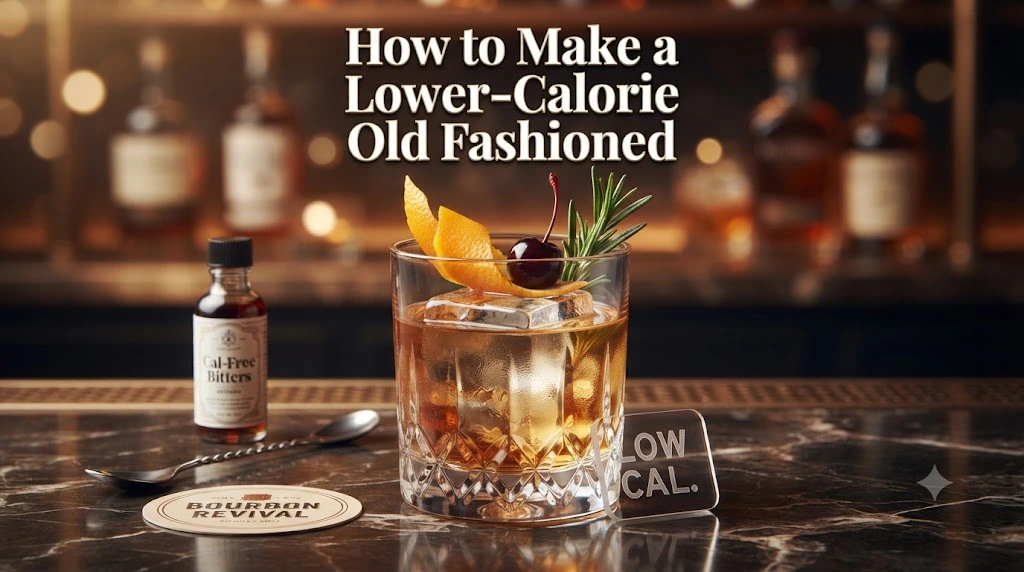
The easiest way to reduce calories is to make small changes that preserve the cocktail’s identity.
Start with a measured 1.5-ounce pour of 80-proof bourbon or rye. Then use a modest amount of sugar rather than a large pour of syrup.
Try this approach:
- Measure 1.5 ounces of whiskey.
- Use one small sugar cube or a carefully measured small amount of simple syrup.
- Add two or three dashes of aromatic bitters.
- Add a little water or allow dilution from stirring with ice.
- Use a large ice cube for slow dilution.
- Express an orange peel over the drink for aroma.
- Keep the garnish simple.
The orange peel is particularly useful because aroma affects how we perceive flavor. A fresh citrus expression can make a drink seem brighter without requiring juice or extra sugar.
You can also experiment with a slightly bolder whiskey or rye. A more assertive spirit can make a smaller, well-balanced drink feel more satisfying.
The goal is not to make the drink taste like a diet cocktail. The goal is to make a properly balanced Old Fashioned with fewer unnecessary calories.
How Whiskey Proof Changes Old Fashioned Calories
Alcohol proof deserves more attention than it usually gets.
In the United States, proof is twice the alcohol-by-volume percentage. Therefore, an 80-proof whiskey contains 40% alcohol by volume.
The USDA reference data shows the calorie difference clearly. A 1.5-ounce serving of 80-proof whiskey is listed at about 97 calories, while 86-proof whiskey is about 105 calories and 90-proof whiskey is about 110 calories.
That means two drinks with the same pour size can have different calorie totals.
For example, a 1.5-ounce pour of a higher-proof bourbon will generally contribute more calories than the same volume of a lower-proof bourbon because it contains more alcohol.
This does not mean you should automatically choose the lowest-proof whiskey. Flavor, balance, and personal preference matter.
Instead, think of proof as one of the variables that helps explain why online calorie estimates sometimes disagree.
If you are tracking calories closely, check the bottle’s proof and measure your pour. That will give you a much better estimate than relying on the cocktail’s name alone.
Does the Orange Garnish Add Calories
The orange garnish contributes very little to the calorie count when you use a peel or small twist.
In fact, the orange peel serves an important sensory purpose. When you express the peel over the surface of the drink, aromatic oils land around the glass and create a fresh citrus smell.
That aroma can make the cocktail feel brighter without adding a significant amount of sugar or juice.
The situation changes if you add a substantial amount of orange juice. Juice contains natural sugar and calories, so an Old Fashioned made with several ounces of juice is no longer comparable to the classic version.
For a traditional drink, stick with a peel or twist.
A cocktail cherry adds a small amount of additional calories, but one garnish is unlikely to change the overall calorie count dramatically. The bigger concern is sweetened syrups and oversized pours.
From a styling perspective, a wide orange peel also looks more polished than a small slice floating awkwardly in the glass. Good presentation can come from aroma and shape rather than extra ingredients.
Common Mistakes That Increase Old Fashioned Calories
One of the easiest mistakes is assuming that every Old Fashioned contains the same amount of whiskey.
It does not.
A home recipe might use 1.5 ounces, while a bar might pour 2 ounces or more. That difference alone can add a meaningful number of calories.
Another common mistake is adding too much syrup. Sweetness can quickly dominate the drink, and extra syrup adds calories without necessarily improving balance.
Watch for these common issues:
- Free-pouring whiskey instead of measuring it.
- Using a large amount of simple syrup.
- Adding sweetened fruit juice.
- Adding multiple sweet liqueurs.
- Using several syrup-packed cherries.
- Choosing a very large cocktail serving.
- Assuming ice changes the calorie count.
Ice itself does not add calories. It changes dilution and temperature.
The better approach is to control the ingredients that actually contribute energy. Measure the whiskey and sweetener first.
You should also be careful with restaurant calorie estimates. Unless a bar publishes nutritional information, you usually cannot know the exact recipe or pour size.
Best Tips for Ordering a Calorie-Conscious Old Fashioned
Ordering at a cocktail bar gives you less control than making the drink at home, but you can still make practical choices.
First, ask whether the bar uses a standard pour or a larger pour. If you are comfortable doing so, request a measured 1.5-ounce pour.
Second, ask how the drink is sweetened. Some bartenders use a sugar cube, while others use simple syrup. Neither option is automatically better, but knowing the method helps you understand the likely calorie contribution.
Third, skip unnecessary sweet additions if the drink already tastes balanced.
A simple request such as a classic Old Fashioned with a measured pour and light sweetness can produce a drink that stays close to the traditional style.
You do not need to turn the order into a complicated nutrition discussion. Good bartenders understand that guests have different preferences.
A useful rule is keep the cocktail simple.
The more ingredients a drink contains, the harder it becomes to estimate calories accurately. A straightforward bourbon, bitters, sugar, and citrus combination is easier to understand than a heavily flavored version with several syrups and liqueurs.
How to Track Calories in an Old Fashioned at Home
Home preparation gives you the most accurate control.
Start by recording the whiskey brand, proof, and exact amount. Then measure your sweetener rather than estimating it by eye.
If your whiskey provides nutrition information, use that information. Otherwise, a general reference such as the USDA’s 1.5-ounce, 80-proof whiskey estimate of about 97 calories can provide a reasonable starting point.
For example, you could build a simple tracking note:
- 1.5 ounces of 80-proof whiskey: about 97 calories.
- Small sugar cube: roughly 16 calories.
- Bitters: minimal contribution in the few-dash quantity used.
- Orange peel: minimal contribution.
- One cocktail cherry: small additional amount.
That puts the drink roughly around 115 to 120 calories, depending on the exact ingredients.
If you use 2 ounces of whiskey, update the calculation rather than keeping the same estimate.
This method also works when you change the recipe. You can see exactly how much a sweeter syrup, larger pour, or different spirit changes the total.
Are There Carbs and Sugar in an Old Fashioned
The answer depends mainly on the sweetener.
Straight distilled spirits such as whiskey do not provide the same carbohydrate profile as sugary mixers. The added sugar in an Old Fashioned comes primarily from the sweetening ingredient and any sweetened garnishes or additional mixers.
A classic Old Fashioned uses a small amount of sugar, so its carbohydrate contribution is generally modest compared with cocktails built around juice or sweet soda.
However, low carbohydrate does not mean low calorie.
Alcohol itself contributes calories. That distinction is important when someone is watching both carbohydrates and total energy intake.
If you are following a specific medical diet or need precise carbohydrate information for a health condition, use the nutrition information for the exact products and recipe you consume and discuss individual dietary needs with a qualified healthcare professional.
For general calorie tracking, the practical lesson is simple: count both the alcohol and the added sugar.
The Best Old Fashioned for Calorie Awareness
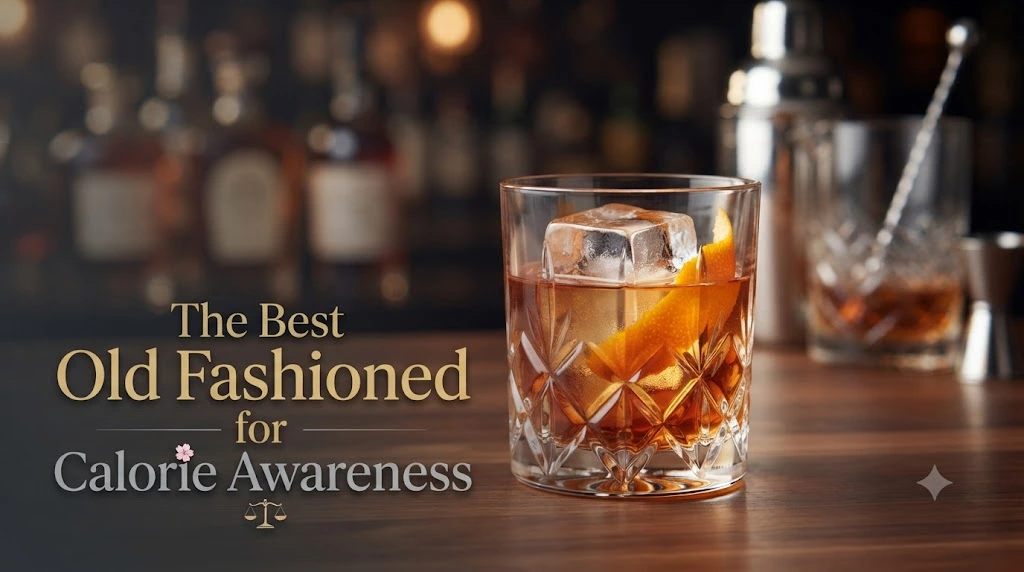
The best calorie-conscious Old Fashioned is not necessarily the one with the fewest possible calories.
A cocktail that tastes thin, overly bitter, or unsatisfying may leave you wanting another drink. A carefully balanced smaller cocktail can be more satisfying.
For a practical home version, I would start with:
- 1.5 ounces of 80-proof bourbon or rye.
- One small sugar cube or a modest measured amount of simple syrup.
- Two or three dashes of Angostura bitters.
- A little water from stirring and dilution.
- One large piece of ice.
- A fresh orange peel.
This follows the basic structure of the classic drink while keeping the portions easy to understand. The IBA’s official recipe uses 45 ml of bourbon or rye, one sugar cube, a few dashes of Angostura bitters, water, ice, and an orange garnish.
The finished drink should taste spirit-forward, gently sweet, aromatic, and balanced.
If you want a little more flavor without adding much sweetness, focus on bitters, citrus aroma, ice quality, and dilution rather than simply adding syrup.
That is where good cocktail technique makes a real difference.
Calories in an Old Fashioned Cocktail FAQs
How many calories are in an Old Fashioned cocktail?
A modest classic Old Fashioned is often around 110 to 120 calories, while larger or sweeter versions can reach roughly 150 to 180 calories or more. The exact number depends mainly on whiskey quantity, proof, and sweetener. The USDA lists 1.5 ounces of 80-proof whiskey at about 97 calories.
Is an Old Fashioned a low-calorie cocktail?
It can be relatively moderate in calories compared with cocktails that contain large amounts of juice, cream, or sweet mixers. However, alcohol still provides calories, so an Old Fashioned should not automatically be considered a low-calorie drink.
How many calories are in a 2-ounce Old Fashioned?
A 2-ounce pour of 80-proof whiskey contributes roughly 129 calories before sugar and garnish. With a modest amount of sugar, the complete drink may land around 140 to 150 calories, although recipes vary.
Does an Old Fashioned have a lot of sugar?
A classic Old Fashioned contains a small amount of added sugar compared with many sweet cocktails. The amount can become much higher when a bar uses a generous pour of simple syrup or other sweeteners.
How many calories are in an Old Fashioned with simple syrup?
It depends on how much syrup the recipe uses and how concentrated it is. A modest half-ounce of standard simple syrup can add roughly 25 to 30 calories, but a larger pour can add considerably more.
Is bourbon or rye better for a lower-calorie Old Fashioned?
Neither is automatically lower in calories. When bourbon and rye have the same proof and are used in the same amount, their calorie contribution is broadly similar. Choose based on flavor and control the serving size.
How can I make an Old Fashioned with fewer calories?
Measure a 1.5-ounce whiskey pour, use a small amount of sugar, avoid extra juice and sweet liqueurs, and use orange peel for aroma instead of adding sugary mixers. This keeps the cocktail recognizable while reducing unnecessary calories.
Conclusion
The calories in an Old Fashioned do not need to be a mystery. Once you understand the recipe, the calculation becomes surprisingly straightforward. Whiskey provides most of the calories, while sugar provides a smaller but controllable amount.
For a classic drink made with 1.5 ounces of 80-proof whiskey and a small sugar cube, around 115 to 120 calories is a sensible working estimate. A 2-ounce pour, higher-proof spirit, or generous syrup addition can push the total higher.
The smartest approach is not to obsess over one universal number. Instead, look at the actual recipe in front of you. Measure your pour at home, ask about ingredients when ordering, and remember that cocktail size can matter just as much as the name printed on the menu.
And if you love an Old Fashioned, there is no reason to strip away everything that makes it enjoyable. A balanced pour, restrained sweetness, good bitters, quality ice, and fresh orange aroma can give you a satisfying classic cocktail without unnecessary extras.