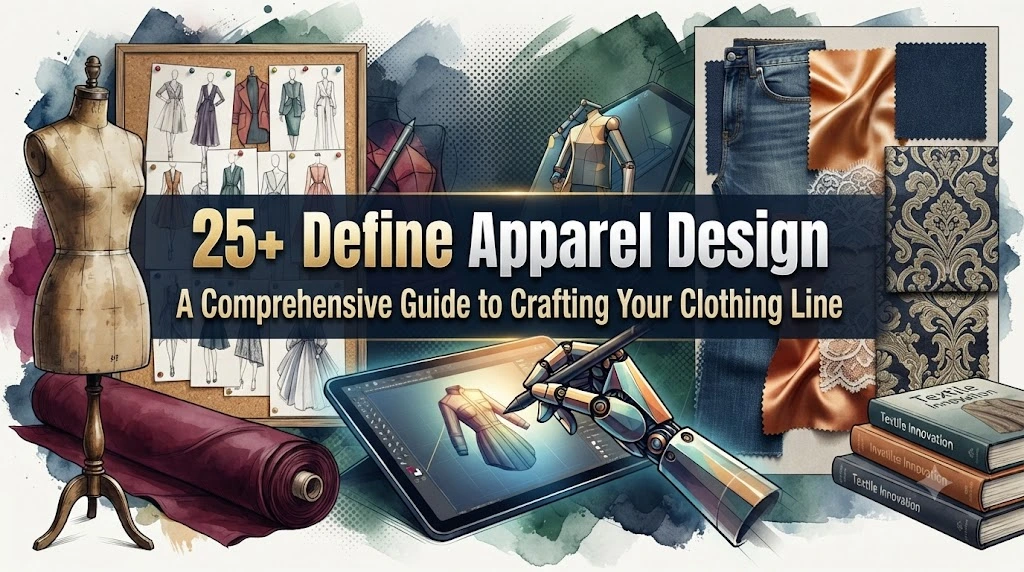
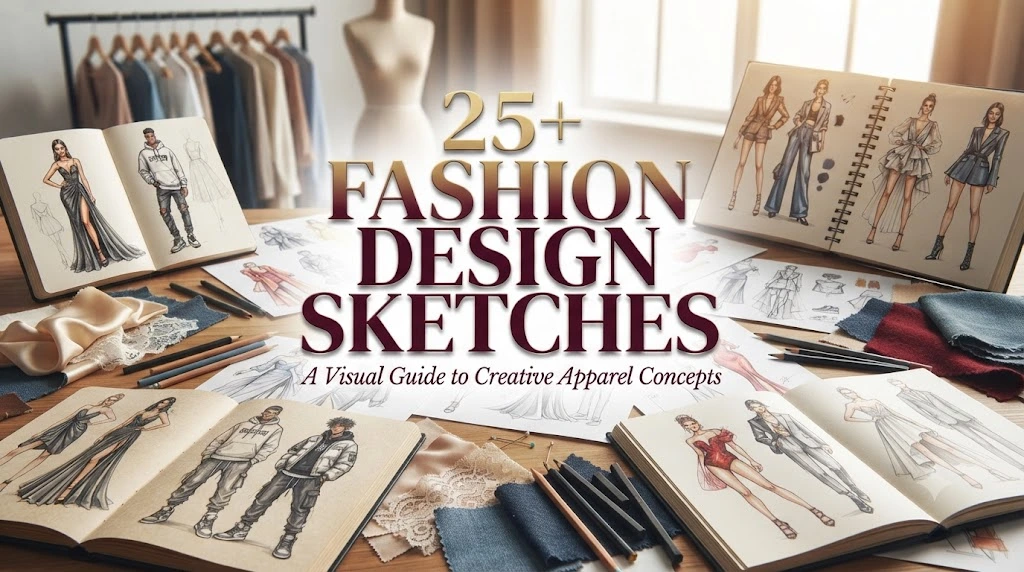
Every stunning outfit starts as a simple idea. Before the fabric is cut, before the sewing begins, and long before a model walks the runway, that idea usually appears as a sketch on paper. A few lines can capture movement, personality, and style in a way that words never could. That’s the magic of a fashion design sketch—it transforms imagination into something you can see, refine, and eventually wear.
If you’ve ever admired a designer’s collection and wondered how it all began, the answer is often surprisingly simple: a pencil, a sketchbook, and a creative vision. You don’t need to be born with incredible drawing skills to create fashion sketches. Like any creative skill, sketching improves with practice, patience, and the right techniques.
Whether you’re a beginner dreaming of designing your first outfit, a fashion student building a portfolio, or someone looking to sharpen your illustration skills, this guide will walk you through every essential step. You’ll learn how to sketch confidently, avoid common mistakes, choose the right tools, and bring your clothing ideas to life with greater clarity and creativity.
What Is a Fashion Design Sketch?
Think of it as a blueprint for creativity. Just as an architect sketches a building before construction begins, fashion designers sketch garments before turning them into finished pieces.
A typical fashion sketch may include:
- A fashion figure or croquis
- Garment outlines
- Fabric details
- Design elements
- Accessories
- Colour notes
- Construction ideas
Some sketches are quick rough drawings created in minutes, while others are polished illustrations used in presentations or client meetings.
Why Sketching Matters
Sketching allows designers to experiment freely without wasting fabric or materials. If one idea doesn’t work, they can quickly make adjustments on paper before moving to production.
It also improves communication. Whether you’re explaining your vision to a client, pattern maker, or manufacturer, a clear sketch reduces confusion and helps everyone understand the design.
Expert Tip
Don’t aim for perfection in your first sketch. Focus on getting your idea onto paper. Many successful collections begin with loose, imperfect drawings that evolve over time.
Why Fashion Sketching Is an Essential Skill
Some beginners believe they need to become professional artists before designing clothes. In reality, fashion sketching is about communicating ideas—not creating museum-quality artwork.
A strong sketch shows how a garment fits, flows, and functions. Even simple line drawings can effectively communicate a creative concept if they’re clear and well-structured.
Benefits of Learning Fashion Sketching
Developing this skill helps you:
- Explore multiple design ideas quickly
- Improve creativity
- Plan garment construction
- Build a professional portfolio
- Communicate with clients and manufacturers
- Refine designs before production
- Save time during the design process
The more you sketch, the easier it becomes to identify design improvements before investing time and money in creating a sample garment.
A Real-Life Example
Imagine you’re designing a summer dress. Instead of purchasing fabric immediately, you sketch three different necklines, two sleeve options, and several hem lengths.
After comparing the variations, you realise one version creates a more balanced silhouette. That simple sketching exercise saves both fabric and production time.
Common Mistake
Many beginners erase every imperfect line. Professional designers often leave light construction lines because they help refine proportions and improve the final drawing.
Essential Tools for Creating a Fashion Design Sketch
You don’t need an expensive studio to start sketching. A few reliable tools are enough to develop your skills and create impressive fashion illustrations.
Traditional Sketching Supplies
Many designers still enjoy drawing by hand because it feels natural and encourages creativity.
Basic supplies include:
- Sketchbook
- HB and 2B pencils
- Mechanical pencil
- Eraser
- Fine liner pens
- Coloured pencils
- Alcohol markers
- Watercolour paints
- Ruler
A quality sketchbook is worth the investment because it keeps your ideas organised and allows you to track your progress over time.
Digital Fashion Illustration Tools
Digital drawing has become increasingly popular in the fashion industry. It allows designers to edit, duplicate, and colour sketches much faster than traditional methods.
Popular digital tools include:
- Drawing tablet
- Stylus
- Illustration software
- Fashion design software
- Digital brushes
- Colour libraries
Digital sketching is especially useful when preparing presentations, technical drawings, or client revisions.
Should Beginners Start with Paper or Digital?
There’s no single correct answer.
Hand sketching strengthens observation and drawing fundamentals, while digital illustration offers speed and flexibility.
Many experienced designers combine both methods. They begin with rough pencil sketches and later refine them digitally for professional presentations.
Expert Recommendation
If you’re just starting, spend several weeks practicing with pencil and paper before moving to digital tools. Building strong drawing fundamentals makes digital illustration much easier later.
How to Draw a Fashion Figure (Croquis)
A croquis is the foundation of most fashion design sketches. It serves as the template on which designers illustrate garments. Unlike realistic human proportions, fashion figures are intentionally elongated to showcase clothing more effectively.
At first, drawing a croquis may seem intimidating, but breaking the process into simple steps makes it much easier.
Step 1: Draw a Guideline
Begin with a light vertical line down the centre of your page. This helps maintain balance and symmetry throughout the sketch.
Step 2: Mark Body Proportions
Fashion figures are often drawn taller than real people, usually around nine heads high instead of the average seven and a half.
Mark the placement of:
- Head
- Shoulders
- Bust
- Waist
- Hips
- Knees
- Ankles
These reference points keep the body proportional and make clothing sit naturally.
Step 3: Sketch the Basic Body Shape
Use simple shapes rather than detailed anatomy.
For example:
- Oval for the head
- Straight lines for limbs
- Rounded shapes for joints
- Soft curves for the torso and hips
Once the framework is complete, gradually refine the figure.
Step 4: Add Clothing
Now begin drawing your garment directly over the croquis.
Pay attention to:
- Fabric drape
- Fit
- Seam placement
- Sleeve shape
- Hemline
- Volume
- Movement
The croquis should support the clothing, not distract from it.
Common Beginner Mistakes
Avoid these frequent errors:
- Drawing the head too large
- Making the legs too short
- Ignoring body balance
- Using heavy, dark lines too early
- Overworking facial features instead of focusing on the clothing
Remember, the garment—not the face—is the main focus of a fashion design sketch.
Expert Styling Advice
Practice sketching the same croquis in different poses. A static standing figure works well for technical designs, while walking or dynamic poses help showcase flowing fabrics, oversized silhouettes, and garments with movement.
How to Sketch Different Clothing Styles
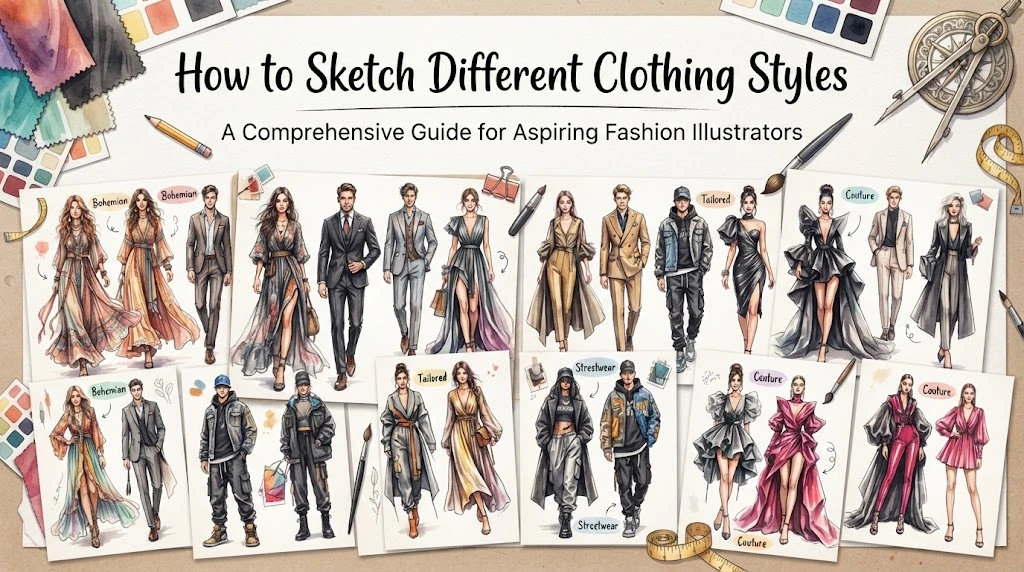
Once you’ve mastered the fashion figure, the next step is learning how to draw different types of clothing. Every garment has its own structure, fit, and movement. A tailored blazer won’t fall like a silk blouse, and an oversized hoodie won’t look like a fitted evening gown.
The key is to observe how real garments behave on the body. Spend time studying clothing in stores, fashion magazines, or even your own wardrobe. The more you observe, the more realistic your sketches will become.
Sketching Dresses
Dresses come in countless silhouettes, so start with the overall shape before adding details.
Focus on:
- Neckline
- Waist placement
- Sleeve style
- Skirt volume
- Hem length
For example, an A-line dress should gradually widen from the waist, while a bodycon dress follows the body’s curves more closely.
Sketching Tops and Jackets
When drawing tops, pay close attention to shoulder width and sleeve construction.
Include details like:
- Collars
- Cuffs
- Buttons
- Pockets
- Zippers
- Seams
Structured garments such as blazers require cleaner, sharper lines than soft knitwear.
Sketching Trousers and Skirts
Legwear depends heavily on fit.
Compare these examples:
- Skinny jeans follow the legs closely.
- Wide-leg trousers fall straight from the hips.
- Cargo trousers include extra pockets and volume.
- Pencil skirts hug the body.
- Pleated skirts create rhythmic folds.
Drawing the correct silhouette first makes adding details much easier.
Expert Tip
Instead of memorising clothing shapes, keep a folder of fashion references. Looking at real garments helps you understand proportion, balance, and construction far better than drawing from memory alone.
Common Mistake
Many beginners draw garments as if they float beside the body. Clothes should wrap around the figure, showing where fabric stretches, hangs, or folds naturally.
Understanding Fabric, Texture, and Movement
A beautiful fashion sketch isn’t only about accurate proportions. It should also communicate how the fabric feels and moves. The same dress looks completely different when made from denim, chiffon, or velvet.
Learning to illustrate texture brings your sketches to life.
How Different Fabrics Behave
Each material has unique characteristics.
For example:
- Silk flows smoothly with soft folds.
- Cotton creates moderate wrinkles.
- Denim appears structured and stiff.
- Leather forms bold, angular folds.
- Linen wrinkles easily.
- Tulle feels light and airy.
- Wool adds volume and warmth.
Before sketching, imagine how the garment would move if someone walked across the room.
Drawing Fabric Folds
Fabric folds appear wherever material reacts to gravity, movement, or tension.
Common fold areas include:
- Elbows
- Knees
- Waist
- Underarms
- Shoulders
- Hips
Avoid drawing random wrinkles. Every fold should have a reason.
Showing Texture
Simple shading techniques can suggest different materials.
Examples include:
- Smooth shading for satin
- Short strokes for tweed
- Small repeated lines for knitted fabrics
- Soft feathering for fur
- Fine crosshatching for textured textiles
You don’t need hundreds of lines. A few carefully placed marks often create a stronger effect.
Practical Exercise
Choose three fabrics from your wardrobe and place them over a chair. Sketch each one without focusing on the clothing itself. Instead, study how gravity creates folds and how light falls across the material.
This simple exercise improves observation faster than copying illustrations.
Expert Advice
Touch fabrics whenever you can. Feeling their weight, softness, and texture helps you draw them more accurately than relying on photographs alone.
How to Add Colour to a Fashion Design Sketch
Colour transforms a basic line drawing into a design presentation. It communicates mood, season, and personality while helping others visualise your concept more clearly.
However, colour should support your design—not overpower it.
Choose a Limited Colour Palette
Professional designers often begin with a focused palette rather than using every colour available.
For example:
- Earth tones for autumn collections
- Soft pastels for spring
- Monochrome palettes for minimalist designs
- Bright colours for resort wear
- Rich jewel tones for evening fashion
Keeping your palette consistent creates a more polished presentation.
Colouring Techniques
Depending on your preferred medium, you can use:
- Coloured pencils
- Alcohol markers
- Watercolours
- Gouache
- Digital brushes
Markers produce smooth, bold finishes, while coloured pencils allow for subtle layering and blending.
Show Light and Shadow
Adding simple shadows creates depth.
Shade areas such as:
- Under collars
- Inside sleeves
- Beneath folds
- Around pleats
- Under overlapping fabric
This makes garments appear more three-dimensional.
Don’t Forget Fabric Patterns
If your design includes prints or textures, add them carefully.
Examples include:
- Floral prints
- Plaids
- Stripes
- Animal prints
- Polka dots
- Abstract graphics
Keep patterns proportional to the garment. Oversized prints can overwhelm the sketch if used incorrectly.
Expert Styling Advice
Before finalising colours, think about your target customer. A luxury evening collection may call for elegant neutrals or deep jewel tones, while a youthful streetwear collection often benefits from bold colour combinations and graphic contrasts.
Common Mistake
Many beginners colour every part of the garment with the same intensity. In reality, fabric reflects light differently across its surface. Varying your colour pressure creates a much more realistic illustration.
Fashion Illustration Techniques That Make Sketches Look Professional
A professional-looking sketch isn’t about adding more detail. It’s about making thoughtful choices that guide the viewer’s attention to the design.
Small improvements in technique can dramatically elevate your work.
Use Confident Lines
Draw with light construction lines first, then refine the final outline with smooth, confident strokes.
Avoid repeatedly tracing over the same line, as this can make the sketch appear messy.
Create Visual Balance
Every design should feel balanced.
Pay attention to:
- Garment proportions
- Placement of details
- Symmetry
- Overall silhouette
If one side of the design feels visually heavier than the other, adjust your elements until the composition feels harmonious.
Highlight the Focal Point
Every outfit should have one standout feature.
It might be:
- A dramatic sleeve
- An unusual neckline
- Embroidery
- A statement collar
- Bold draping
- Unique pleats
Keep surrounding details simpler so the focal point attracts attention naturally.
Improve Your Presentation
Presentation matters just as much as drawing ability.
Consider including:
- A clean background
- Fabric swatches
- Colour palette
- Design notes
- Close-up detail sketches
- Technical flats
These additions help clients, instructors, and manufacturers understand your vision more clearly.
Practice Daily
Even professional designers continue sketching every day.
Try these exercises:
- Five-minute gesture sketches
- Daily outfit illustrations
- Fabric studies
- Sleeve variations
- Collar design challenges
- Fashion magazine redraws
Consistent practice builds confidence much faster than occasional long drawing sessions.
Expert Tip
Keep every sketch, even the ones you don’t like. Looking back after a few months is one of the best ways to see how much your skills have improved. Progress often becomes clear only when you compare your newest work with your earliest drawings.
Common Fashion Sketch Mistakes and How to Avoid Them
Every fashion designer makes mistakes while learning. In fact, mistakes are part of the creative process. The difference between a beginner and an experienced designer is that professionals learn from each sketch and improve with every project.
Knowing what to avoid will help you progress much faster.
Mistake 1: Ignoring Body Proportions
One of the most common problems is drawing clothing without considering the figure underneath. If the body proportions are incorrect, the garment will also look unrealistic.
Practice drawing the croquis regularly until you can sketch balanced figures with confidence.
Mistake 2: Overloading the Design
Adding too many ruffles, pockets, buttons, zippers, prints, and embellishments can make a sketch feel cluttered.
Instead, choose one or two standout features and let them become the focal point of the design.
Mistake 3: Forgetting Fabric Behaviour
Every fabric moves differently. A heavy wool coat won’t drape like a silk dress, and denim won’t create the same soft folds as chiffon.
Always ask yourself:
- Is this fabric soft or structured?
- Would it stretch?
- How would it move while walking?
Thinking about these questions makes your sketches far more believable.
Mistake 4: Using Dark Lines Too Early
Many beginners press hard with their pencil from the very beginning.
Professional designers usually start with light construction lines before gradually refining the final illustration.
This makes corrections much easier.
Mistake 5: Copying Instead of Learning
Looking at runway collections for inspiration is helpful, but copying another designer’s work doesn’t build your creativity.
Study successful designs, then ask yourself why they work. Use those lessons to create something original.
Expert Tip
After finishing a sketch, put it away for a day. When you look at it again with fresh eyes, you’ll often notice proportion or design issues that were easy to miss before.
How to Create Technical Fashion Flats
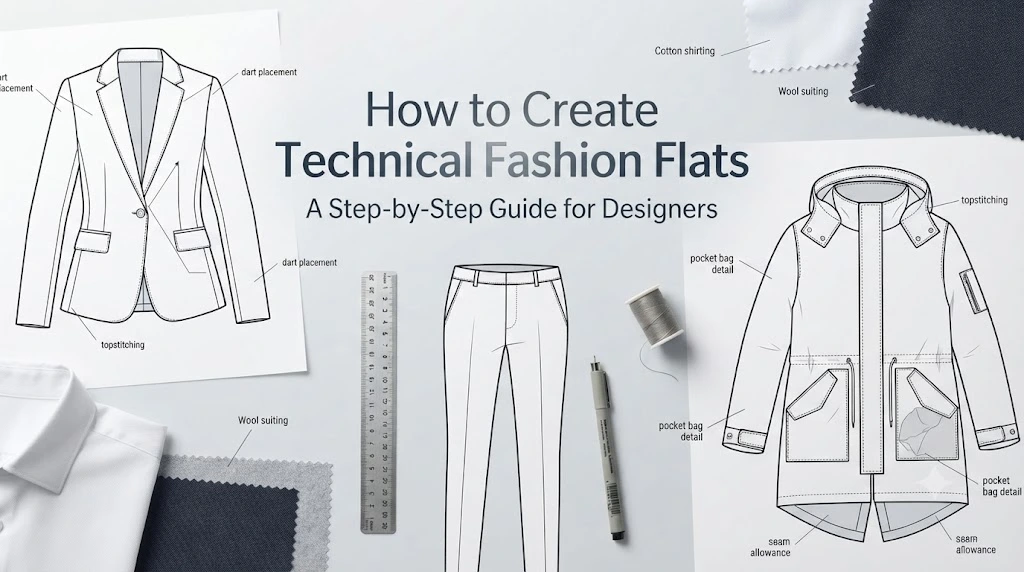
While fashion illustrations showcase creativity, technical fashion flats communicate construction details. Manufacturers use these drawings to understand exactly how a garment should be made.
A beautiful illustration may impress a client, but a clear technical flat helps turn the design into a real product.
What Is a Fashion Flat?
A fashion flat is a simple two-dimensional drawing of a garment shown without a fashion figure.
It usually includes:
- Front view
- Back view
- Stitching details
- Seams
- Pockets
- Closures
- Labels
- Measurements
- Construction notes
Unlike artistic sketches, fashion flats focus on accuracy.
Why Technical Flats Matter
Fashion brands rely on technical drawings because they reduce production errors.
A detailed flat allows:
- Pattern makers to understand construction
- Sample makers to build prototypes
- Manufacturers to produce garments consistently
- Buyers to review collections efficiently
Without clear technical drawings, expensive mistakes can happen during production.
Tips for Better Fashion Flats
Keep your drawings:
- Symmetrical
- Clean
- Easy to read
- Correctly proportioned
- Labelled clearly
Avoid unnecessary shading or artistic effects. Technical drawings should prioritise clarity over decoration.
Expert Recommendation
Practice drawing one garment twice—first as a creative illustration, then as a technical flat. This exercise helps you understand both the artistic and practical sides of fashion design.
Building a Fashion Sketch Portfolio
A strong portfolio is one of the most valuable tools for fashion students and aspiring designers. It reflects your creativity, technical ability, and personal design style.
Remember, your portfolio isn’t just a collection of drawings. It’s a visual story of your growth as a designer.
What Should a Portfolio Include?
Aim for variety while maintaining quality.
Include projects such as:
- Fashion illustrations
- Technical flats
- Mood boards
- Colour palettes
- Fabric research
- Textile experiments
- Collection concepts
- Pattern development
- Garment construction photos
- Finished garments
Showing different types of work demonstrates your versatility.
Organise Projects Thoughtfully
Arrange your portfolio in a logical sequence.
For example:
- Introduction page
- Inspiration
- Research
- Concept development
- Sketches
- Technical drawings
- Fabric selection
- Final garment
This layout allows viewers to follow your creative process from beginning to end.
Quality Matters More Than Quantity
Many students believe adding more pages makes a stronger portfolio.
In reality, ten outstanding projects are usually more impressive than thirty average ones.
Every page should have a purpose.
Update Your Portfolio Regularly
Your portfolio should evolve as your skills improve.
Replace older work with stronger projects and remove anything that no longer represents your current abilities.
Think of your portfolio as a living document rather than a finished product.
Expert Advice
Include one personal project that reflects your own design identity. Admissions officers and employers often remember originality more than technical perfection.
Traditional vs Digital Fashion Sketching
Fashion designers now have more tools than ever before. Some prefer the feel of pencil on paper, while others create entire collections digitally.
Both approaches have strengths, and many professionals use a combination of the two.
Traditional Sketching
Drawing by hand remains an essential skill because it encourages observation and creative thinking.
Benefits include:
- Better understanding of proportions
- Improved hand-eye coordination
- Greater creative freedom
- Strong drawing fundamentals
- Easy idea generation
Many designers still carry small sketchbooks to capture ideas whenever inspiration strikes.
Digital Sketching
Digital illustration has become standard across much of the fashion industry.
Advantages include:
- Faster editing
- Unlimited colour options
- Easy duplication
- Professional presentation
- Efficient client revisions
- File sharing
- Layer-based editing
Digital tools also simplify preparing collections for presentations and manufacturing.
Which Method Should You Choose?
The answer depends on your goals.
Traditional sketching is excellent for developing artistic confidence, while digital illustration improves workflow and presentation.
Many successful designers follow this process:
- Sketch rough ideas by hand.
- Refine selected concepts digitally.
- Create technical flats using design software.
- Prepare polished presentation boards.
This workflow combines the strengths of both techniques.
Common Mistake
Some beginners skip hand drawing completely and rely only on software.
Digital tools can improve efficiency, but they don’t replace fundamental sketching skills. Learning to draw first makes every digital tool easier to master later.
Expert Styling Advice
Don’t limit yourself to one method. Keep a sketchbook with you during the day for spontaneous ideas, then use digital software to refine your strongest concepts into professional-quality presentations. This balance mirrors the workflow used by many successful fashion designers and helps you stay creative without sacrificing efficiency.
How to Improve Your Fashion Sketching Skills Faster
Improving your fashion design sketch skills does not happen overnight. Even talented designers spend years refining their drawing techniques, learning fabric behaviour, and developing their own creative style.
The good news is that progress becomes much faster when you practice with purpose. Instead of drawing randomly, focus on exercises that improve specific skills.
Practice the Basics Daily
Consistency matters more than long, occasional practice sessions.
A simple daily routine can include:
- Five-minute figure sketches
- Drawing different poses
- Practising sleeves and collars
- Creating fabric studies
- Redrawing old designs with improvements
- Exploring new silhouettes
Even 20 minutes of focused practice each day can create noticeable improvement over time.
Study Real Clothing
Fashion sketching improves when you understand real garments.
Look closely at:
- How seams are placed
- Where fabric gathers
- How sleeves attach
- How different materials fall
- How clothing changes when someone moves
Visit clothing stores, study runway photos, or examine garments you already own.
A designer who understands construction can create more realistic and practical designs.
Learn From Fashion History
Great designers understand the past while creating the future.
Studying fashion history helps you recognize:
- Classic silhouettes
- Cultural influences
- Changing trends
- Different design movements
- Famous designer techniques
For example, understanding the structured shapes of 1950s fashion or the relaxed styles of modern streetwear can inspire new creative directions.
Use References Wisely
Professional designers use references all the time. Inspiration is an important part of the creative process.
Create inspiration boards using:
- Magazine images
- Fabric samples
- Nature photographs
- Architecture
- Artwork
- Historical clothing
- Colour combinations
However, avoid copying another designer’s exact work. Use references to develop ideas, not duplicate them.
Get Feedback Regularly
Feedback helps you notice problems you might miss yourself.
Share your sketches with:
- Fashion instructors
- Classmates
- Designers
- Creative communities
- Mentors
Constructive criticism can improve your skills much faster than practising alone.
Expert Tip
Keep a design journal where you record ideas, sketches, fabric thoughts, and observations. Many professional designers use similar methods because creativity often appears unexpectedly.
Fashion Sketching Tips From Professional Designers
Experienced designers approach sketching differently from beginners. They don’t just draw attractive outfits—they use sketches as tools for problem-solving and communication.
Here are practical techniques professionals use.
Start With the Concept, Not the Details
Before drawing buttons, patterns, or decorations, understand the main idea.
Ask:
- Who will wear this design?
- What feeling should it create?
- What problem does it solve?
- What makes it different?
For example, a travel clothing collection may focus on comfort, flexibility, and lightweight fabrics. Those ideas should influence the sketch from the beginning.
Focus on Silhouette First
The silhouette is the overall shape of a garment. It is one of the first things people notice.
Strong designers often begin with:
- Oversized shapes
- Fitted forms
- Layered structures
- Asymmetrical designs
- Dramatic proportions
A simple garment with a powerful silhouette can often make a stronger impression than a complicated design without clear direction.
Think Like a Stylist
A designer should imagine the complete look, not only one garment.
Consider:
- Shoes
- Bags
- Jewellery
- Hairstyles
- Layering options
- Colour combinations
Styling choices help communicate the personality of the collection.
Create Multiple Versions
Professional designers rarely stop at the first idea.
They explore variations by changing:
- Sleeve length
- Fabric choice
- Colour palette
- Neckline
- Length
- Proportions
Creating several versions allows you to discover stronger solutions.
Don’t Hide Mistakes
Mistakes often lead to creative breakthroughs.
A wrong proportion or unexpected line may inspire a completely new design idea.
Many successful designers keep early sketches because those rough drawings sometimes contain their most original concepts.
Expert Styling Advice
When creating a collection, avoid designing separate outfits that have no connection. Think about a story. A strong collection feels like a family of designs with a shared mood, colour direction, or inspiration.
Future Trends in Fashion Illustration and Design
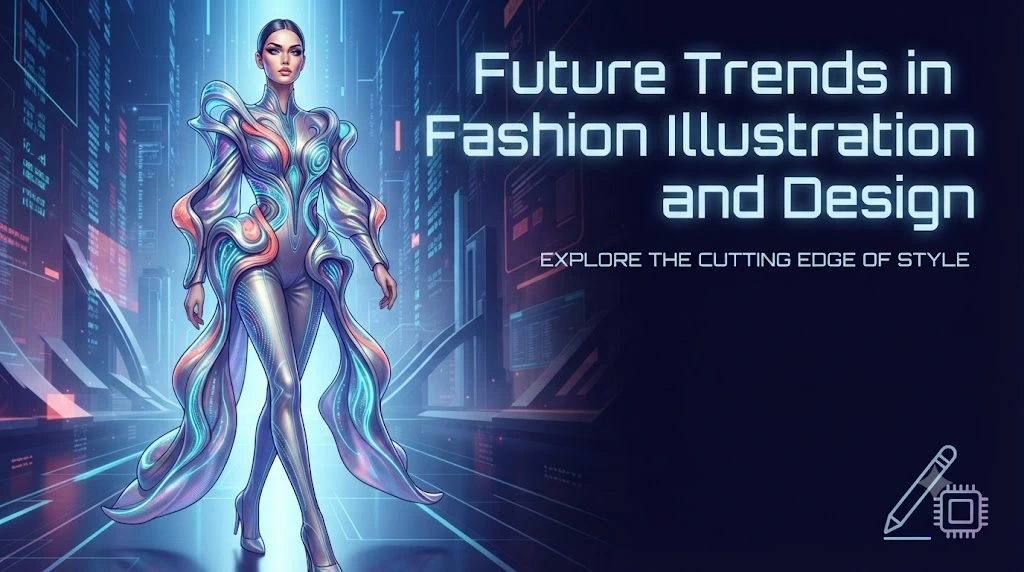
Fashion illustration continues to change as technology, consumer preferences, and creative tools evolve. While traditional sketching remains valuable, new methods are expanding how designers communicate ideas.
Understanding these changes can help future designers stay competitive.
Digital Fashion Illustration Growth
Digital tools are becoming increasingly important in modern fashion workflows.
Designers now use digital platforms for:
- Concept development
- Virtual presentations
- Collection planning
- Colour testing
- Design revisions
Digital fashion sketching allows designers to make changes quickly and present ideas professionally.
3D Fashion Design
Three-dimensional design technology is changing the way garments are created and tested.
Instead of producing multiple physical samples, designers can create digital versions to examine:
- Fit
- Shape
- Movement
- Fabric behaviour
This approach can reduce waste and improve production efficiency.
Sustainable Design Thinking
Environmental responsibility is becoming a major focus in fashion.
Future designers are expected to consider:
- Sustainable materials
- Ethical production
- Waste reduction
- Longer-lasting garments
- Circular fashion systems
A fashion sketch may now include notes about recycled fabrics, responsible sourcing, and production methods.
Artificial Intelligence and Creative Tools
AI-powered tools are becoming part of the fashion design process. They can assist with idea generation, trend analysis, and digital experimentation.
However, human creativity remains essential.
A tool can suggest possibilities, but a designer provides:
- Personal vision
- Emotional connection
- Cultural understanding
- Original thinking
The strongest designers will combine technology with their own creative identity.
Fashion Illustration as Storytelling
Modern fashion sketches are becoming more than technical drawings. They communicate emotions, lifestyles, and brand identities.
A successful sketch tells a viewer:
- Who the customer is
- How the garment feels
- Where it might be worn
- What makes it special
This storytelling ability separates ordinary sketches from memorable designs.
Conclusion
A fashion design sketch is the beginning of every great fashion idea. It allows designers to transform imagination into a visual concept that can be improved, developed, and eventually turned into a real garment.
Learning to sketch fashion successfully requires more than drawing ability. It requires observation, practice, creativity, and an understanding of how clothing interacts with the human body. From choosing the right tools and learning croquis techniques to studying fabrics, creating technical flats, and building a strong portfolio, every step helps you become a more confident designer.
The most important lesson is that improvement comes through consistent practice. Every sketch teaches you something new. A rough drawing today can become the foundation of a professional collection tomorrow.
Whether you are a beginner exploring fashion for the first time, a student preparing a portfolio, or an aspiring designer building your career, developing strong sketching skills will help you communicate ideas clearly and professionally.
Fashion constantly changes, but the ability to turn creativity into a visual story will always remain valuable. Keep experimenting, keep learning, and keep sketching. Your next great design may begin with a single line.
Frequently Asked Questions
1. What is a fashion design sketch used for?
A fashion design sketch is used to visually communicate clothing ideas before production begins. Designers use sketches to explore concepts, plan garments, explain ideas to teams, and create professional portfolios.
2. Do I need to be good at drawing to create fashion sketches?
You do not need to be a professional artist to start fashion sketching. Basic drawing skills improve with practice. The main goal is to communicate clothing ideas clearly rather than create realistic portraits.
3. What tools do fashion designers use for sketching?
Fashion designers use both traditional and digital tools. Common supplies include pencils, markers, sketchbooks, coloured pencils, drawing tablets, and fashion illustration software.
4. How long does it take to learn fashion sketching?
The learning time depends on practice and dedication. With regular practice, beginners can improve basic skills within a few months, while professional-level illustration often requires years of experience.
5. What should I include in a fashion sketch portfolio?
A strong portfolio can include fashion illustrations, technical flats, mood boards, fabric studies, colour palettes, garment development processes, and finished clothing projects.
6. Is digital fashion sketching better than hand drawing?
Neither method is better. Hand drawing builds strong fundamentals and creativity, while digital sketching offers speed and professional presentation options. Many designers use both approaches together.
7. How can I make my fashion sketches look professional?
To create professional-looking sketches, focus on accurate proportions, fabric movement, clean presentation, strong silhouettes, and clear communication of your design ideas. Regular practice and studying real garments will also improve your results.