Every great fashion creation starts with an idea. Sometimes it appears as a quick sketch on a notebook, a thought while looking at a beautiful fabric, or a vision of an outfit you wish existed. The exciting part of fashion is turning that small idea into something real, wearable, and meaningful.
However, many beginners face one common challenge: knowing where to start. Drawing a complete outfit from scratch can feel difficult, especially when you are still learning proportions, garment shapes, and design details. This is where fashion design clothing templates become incredibly useful.
Clothing templates give designers a structured foundation to build upon. They help students, hobby creators, and professionals focus more on creativity instead of spending hours creating basic outlines. With the right template, you can experiment with silhouettes, colors, fabrics, and styling ideas much faster.
From fashion students preparing portfolios to independent designers planning their first collection, templates make the design process more organized and enjoyable. They are not a replacement for creativity—they are a tool that helps creativity grow.
Over time, many designers discover that templates improve their workflow. They provide consistency, encourage experimentation, and help communicate ideas clearly. A simple template can become the starting point for an entire fashion story.
What Are Fashion Design Clothing Templates?
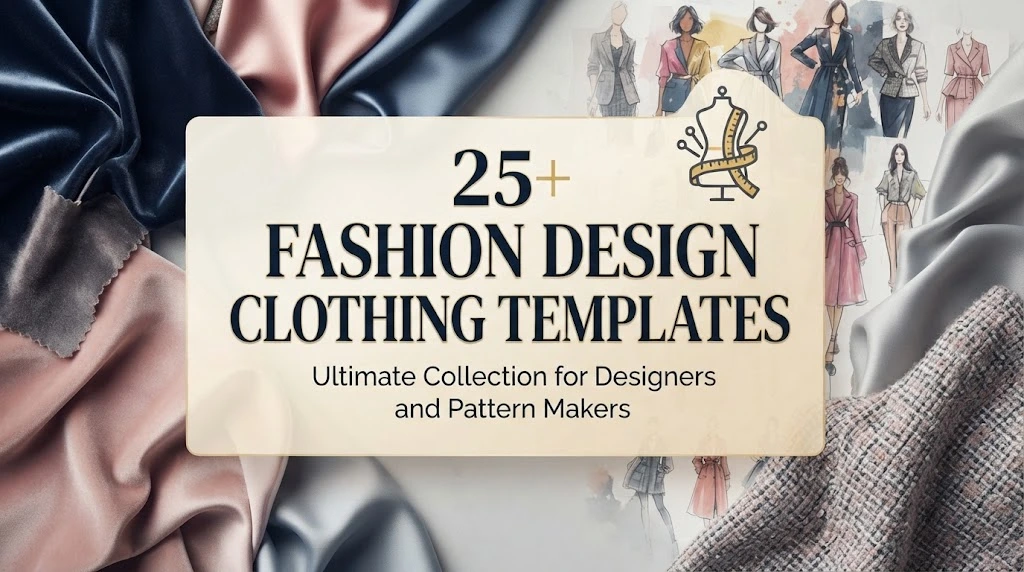
Fashion design clothing templates are pre-created outlines or digital frameworks that help designers create clothing concepts more easily. They usually include basic garment shapes, fashion figures, technical outlines, or ready-made design structures that can be customized.
These templates are commonly used for:
- Fashion illustration.
- Clothing sketches.
- Collection planning.
- Technical drawings.
- Portfolio presentations.
- Styling experiments.
A template may show a human figure, a garment outline, or specific clothing pieces such as dresses, jackets, shirts, pants, and accessories.
For example, a designer creating a summer dress collection can start with a basic dress template and experiment with different necklines, sleeve styles, fabrics, and patterns. Instead of spending time drawing the same foundation repeatedly, they can focus on developing unique design ideas.
Fashion templates come in different formats, including:
- Printable paper templates.
- Digital drawing templates.
- Vector fashion templates.
- Technical fashion flats.
- 3D garment templates.
Each type serves a different purpose depending on the designer’s needs.
Expert Tip: Choose templates that match your design goal. A fashion illustration template works well for creative sketches, while a technical template is better for production planning.
Why Fashion Designers Use Clothing Templates
Fashion design involves many steps, and each stage requires attention to detail. Templates help simplify the early design process by providing a reliable starting point.
One major advantage is saving time. Designers do not need to redraw basic body proportions or garment structures every time they begin a new project.
Templates help designers:
- Develop ideas faster.
- Compare different styles.
- Maintain consistent proportions.
- Create professional presentations.
- Improve design accuracy.
Imagine designing ten different jacket concepts. Without templates, you may spend a large amount of time drawing the same basic figure repeatedly. With a template, you can immediately focus on the creative differences between each design.
Templates are especially valuable for students because they reduce frustration during the learning process. Beginners can concentrate on understanding fashion elements instead of struggling with basic drawing challenges.
Professional designers also use templates because efficiency matters. In the fashion industry, deadlines are often strict, and organized workflows create better results.
Common Mistake: Some beginners believe using templates limits creativity. In reality, templates create freedom by removing repetitive work and allowing more time for innovation.
Different Types of Fashion Design Clothing Templates
Not all clothing templates serve the same purpose. Understanding the different types can help you choose the right option for your project.
Fashion Figure Templates
Fashion figure templates provide a basic human form for creating clothing illustrations.
They help designers practice:
- Body proportions.
- Garment placement.
- Outfit styling.
- Fashion poses.
These templates are popular among fashion students and illustrators.
Technical Fashion Templates
Technical templates focus on accuracy rather than artistic presentation.
They show garments in a flat format and include details such as:
- Seams.
- Stitching lines.
- Closures.
- Panels.
- Measurements.
Manufacturers and production teams often use these drawings because they clearly explain how a garment should be created.
Garment-Specific Templates
These templates focus on individual clothing items.
Examples include:
- Dress templates.
- Shirt templates.
- Coat templates.
- Skirt templates.
- Trouser templates.
They are useful when developing specific product categories.
Digital Vector Templates
Vector templates allow designers to edit shapes easily using design software.
Benefits include:
- Clean lines.
- Easy resizing.
- Professional presentation.
- Simple color adjustments.
3D Clothing Templates
Advanced designers use 3D templates to visualize how clothing may look on a digital model.
These tools help with:
- Virtual fitting.
- Fabric simulation.
- Digital fashion presentations.
Recommendation: Beginners should start with simple fashion figure or garment templates before moving into advanced technical and 3D options.
How Beginners Can Use Fashion Design Clothing Templates
Starting fashion design can feel overwhelming, but templates make the learning process much easier. They provide guidance while allowing beginners to develop their own creative style.
A beginner can use templates to practice:
- Drawing different silhouettes.
- Creating outfit combinations.
- Exploring colors.
- Understanding garment structure.
- Building confidence.
For example, a new designer may start with a basic blouse template. They can change the collar, add different sleeves, experiment with patterns, and create several variations of the same design.
This type of practice teaches an important fashion skill: seeing how small changes create completely different looks.
Templates also help beginners understand balance. A successful outfit depends on how different elements work together, including:
- Shape.
- Proportion.
- Color.
- Texture.
- Accessories.
Expert Tip: Do not copy templates exactly every time. Use them as a foundation, then add your personal ideas to create original designs.
How Clothing Templates Improve Fashion Illustration Skills
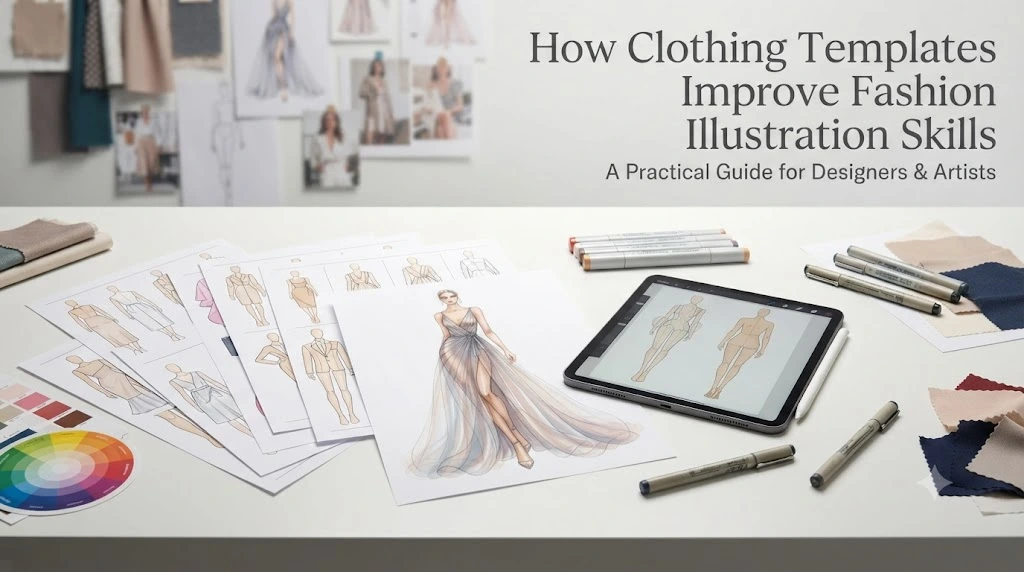
Fashion illustration requires practice, patience, and observation. Templates can support skill development by allowing designers to focus on clothing details.
Instead of worrying about drawing the entire figure, artists can spend more time improving:
- Fabric movement.
- Clothing details.
- Shading techniques.
- Color combinations.
- Styling choices.
For example, when designing a flowing evening gown, a template helps maintain the body structure while the designer focuses on showing how the fabric moves and falls.
This approach allows beginners to gradually improve their artistic abilities.
However, templates should support learning rather than replace it. Understanding human anatomy, garment construction, and fashion proportions remains important.
A strong fashion illustrator knows how clothing interacts with the body.
They understand:
- Where fabric naturally folds.
- How different materials behave.
- How clothing changes with movement.
- How styling affects the final appearance.
Common Mistake: Adding decoration before understanding structure can make designs look attractive but unrealistic. Build strong foundations first, then add creative details.
How to Choose the Right Fashion Design Clothing Templates
Choosing the right template can make your design process smoother and more enjoyable. The best template depends on your experience level, design purpose, and the type of clothing you want to create.
A beginner designing casual outfits will need a different template compared to a professional creating manufacturing-ready designs.
Before choosing a template, consider these questions:
- What type of clothing am I designing?
- Do I need a creative sketch or a technical drawing?
- Will I use paper, a tablet, or design software?
- Is the template easy to customize?
- Does it match my current skill level?
For fashion illustration, choose templates with clear body poses and enough space for creative details. For professional clothing development, select templates that include accurate garment structures and technical information.
A useful template should help you work faster without limiting your imagination.
Look for features such as:
- Adjustable proportions.
- Clean outlines.
- Multiple poses.
- Layer compatibility.
- Easy editing options.
- High-quality file formats.
Expert Tip: Do not choose a template only because it looks attractive. A practical template that fits your workflow will always be more valuable than one with unnecessary details.
Free Fashion Design Clothing Templates for Students and Beginners
Fashion students often need affordable resources while developing their skills. Free clothing templates provide an excellent way to practice without investing in expensive tools immediately.
These templates help students complete projects such as:
- Fashion illustration assignments.
- Design exercises.
- Portfolio development.
- Collection planning.
- Style experiments.
A student working on a school project can use a free template to create different versions of a garment. For example, a basic jacket template can become a winter coat, streetwear jacket, or luxury blazer by changing the details.
Free templates are also helpful for learning design principles.
Students can practice:
- Color coordination.
- Fashion proportions.
- Clothing shapes.
- Styling concepts.
- Visual presentation.
However, beginners should avoid depending on free templates forever. As skills improve, designers should gradually learn how to create original figures and garment drawings.
Recommendation: Use free templates as a learning tool. They should help you grow your skills, not replace the creative thinking behind fashion design.
How Professional Designers Use Clothing Templates in Their Workflow
Professional fashion designers often work under pressure. They need to create ideas quickly while maintaining accuracy and quality. Templates help them manage this process efficiently.
A professional workflow may include:
- Selecting a suitable template.
- Creating an initial design concept.
- Testing colors and materials.
- Refining garment details.
- Preparing final presentations.
For example, a designer developing a new collection may use templates to create multiple outfit variations before deciding which designs move into production.
Templates also improve communication. When designers share ideas with manufacturers or clients, clear visuals reduce misunderstandings.
A technical clothing template can show:
- Exact garment structure.
- Placement of design features.
- Construction details.
- Expected final appearance.
This makes collaboration easier between creative teams and production specialists.
Expert Tip: Save your best customized templates. Over time, you can build a personal library that speeds up future projects.
Fashion Design Clothing Templates for Different Types of Garments
Every clothing category has unique design requirements. A dress template, for example, needs different details compared to a jacket or pair of trousers.
Using garment-specific templates helps designers focus on the unique characteristics of each item.
Dress Templates
Dress templates help designers explore:
- Neckline variations.
- Sleeve designs.
- Skirt shapes.
- Length options.
- Formal and casual styles.
They are popular for creating evening wear, bridal designs, and everyday fashion concepts.
Shirt and Blouse Templates
These templates help experiment with:
- Collars.
- Buttons.
- Cuffs.
- Sleeve styles.
- Fabric patterns.
Small adjustments can completely change the personality of a shirt design.
Jacket and Coat Templates
Outerwear requires attention to structure and fit.
Templates help designers plan:
- Lapels.
- Pockets.
- Closures.
- Layering options.
- Oversized or fitted silhouettes.
Pants and Skirt Templates
These help explore:
- Waist designs.
- Length variations.
- Pleats.
- Cuts.
- Fabric flow.
Recommendation: Build a collection of different garment templates instead of relying on one universal template. Different clothing types require different approaches.
How Fashion Design Clothing Templates Help Create Mood Boards and Collections
A successful fashion collection needs a clear identity. Designers often create mood boards before developing final garments because they help organize ideas visually.
Fashion templates work well with mood boards because they allow designers to connect inspiration with actual clothing concepts.
A collection planning process may include:
- Gathering inspiration images.
- Choosing a theme.
- Selecting colors.
- Creating template-based sketches.
- Refining final designs.
For example, a designer creating a nature-inspired collection may collect images of forests, natural textures, and earthy colors. They can then apply those ideas to clothing templates and develop a connected group of outfits.
This process helps maintain consistency throughout the collection.
A strong collection usually has:
- A clear theme.
- Related colors.
- Similar design elements.
- A recognizable style.
Templates make it easier to visualize how separate pieces work together.
Common Mistake: Designing individual outfits without considering the complete collection can make the final result feel disconnected. Always think about the bigger story behind your designs.
Digital vs Printable Fashion Design Clothing Templates
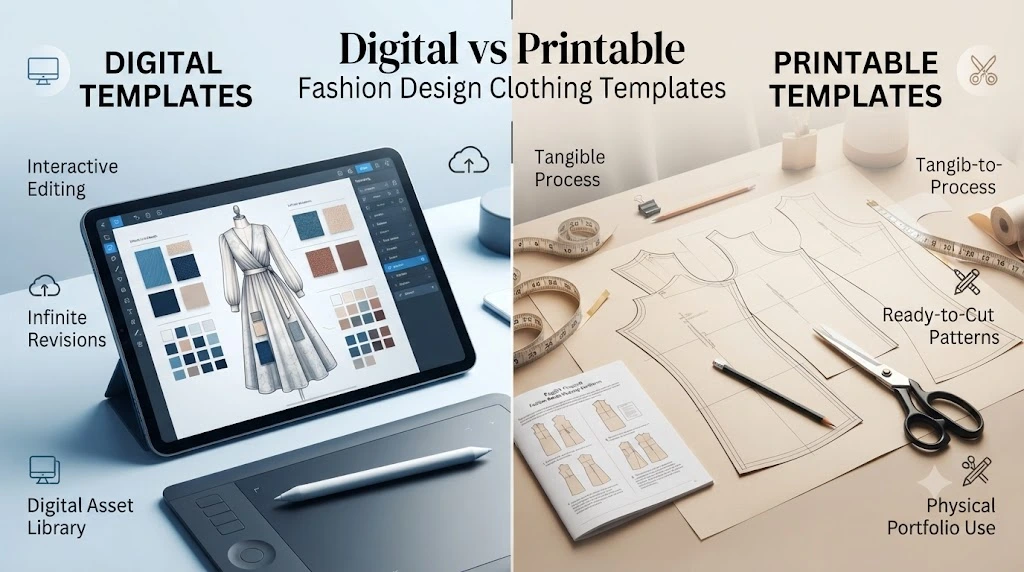
Fashion templates are available in both digital and printable formats. Choosing between them depends on how you prefer to design.
Printable Templates
Printable templates are useful for traditional sketching.
Advantages include:
- Easy handwriting notes.
- No technology required.
- Good for classroom practice.
- Simple to trace and modify.
Many beginners enjoy printable templates because they feel similar to traditional drawing.
Digital Templates
Digital templates are better for modern design workflows.
Advantages include:
- Easy editing.
- Quick color changes.
- Simple duplication.
- Professional presentation.
- Easy sharing.
Designers using tablets or computers often prefer digital templates because they can experiment faster.
For example, a digital designer can create one dress template and test ten different color combinations in minutes.
Both methods have value. Many successful designers combine them by sketching ideas traditionally and refining them digitally.
Expert Tip: Choose the format that encourages you to create more often. The best tool is the one that becomes part of your regular creative routine.
How to Customize Fashion Design Clothing Templates
One of the biggest advantages of using clothing templates is the ability to transform a simple base design into something completely unique. A template gives you structure, but your creativity gives it personality.
Customization allows designers to experiment with different fashion ideas without starting from zero. This makes the design process faster while still leaving plenty of room for originality.
You can customize templates by changing:
- Neckline shapes.
- Sleeve lengths.
- Fabric textures.
- Color combinations.
- Garment proportions.
- Decorative details.
- Accessories.
For example, a basic dress template can become a formal evening gown by adding a flowing skirt, elegant fabric texture, and detailed embellishments. The same template can also become a casual summer dress by changing the length, fabric, and styling.
Successful customization depends on understanding balance. Adding too many details can make a design look confusing.
Expert Tip: Change one design element at a time. This helps you understand which changes create the biggest visual impact.
Using Fashion Design Clothing Templates for Creating Fashion Portfolios
A strong portfolio helps designers showcase their creativity and skills. Whether you are applying to fashion school, searching for a job, or attracting clients, your portfolio represents your design ability.
Fashion design clothing templates can help create organized and professional portfolio pages.
A portfolio project may include:
- Initial concept sketches.
- Template-based illustrations.
- Color development.
- Fabric choices.
- Final outfit designs.
- Design explanations.
For example, instead of showing only a finished dress illustration, explain how you developed the idea. Include your inspiration, color decisions, and styling choices.
This shows your creative process and helps viewers understand your design thinking.
Templates are especially useful for beginners because they create consistency across different projects.
A professional portfolio should demonstrate:
- Creativity.
- Technical understanding.
- Personal style.
- Attention to detail.
- Problem-solving ability.
Recommendation: Focus on presenting fewer high-quality designs rather than filling your portfolio with unfinished work.
Common Mistakes When Using Fashion Design Clothing Templates
Templates are powerful tools, but using them incorrectly can limit your growth. Many beginners make simple mistakes that prevent their designs from improving.
Understanding these mistakes can help you use templates more effectively.
Copying Templates Without Adding Creativity
A template should be a starting point, not the final design.
If you use the same template without modification, your work may look generic.
Try adding:
- Personal styling ideas.
- Unique patterns.
- Different silhouettes.
- Creative details.
Ignoring Real Garment Construction
A beautiful sketch must still represent a wearable garment.
Designers should consider:
- How fabric behaves.
- How clothing fits the body.
- Where seams are placed.
- How the garment moves.
Choosing the Wrong Template Style
Using an unsuitable template can make the design process harder.
For example, a technical production drawing template is not ideal for creating artistic fashion illustrations.
Overcomplicating Designs
Beginners often add too many elements because they want their designs to look impressive.
Professional designs usually focus on clarity and purpose.
Expert Tip: Before adding details, ask yourself whether each element improves the design or simply makes it busier.
How Fashion Design Clothing Templates Improve Creative Workflow
A good workflow helps designers turn ideas into finished designs efficiently. Templates create a structured process that reduces repetitive tasks and improves organization.
Without templates, designers may spend too much time recreating basic shapes. With templates, they can spend more energy on creative decisions.
A simple workflow may look like this:
This approach keeps the design process organized and prevents unnecessary delays.
Templates are especially helpful when creating multiple designs for a collection. Designers can maintain consistent proportions while exploring different ideas.
For example, a designer creating a clothing line may use the same figure template across several outfits so the collection looks visually connected.
Recommendation: Create a personal design system with your favorite templates, color palettes, and references. This can make future projects much easier.
Fashion Design Clothing Templates for Sustainable Fashion Planning
Sustainable fashion focuses on creating clothing responsibly while reducing unnecessary waste. Digital templates support this goal by helping designers plan carefully before producing physical garments.
Before making samples, designers can use templates to test:
- Different garment shapes.
- Color options.
- Styling combinations.
- Collection ideas.
This reduces the need for multiple physical prototypes.
For example, a designer developing an eco-friendly jacket collection can test several versions digitally before selecting the final design. This saves fabric and resources.
Digital planning also encourages thoughtful decision-making. Designers can evaluate whether a piece fits their collection before moving into production.
Sustainability benefits from better planning because fewer mistakes lead to less waste.
Expert Tip: Use templates to explore ideas early, but always consider real-world factors such as fabric availability, comfort, durability, and production methods.
How Fashion Design Clothing Templates Help With Trend Forecasting
Fashion trends change constantly. Designers need to understand what customers may want while still creating original ideas.
Templates help designers explore future styles by allowing quick experimentation.
A designer studying upcoming trends can test:
- New silhouettes.
- Seasonal colors.
- Different garment shapes.
- Modern styling ideas.
For example, if oversized clothing becomes popular, a designer can use templates to experiment with relaxed jackets, wide-leg trousers, or layered outfits.
Trend forecasting is not about copying what already exists. It is about understanding direction and creating something fresh.
Templates make this process easier because designers can compare multiple ideas quickly.
A strong designer combines:
- Market awareness.
- Personal creativity.
- Customer understanding.
- Technical knowledge.
Common Mistake: Following every trend without developing a unique identity can make designs feel ordinary. Use trends as inspiration, not as a replacement for creativity.
How Students Can Practice Fashion Design Using Templates
Practice is the foundation of improvement. Fashion design clothing templates give students a simple way to develop skills through regular exercises.
Students can create practice projects such as:
- Designing one outfit every week.
- Creating seasonal collections.
- Redesigning classic garments.
- Experimenting with different styles.
For example, a student can choose one basic shirt template and create five versions:
- A formal office shirt.
- A casual streetwear design.
- A luxury-inspired version.
- A sustainable cotton shirt.
- A modern oversized style.
This type of practice improves creativity and problem-solving skills.
Templates also help students compare their progress over time. Looking back at older designs often reveals improvements in style, confidence, and technical ability.
Expert Tip: Challenge yourself with different themes. Designing outside your comfort zone helps you discover new creative strengths.
How Fashion Brands Use Clothing Templates in Professional Design
Fashion brands rely on organized design systems to create collections efficiently. Clothing templates help brands maintain consistency while allowing designers to develop fresh and creative ideas.
In a professional fashion environment, templates support many stages of production, including:
- Initial concept development.
- Collection planning.
- Design presentations.
- Technical communication.
- Product preparation.
For example, a clothing brand launching a new seasonal collection may use templates to create dozens of outfit ideas before selecting the final pieces. This allows the design team to compare different options and choose styles that match the brand identity.
Templates also help teams work together. A designer, pattern maker, and manufacturer can understand the same visual reference, reducing mistakes during production.
A strong fashion brand does not only create attractive clothing. It creates designs that are practical, consistent, and connected to customer needs.
Expert Tip: Brands should regularly update their template libraries to match new trends, customer preferences, and production requirements.
Best Ways to Make Fashion Design Clothing Templates Look Professional
A template alone does not create a professional design. The final result depends on how you use it and how carefully you develop your ideas.
Professional-looking fashion designs usually include:
- Clear garment structure.
- Balanced proportions.
- Thoughtful color choices.
- Realistic fabric representation.
- Clean presentation.
Start by creating a strong concept before adding details. A well-planned design always looks more polished than a random collection of decorative elements.
For example, if you are designing a luxury handbag collection, focus on the brand story first. Then choose materials, colors, and shapes that support that idea.
Small improvements can make a big difference:
- Use consistent line quality.
- Add realistic shadows.
- Show fabric texture.
- Keep layouts organized.
- Avoid overcrowding the design.
Recommendation: Study professional fashion presentations and notice how designers use spacing, colors, and details to create visual impact.
How Fashion Design Clothing Templates Support Online Fashion Learning
Online learning has made fashion education more accessible. Many students now learn illustration, styling, and clothing development through digital platforms.
Templates make online learning easier because they provide practical exercises.
Students can use them to practice:
- Fashion drawing techniques.
- Clothing construction ideas.
- Digital illustration skills.
- Design presentation methods.
For example, an online fashion student can download a clothing template, create multiple designs, and receive feedback from instructors or creative communities.
Templates also help beginners follow structured lessons. Instead of wondering where to begin, learners have a clear foundation to build upon.
However, online learning should include more than just using templates.
A complete fashion education should also cover:
- Textile knowledge.
- Sewing basics.
- Fashion marketing.
- Consumer behavior.
- Industry trends.
Expert Tip: Use templates during online courses as practice tools, but always try creating original concepts to strengthen your personal design voice.
Future of Fashion Design Clothing Templates in Digital Fashion
Technology continues to change the fashion industry. Digital tools are becoming more advanced, and clothing templates are evolving with new possibilities.
Future fashion design systems may include:
- Artificial intelligence design support.
- 3D clothing visualization.
- Virtual fitting experiences.
- Digital fashion collections.
- Automated pattern suggestions.
These developments can help designers create and test ideas faster.
For example, future digital templates may allow designers to adjust a garment shape and instantly see how it behaves on a virtual model.
However, technology will not replace creative thinking. Fashion is still about storytelling, emotion, culture, and personal expression.
The best designers will combine digital skills with traditional fashion knowledge.
They will understand:
- How fabrics move.
- What customers want.
- How designs communicate emotions.
- How creativity connects with real life.
Recommendation: Learning digital design tools today can prepare future designers for the changing fashion industry.
Expert Tips for Getting Better Results With Fashion Design Clothing Templates
Using templates effectively requires practice and a thoughtful approach. The following tips can help designers improve their results.
Build a Personal Template Collection
Save templates that match your style and projects.
Organize them by:
- Garment type.
- Design purpose.
- File format.
- Project category.
A personal library saves time in future projects.
Study Real Clothing
Look at real garments and observe:
- Stitching.
- Fabric folds.
- Fitting.
- Construction details.
Real-world observation improves digital designs.
Experiment Regularly
Try new styles instead of repeating the same ideas.
Explore:
- Different fashion eras.
- New color combinations.
- Unusual silhouettes.
- Various customer styles.
Ask for Feedback
Feedback helps identify areas for improvement.
Share your designs with:
- Teachers.
- Designers.
- Creative communities.
- Fashion enthusiasts.
Keep Learning
Fashion constantly changes, so continue developing your skills.
Learn about:
- New design software.
- Sustainable practices.
- Industry trends.
- Visual storytelling.
Final Expert Advice: A template is only a starting point. The true value comes from your creativity, knowledge, and ability to transform a simple outline into a meaningful fashion idea.
Conclusion
Fashion design clothing templates have become valuable resources for beginners, students, independent creators, and professional designers. They simplify the creative process by providing a strong foundation where ideas can grow into complete fashion concepts.
These templates help with illustration, collection planning, technical drawings, portfolio development, and trend exploration. They save time, improve organization, and allow designers to focus on the most important part of fashion—creativity.
However, successful fashion design requires more than using templates. Understanding fabrics, garment construction, styling, and customer needs remains essential. Templates work best when they support your imagination rather than replace it.
Whether you are creating your first outfit sketch or developing a professional collection, the right template can make your journey easier and more enjoyable. Use these tools to practice, experiment, and build confidence in your design abilities.
Fashion is about telling stories through clothing. With dedication, creativity, and the right resources, a simple template can become the beginning of a unique fashion vision.
Frequently Asked Questions (FAQs)
1. What are fashion design clothing templates used for?
Fashion design clothing templates are used for creating outfit sketches, technical drawings, digital illustrations, collection plans, and fashion portfolio projects. They provide a basic structure that designers can customize.
2. Are fashion design clothing templates helpful for beginners?
Yes, templates are very helpful for beginners because they make it easier to practice proportions, explore clothing ideas, and learn basic fashion illustration skills.
3. Can professional designers use clothing templates?
Yes, professional designers use templates to save time, organize collections, communicate ideas, and maintain consistency during the design process.
4. Can I create original designs using fashion templates?
Absolutely. Templates provide a foundation, but designers can customize colors, shapes, fabrics, patterns, and details to create unique fashion concepts.
5. What is the difference between fashion illustration templates and technical templates?
Fashion illustration templates focus on creative presentation and styling, while technical templates show accurate garment details needed for production and manufacturing.
6. Are digital fashion design templates better than printable templates?
Both options have benefits. Digital templates allow easy editing and professional presentations, while printable templates are useful for traditional sketching and practice.
7. How can I improve my fashion designs using templates?
You can improve by practicing regularly, studying real clothing, experimenting with different styles, learning fashion principles, and adding your own creative ideas instead of copying templates.