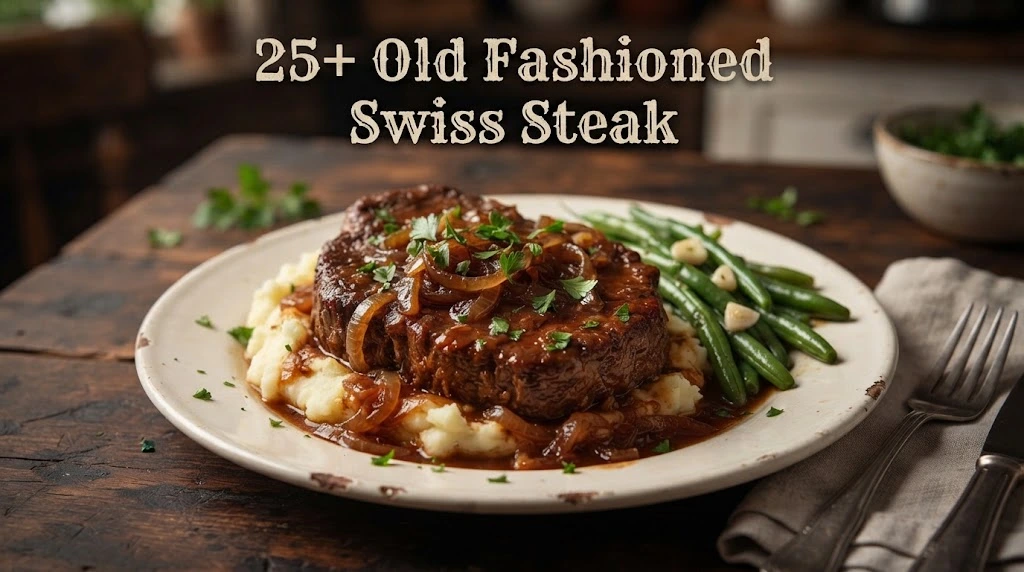
There’s a certain smell that fills a house when Swiss steak is simmering low and slow on the stove, and if you grew up with it, you know exactly what I mean. It’s savory, a little tangy from the tomatoes, and it means dinner is going to be the kind that sticks to your ribs. My grandmother made this at least twice a month, and to this day, the smell of round steak browning in a cast iron skillet takes me straight back to her kitchen table.
Old fashioned Swiss steak is one of those recipes that never really goes out of style, even though it’s not on every restaurant menu anymore. It takes a tough, cheap cut of beef and turns it into something so tender you can cut it with a fork. No fancy equipment, no hard-to-find ingredients, just time, patience, and a few pantry staples.
This guide covers everything you need to make Swiss steak the way it was meant to be made — tender, rich, and full of old-school comfort. We’ll go through the history, the best cuts of meat, step-by-step instructions, common mistakes, and even how to store leftovers so this dish tastes just as good the next day.
What Is Old Fashioned Swiss Steak?
Swiss steak is a braised beef dish made by tenderizing a tough cut of round steak, dredging it in seasoned flour, browning it, and then slow-cooking it in a tomato-based gravy until it falls apart. Despite the name, it has nothing to do with Switzerland.
The name actually comes from the cooking technique called “swissing,” which refers to the process of pounding or rolling meat to break down its tough fibers. This technique was commonly used on cheaper cuts of beef long before pressure cookers and meat tenderizers became household staples.
At its core, Swiss steak is a one-pot braise. You start with a cut of meat that would be chewy if cooked quickly, and through low, slow cooking in liquid, it becomes soft enough to shred with a fork. It’s the same basic principle behind pot roast, just with a slightly different seasoning profile and presentation.
A Brief History of Swiss Steak
Swiss steak became a staple of American home cooking in the mid-20th century, especially during and after the Great Depression, when families needed ways to stretch inexpensive cuts of meat into satisfying meals. Round steak, cut from the rear leg of the cow, was cheap and widely available, but it was also tough and lean.
Home cooks realized that pounding the meat with a mallet, dredging it in flour, and braising it slowly in tomatoes and broth transformed it into something tender and flavorful. This method spread quickly through community cookbooks, church potlucks, and family recipe boxes.
By the 1950s and 60s, Swiss steak had become a fixture on diner menus and in home kitchens across the country. Cast iron skillets full of it would sit on stovetops all afternoon while families went about their Sunday chores, filling the house with that unmistakable tomato-and-beef aroma.
What Cut of Meat Works Best for Swiss Steak
The right cut of meat makes all the difference in how your Swiss steak turns out, and this is where a lot of home cooks get tripped up by grabbing whatever’s on sale without thinking it through.
Round steak is the traditional and most authentic choice. It’s lean, affordable, and holds up beautifully to long braising. Within this category, you have a few options:
- Top round steak — the most common choice, slightly more tender than bottom round.
- Bottom round steak — tougher but very flavorful, benefits from extra tenderizing.
- Eye of round steak — leaner and a bit pricier, still works well with proper tenderizing.
Cube steak, which is round steak that’s already been mechanically tenderized at the store, is a great shortcut if you want to skip the pounding step yourself. It’s widely available and cooks up just as tender when braised properly.
Expert tip: Avoid using a naturally tender cut like sirloin or ribeye for Swiss steak. These cuts don’t have the connective tissue that breaks down into rich, gelatinous texture during a long braise, so you’ll end up with meat that’s dry instead of fall-apart tender.
Essential Ingredients for Old Fashioned Swiss Steak
The beauty of this recipe is that it relies on ingredients most people already have in their pantry. Here’s what a classic version calls for.
- Round steak (about 1.5 to 2 pounds, cut into serving-sized pieces)
- All-purpose flour, seasoned with salt and pepper for dredging
- Vegetable oil or butter for browning
- Diced tomatoes or tomato sauce as the base for the braising liquid
- Beef broth to thin out the sauce and add depth
- Onion, sliced or diced
- Celery and carrots, for classic mirepoix flavor
- Garlic, minced
- Worcestershire sauce, for a savory, umami boost
- Bay leaf, for subtle background flavor
- Salt, black pepper, and paprika for seasoning
Some family recipes also include a splash of red wine vinegar or a spoonful of brown sugar to balance the acidity of the tomatoes. Both are optional but worth trying if you want to put your own spin on the classic.
How to Make Old Fashioned Swiss Steak Step by Step
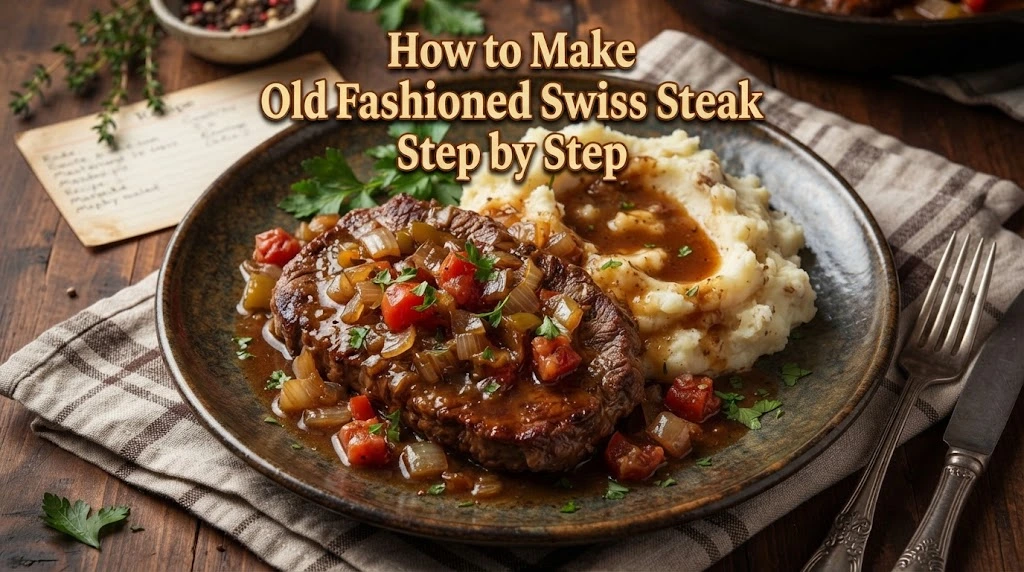
Here’s the full process, broken down so even a first-time cook can follow along without any guesswork.
- Tenderize the meat. Place your round steak between two sheets of plastic wrap and pound it with a meat mallet until it’s about half its original thickness. This breaks down tough muscle fibers.
- Season and dredge. Mix flour with salt and pepper, then coat each piece of meat thoroughly, shaking off the excess.
- Brown the meat. Heat oil in a heavy skillet or Dutch oven over medium-high heat, then sear the meat for two to three minutes per side until golden brown. Don’t overcrowd the pan — work in batches if needed.
- Sauté the vegetables. Remove the meat and set aside, then cook onion, celery, and carrots in the same pan until softened, scraping up the browned bits from the bottom.
- Build the sauce. Stir in garlic, diced tomatoes, beef broth, Worcestershire sauce, and a bay leaf, then bring to a gentle simmer.
- Return the meat to the pan. Nestle the browned steak pieces into the sauce, making sure they’re mostly submerged.
- Cover and cook low and slow. Simmer on the stovetop over low heat for two to three hours, or braise in a 325°F oven for the same amount of time, until the meat is fork-tender.
- Adjust and serve. Taste the sauce, adjust seasoning if needed, remove the bay leaf, and serve hot over mashed potatoes, rice, or noodles.
Expert tip: Resist the urge to rush this by turning up the heat. Swiss steak needs time at a low simmer to properly break down, and cooking it too fast at high heat will leave the meat tough no matter how long it sits on the stove.
The Secret to Tenderizing Swiss Steak Properly
Tenderizing is the single most important step in this whole recipe, and it’s also the one people rush through the most. There are actually two forms of tenderizing happening in Swiss steak, and understanding both helps you get consistently great results.
Mechanical tenderizing happens when you physically pound the meat with a mallet or run it through a tenderizing machine. This breaks the tough connective fibers before cooking even begins, which is why the dish is named after the “swissing” technique in the first place.
Chemical and time-based tenderizing happens during the long, slow braise. The collagen and connective tissue in tough cuts like round steak slowly breaks down into gelatin when cooked in liquid over low heat for an extended period. This is what gives braised meat that fall-apart texture instead of the chewy toughness you’d get from cooking it quickly.
Common mistake: Some people skip the mallet step entirely, assuming the long braise will do all the work. It helps, but pounding the meat first genuinely improves the final texture and shortens the cooking time slightly, so don’t skip it even if you’re in a hurry.
Stovetop vs Oven vs Slow Cooker: Which Method Is Best
There isn’t one “correct” way to cook Swiss steak, and each method has its own advantages depending on your schedule and kitchen setup.
Stovetop braising gives you the most control over the cooking process. You can check on the sauce, adjust the heat, and stir as needed. This method works well if you’re home for the afternoon and want to keep an eye on things.
Oven braising distributes heat more evenly around the pot, which can result in slightly more consistent tenderness without needing to babysit the stove. Set it and check back every 45 minutes or so to make sure the liquid level looks right.
Slow cooker method is the most hands-off option. Brown the meat and sauté the vegetables first, then transfer everything to a slow cooker and cook on low for six to eight hours. This is ideal for busy weekdays when you want dinner ready by the time you get home.
MethodTimeHands-On LevelBest ForStovetop2–3 hoursMediumWeekend cookingOven2–3 hoursLowSet-and-forget cookingSlow Cooker6–8 hoursVery lowBusy weekdays
Recommendation: If you’ve never made Swiss steak before, try the oven method first. It’s more forgiving than the stovetop and gives more consistent results than most slow cookers, which can vary quite a bit in actual temperature.
Common Mistakes People Make With Swiss Steak
Even a simple, forgiving recipe like this one has a few pitfalls that trip up home cooks regularly. Here’s what to watch out for.
- Not browning the meat first. Skipping this step means missing out on a huge amount of flavor that comes from the caramelized crust on the meat.
- Using too little liquid. The meat needs to be mostly submerged to braise properly; too little liquid leads to dry, unevenly cooked meat.
- Cooking at too high a temperature. A rapid boil instead of a gentle simmer toughens the meat instead of tenderizing it.
- Skipping the tenderizing step. As mentioned earlier, pounding the meat genuinely matters, even with a long braise time.
- Not tasting and adjusting the sauce before serving. Tomato-based sauces often need a pinch of sugar or salt to balance acidity, and this step gets overlooked constantly.
What to Serve With Swiss Steak
Swiss steak’s rich, tomato-based gravy practically begs for something to soak it up, which is why the side dishes matter almost as much as the main event.
- Mashed potatoes are the classic choice, and for good reason. The gravy soaks in beautifully.
- Egg noodles offer a slightly different texture and are a favorite in many Midwestern households.
- White rice works well if you want something lighter and less rich than potatoes.
- Buttered dinner rolls are perfect for mopping up any leftover sauce on the plate.
- Steamed green beans or roasted carrots add a fresh, slightly crisp contrast to the soft texture of the meat.
Expert tip: If you’re serving this for a dinner party or holiday meal, a simple green salad with a vinegar-based dressing helps cut through the richness of the tomato gravy and keeps the meal from feeling too heavy.
How to Make the Gravy Extra Rich and Flavorful

The sauce is really the heart and soul of Swiss steak, and a few small techniques can take it from good to genuinely memorable.
- Deglaze the pan properly. After browning the meat, use a splash of broth or wine to scrape up every bit of the browned fond stuck to the bottom of the pan. That’s concentrated flavor you don’t want to waste.
- Use tomato paste alongside diced tomatoes. A tablespoon or two adds depth and a slightly richer color to the final sauce.
- Add a splash of Worcestershire sauce. It brings a savory, almost meaty undertone that rounds out the tomato’s acidity.
- Finish with a small pat of butter. Stirring in butter right before serving gives the sauce a silky, restaurant-quality finish.
- Let it rest for a few minutes before serving. The flavors settle and deepen slightly once you take it off the heat.
Old Fashioned Swiss Steak Variations Worth Trying
Once you’ve mastered the classic version, there’s plenty of room to make this recipe your own without straying too far from tradition.
Southern-style Swiss steak often includes a bit of bacon fat for browning and a touch of hot sauce or cayenne for a subtle kick.
Mushroom Swiss steak swaps some of the tomato base for a mushroom and beef broth gravy, giving it an earthier, umami-rich flavor closer to Salisbury steak.
Slow cooker Swiss steak with bell peppers adds sliced green and red bell peppers to the braise, giving the dish a slightly sweeter, more colorful profile.
Instant Pot Swiss steak uses the same ingredients but cuts the cooking time down to about 35 to 40 minutes under pressure, making it a great option for weeknight dinners when you’re short on time.
How to Store and Reheat Leftover Swiss Steak
Swiss steak is one of those rare dishes that often tastes even better the next day, since the flavors have more time to meld together.
To store it properly:
- Cool the dish to room temperature before refrigerating, but don’t leave it out for more than two hours.
- Store in an airtight container in the refrigerator for up to four days.
- Keep the meat submerged in the sauce while storing to prevent it from drying out.
To reheat:
- Warm gently on the stovetop over low heat, adding a splash of broth if the sauce has thickened too much overnight.
- Cover the pan while reheating to help the meat warm through evenly without drying out on top.
- Avoid microwaving on high power, since it can make the meat rubbery. If you do use a microwave, reheat in short bursts at 50% power.
Can You Freeze Swiss Steak?
Yes, and it freezes remarkably well, making it a great candidate for meal prep or batch cooking on weekends.
- Cool completely before freezing to avoid ice crystals forming inside the container.
- Use freezer-safe containers or heavy-duty freezer bags, removing as much air as possible.
- Freeze in individual or family-sized portions, whichever suits how you plan to reheat it later.
- Label with the date and use within three months for the best flavor and texture.
- Thaw overnight in the refrigerator before reheating gently on the stovetop.
Expert tip: If you’re planning to freeze a batch, slightly undercook the meat by about 20 to 30 minutes before freezing. It’ll finish cooking during the reheating process without becoming overly soft or mushy.
Nutrition and Healthier Swiss Steak Options
Traditional Swiss steak is a hearty, protein-rich meal, but there are a few easy adjustments if you want to lighten it up without losing the comfort-food appeal.
A typical serving includes a good amount of lean protein from the round steak, along with fiber and vitamins from the tomatoes, carrots, and celery in the braise. Round steak itself is naturally lower in fat compared to fattier cuts like ribeye or chuck.
To make it a bit lighter:
- Use low-sodium beef broth to control salt content more precisely.
- Trim visible fat from the steak before cooking.
- Reduce the flour used for dredging or use a light coating of whole wheat flour instead.
- Add extra vegetables like mushrooms, zucchini, or bell peppers to increase fiber and volume without adding much fat.
- Serve over cauliflower mash instead of traditional mashed potatoes for a lower-carb option.
These small swaps keep the dish satisfying while making it a bit more balanced for everyday meals.
Tips From Grandma’s Kitchen: Expert Advice for Perfect Swiss Steak

Every family seems to have their own small tricks passed down for this recipe, and a few of these tips have made a real difference in my own kitchen over the years.
- Always pound the meat a little thinner than you think you need to. It cooks more evenly and tenderizes faster.
- Don’t rush the browning step. A deep golden-brown crust on the meat translates directly into a richer-tasting sauce.
- Season in layers, not all at once. Add a bit of salt when browning the meat, more when building the sauce, and taste again right before serving.
- Let the dish rest for ten minutes off the heat before serving. This allows the sauce to thicken slightly and the flavors to settle.
- Make it a day ahead if you can. Swiss steak reheats beautifully and often tastes even better on day two, which makes it a great option for meal prep or entertaining.
Conclusion
Old fashioned Swiss steak proves that some of the best comfort food comes from humble ingredients and a little patience. A tough, inexpensive cut of beef transforms into something tender and deeply flavorful with nothing more than a meat mallet, a few pantry staples, and time on the stove or in the oven.
Whether you stick to the classic tomato-based version your grandmother might have made or put your own spin on it with mushrooms, peppers, or a pressure cooker shortcut, the fundamentals stay the same: tenderize properly, brown thoroughly, and let it braise low and slow. Do that, and you’ll end up with a dish that tastes like it’s been made a hundred times before, even if it’s your very first attempt.
Frequently Asked Questions
What cut of meat is traditionally used for Swiss steak?
Round steak is the traditional choice, including top round, bottom round, or pre-tenderized cube steak. These cuts are lean and benefit greatly from the long, slow braising process.
Why is it called Swiss steak if it’s not from Switzerland?
The name comes from “swissing,” an old term for the process of pounding or rolling meat to break down tough fibers, not from any connection to Swiss cuisine.
How long does it take to make Swiss steak tender?
Most recipes need two to three hours of low, slow braising on the stovetop or in the oven, or six to eight hours in a slow cooker, for the meat to become fully fork-tender.
Can I make Swiss steak without tomatoes?
Yes, some variations use a mushroom or brown gravy base instead of tomatoes, which gives the dish a flavor closer to Salisbury steak while keeping the same tenderizing technique.
What’s the difference between Swiss steak and pot roast?
Swiss steak uses smaller, individually portioned pieces of meat that are pounded thin before braising, while pot roast typically uses one large cut of meat cooked whole in a similar braising liquid.
Can Swiss steak be made in an Instant Pot?
Yes, pressure cooking Swiss steak cuts the cooking time down to about 35 to 40 minutes while still producing tender, flavorful meat, making it a great option for busy weeknights.
What should I serve with Swiss steak for a complete meal?
Mashed potatoes, egg noodles, or rice all pair well since they soak up the rich tomato gravy, and a side of steamed green beans or a simple salad rounds out the meal nicely.