
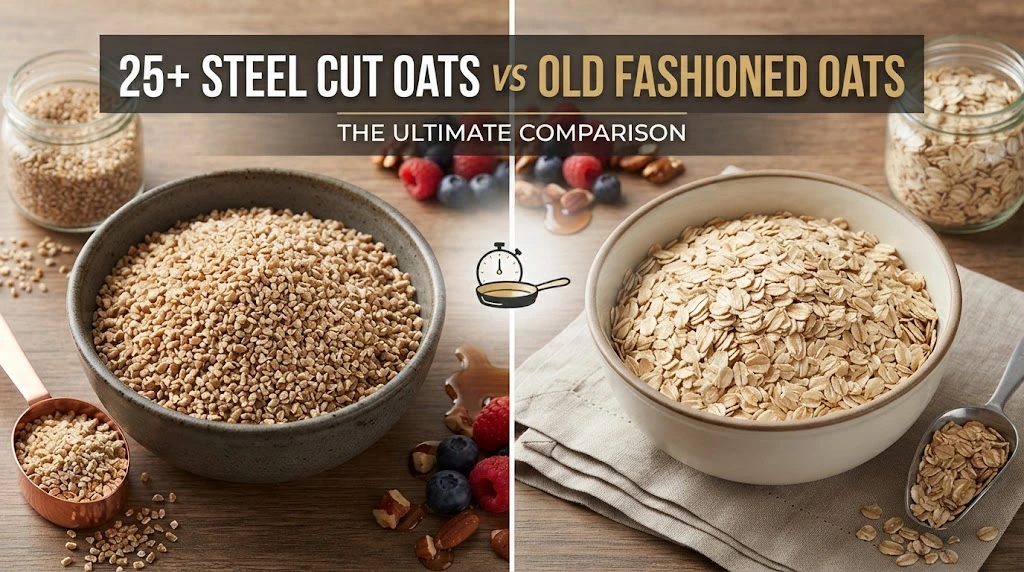
Both steel cut oats and old fashioned oats come from the same whole grain, but how they’re processed changes almost everything else: texture, cooking time, how they affect your blood sugar, and even how you should use them in the kitchen. Let’s break down exactly what separates them, so you can pick the right one for your morning routine.
What Are Steel Cut Oats?
Unlike rolled or instant oats, they’re not flattened or pre-cooked in any way.Because the oat groat stays mostly intact, they take considerably longer to cook than other forms.
What Are Old Fashioned (Rolled) Oats?
Old fashioned oats, also called rolled oats, start out as the same whole oat groat used for steel cut oats. The difference is what happens next: the groats are steamed and then flattened between large rollers.
This steaming and rolling process is what gives old fashioned oats their familiar flat, flaky appearance.
This middle ground is exactly why they’ve become the most commonly used oat variety in recipes.
How Steel Cut and Old Fashioned Oats Are Processed Differently
Understanding the processing difference is the key to understanding everything else about these two oats.
- Steel cut oats: Whole oat groats are cleaned, hulled, and then simply chopped into smaller pieces with a steel blade. No steaming, no flattening.
- Old fashioned oats: Whole oat groats are cleaned, hulled, steamed to soften them, and then pressed flat between rollers.
This processing spectrum explains why steel cut oats take the longest to cook and instant oats take the shortest. Less processing generally means more chew, more cooking time, and a heartier texture.
Texture and Taste: Steel Cut Oats vs Old Fashioned Oats
This is where the two oats feel most different at the breakfast table.
- Steel cut oats have a chewy, slightly crunchy texture, almost similar to a risotto or a hearty grain bowl. Each bite has distinct, separate pieces rather than a smooth, unified texture.
- Old fashioned oats cook up softer and creamier, with a more traditional “bowl of oatmeal” texture that most people grew up eating.
- Flavor-wise, steel cut oats tend to have a slightly nuttier, more pronounced oat flavor, while old fashioned oats have a milder taste that blends more easily with sweeteners and toppings.
Personal observation: If you enjoy a heartier, more textured breakfast that feels almost like a savory grain bowl, steel cut oats will likely become your favorite. If you prefer the classic creamy oatmeal bowl you probably grew up with, old fashioned oats will feel more familiar and comforting.
Nutrition Comparison: Steel Cut Oats vs Old Fashioned Oats
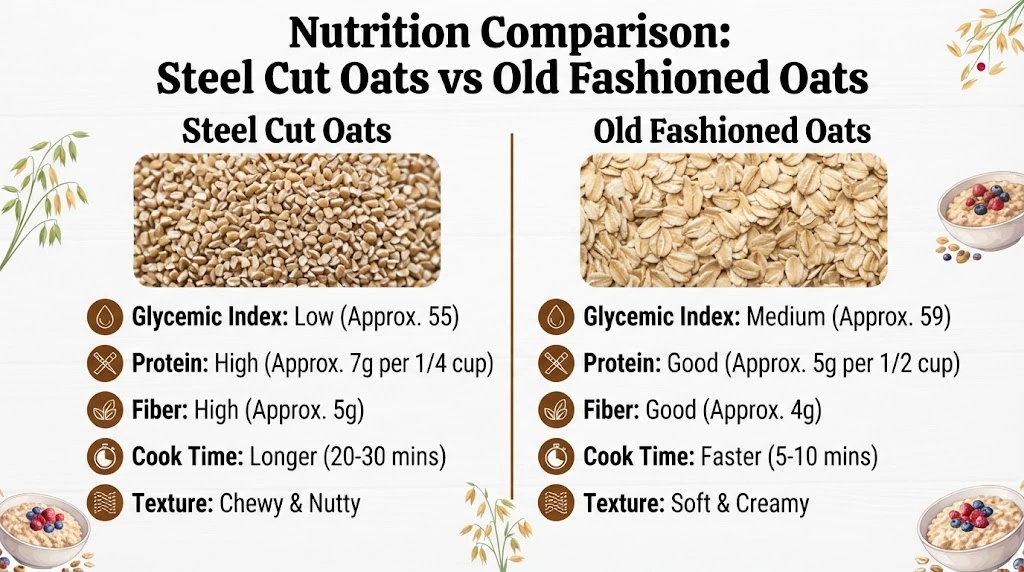
Nutritionally, these two oats are remarkably similar, since they both come from the same whole grain.
Per 1/2 cup dry serving, both types generally provide approximately:
- 150 to 170 calories
- 5 to 6 grams of protein
- 3 to 4 grams of fiber
- Around 27 to 30 grams of carbohydrates
- 2 to 3 grams of fat
- Similar levels of iron, magnesium, and B vitamins
Expert tip: Always compare oats by dry weight or dry measurement, not by the cooked volume, since cooked steel cut oats expand less dramatically than cooked old fashioned oats.
Glycemic Index and Blood Sugar Impact
- Steel cut oats generally have a lower glycemic index, meaning they’re digested and absorbed more slowly, leading to a more gradual rise in blood sugar.
- Old fashioned oats have a slightly higher glycemic index than steel cut oats, since the steaming and rolling process breaks down some of the oat’s structure, making it easier and faster for your body to digest.
- Both oats still rank as low to medium glycemic index foods overall, especially compared to instant oats or refined cereals.
- The chewier, denser structure of steel cut oats requires more digestive effort, which is the main reason behind their slower blood sugar impact.
Recommendation: If you’re specifically managing blood sugar levels, such as with prediabetes or diabetes, steel cut oats are generally the better choice due to their slower digestion. That said, individual responses can vary, so it’s worth discussing your specific situation with a doctor or registered dietitian.
Cooking Time and Method Comparison
This is often the deciding factor for busy mornings.
Steel cut oats:
- Stovetop: 20 to 30 minutes, requiring occasional stirring
- Instant Pot or pressure cooker: About 10 minutes with natural release
- Overnight soaking: Can reduce stovetop cooking time to about 10 to 15 minutes
Old fashioned oats:
- Stovetop: 5 to 10 minutes
- Microwave: 2 to 3 minutes
- Overnight oats (no cooking required): Ready to eat after soaking in liquid in the refrigerator overnight
Expert tip: If you love steel cut oats but don’t have 30 minutes in the morning, cook a large batch on the weekend and refrigerate individual portions. They reheat beautifully with a splash of milk or water throughout the week.
Which Is Healthier: Steel Cut or Old Fashioned Oats?
This is the question most people are really searching for, and the honest answer is that both are genuinely healthy choices.
- For blood sugar management, steel cut oats have a slight edge due to their lower glycemic index and slower digestion.
- For overall nutrition, both oats are nearly identical, since they come from the same whole grain with minimal nutrient loss during processing.
- For fullness and satiety, the denser, chewier texture of steel cut oats may help some people feel fuller longer, though this varies by individual.
- For convenience-driven consistency, old fashioned oats are easier to fit into a daily routine, and a healthy food you’ll actually eat regularly often matters more than small nutritional differences.
Recommendation: Neither oat is objectively “healthier” in a way that should override your personal preference or lifestyle. Choose steel cut oats if you have time for the longer cook or specifically want the slower blood sugar response, and choose old fashioned oats if convenience and quicker cooking matter more to your routine.
Best Uses for Steel Cut Oats
Steel cut oats shine in specific recipes where their chewy texture becomes an advantage rather than a drawback.
- Savory oat bowls, topped with a fried egg, sautéed greens, and a little cheese
- Baked oatmeal casseroles, where the heartier texture holds up well through baking
- Slow cooker or Instant Pot breakfast prep, since the longer cooking method suits steel cut oats naturally
- Oat “risotto” style dishes, where the chewy bite mimics traditional risotto rice
- Granola bars or energy bites, where a denser, chewier texture adds satisfying bite
Steel cut oats aren’t the best choice for recipes that need a smooth, quick-cooking base, like most cookie recipes, where old fashioned oats work far better.
Best Uses for Old Fashioned Oats
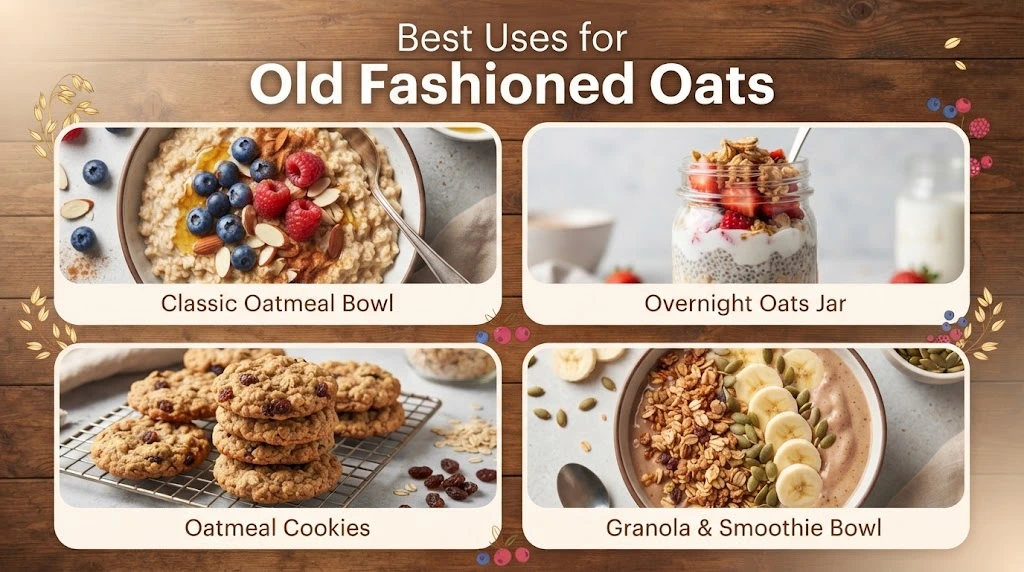
Old fashioned oats are the more versatile choice for baking and quick meal prep.
- Overnight oats, since their texture softens beautifully after soaking in the refrigerator
- Baking, including oatmeal cookies, muffins, and quick breads, where their softer texture blends more smoothly into batter
- Homemade granola, where their flat shape toasts evenly and creates that classic granola crunch
- Smoothies, blending in easily without leaving a gritty texture
- Quick weekday breakfasts, when you need something ready in under 10 minutes
Styling tip for recipes: If a recipe calls for “oats” without specifying which kind, old fashioned oats are almost always the safest default, since most baking recipes are developed and tested specifically with that texture in mind.
Can You Substitute One for the Other?
Yes, but the swap isn’t always a perfect 1:1 replacement, and it depends heavily on the recipe.
- In oatmeal bowls, you can substitute one for the other, but expect a noticeably different texture and a longer or shorter cooking time depending on which direction you’re swapping.
- In baking, substituting steel cut oats for old fashioned oats can result in a much chewier, denser final product, since steel cut oats don’t soften and blend into batter the same way.
- In overnight oats, steel cut oats can work, but they need a longer soaking time, often 12 hours or more, and will still retain more chew than old fashioned oats.
- In granola, old fashioned oats are strongly preferred, since steel cut oats don’t toast or bind together the same way in the oven.
Common mistake to avoid: Swapping steel cut oats into a baking recipe designed for old fashioned oats without adjusting the liquid content. Steel cut oats absorb liquid much more slowly, which can leave baked goods too wet in the center.
Common Mistakes When Cooking Each Type
Both oats have their own set of common cooking pitfalls.
Steel cut oat mistakes:
- Not stirring occasionally, which can cause sticking and uneven cooking at the bottom of the pot
- Using too little liquid, resulting in a gummy, overly thick texture
- Rushing the cooking time, which leaves the oats undercooked and overly firm
Old fashioned oat mistakes:
- Overcooking on the stovetop, which can turn them gummy and pasty
- Not stirring during microwave cooking, leading to uneven texture or boil-overs
- Using too much liquid in overnight oats, resulting in a soupy, unappetizing texture the next morning
Expert tip: Regardless of which oat you’re using, always start with slightly less liquid than the package suggests. It’s much easier to add more liquid to thin out oatmeal than to fix an overly soupy batch.
Steel Cut Oats vs Old Fashioned Oats for Weight Loss and Diabetes
Both oat types can fit well into a weight management or diabetes-friendly eating plan, though there are some practical differences worth knowing.
- Steel cut oats’ slower digestion may support better blood sugar stability throughout the morning, which can be particularly relevant for people managing diabetes or insulin resistance.
- Portion control matters more than oat type for weight management purposes, since both oats provide similar calories per dry ounce.
- Added toppings and mix-ins often matter more than the base oat choice. A bowl of steel cut oats loaded with brown sugar and dried fruit can easily out-calorie a simply prepared bowl of old fashioned oats.
- Fiber content is nearly identical between the two, so neither has a significant advantage in terms of digestive fullness from fiber alone.
If you’re managing diabetes, it’s worth discussing your specific oat choice and portion sizes with a registered dietitian or your healthcare provider, since individual blood sugar responses can vary more than general glycemic index rankings suggest.
Storage and Shelf Life Differences
Both oat types store well, though there are a few small differences worth knowing.
- Dry, uncooked oats of both types last 12 to 24 months when stored in an airtight container in a cool, dry pantry.
- Steel cut oats have a slightly higher fat content exposed at the cut surface, which can make them marginally more prone to rancidity over very long storage periods compared to old fashioned oats.
- Cooked oats of either type keep well in the refrigerator for 4 to 5 days in an airtight container.
- Freezing cooked oats works well for both types, portioned into individual containers for up to 3 months.
Recommendation: If you buy oats in bulk and don’t go through them quickly, store them in the freezer instead of the pantry. This significantly extends freshness for both steel cut and old fashioned varieties.
Price and Value: Which Is the Better Buy?

Price differences between these two oats are usually minor, but a few factors are worth considering.
- Steel cut oats are sometimes priced slightly higher per pound, since they require less processing but are often sold in smaller specialty packaging.
- Old fashioned oats are widely available in large, budget-friendly bulk packaging, especially store-brand versions, making them often the more economical everyday choice.
- Cost per serving is nearly identical between the two once you account for actual serving sizes, since both come from the same base grain.
- Buying in bulk from bins at grocery or health food stores can significantly reduce the cost of either type compared to pre-packaged boxes.
Recommendation: If budget is your main concern, check unit pricing rather than assuming one type is automatically cheaper, since this varies significantly by brand, store, and region.
Conclusion
Steel cut oats and old fashioned oats come from the exact same whole grain, but the way they’re processed shapes nearly everything else about them, from texture and cooking time to how gently they affect your blood sugar. Steel cut oats reward you with a chewier bite and a slower, steadier energy release, while old fashioned oats offer convenience, versatility, and that familiar, comforting bowl of oatmeal most of us grew up with.
Neither one is the clear winner for everyone.
FAQs
Are steel cut oats healthier than old fashioned oats?
Neither is objectively healthier overall, and the better choice often comes down to personal preference and lifestyle.
Can I substitute old fashioned oats for steel cut oats in a recipe?
You may need to reduce the liquid and cooking time significantly compared to a steel cut oats recipe.
Why do steel cut oats take so much longer to cook than old fashioned oats?
Steel cut oats are simply chopped whole oat groats with no steaming involved, so they retain their dense, intact structure. Old fashioned oats are pre-steamed and flattened, which breaks down the structure and speeds up cooking significantly.
Do steel cut oats and old fashioned oats have the same calories?
The difference in appearance comes from how much they expand during cooking, not from a difference in actual calorie content.
Can I use steel cut oats for overnight oats?
Many people prefer old fashioned oats for overnight oats specifically because they soften more completely.
Which oats are better for baking cookies or granola?
Steel cut oats generally don’t soften or bind well enough for most baked recipes.